
24/7 Emergency Sump Pump Service
Sump Pump Repair Guys
Trusted Sump Pump Repair Service Provider in the USA
Same-day repair, replacement and battery backup installation. Licensed technicians, upfront pricing, 24/7 emergency response.
Call (512) 688-8345Available now. Free quote over the phone.
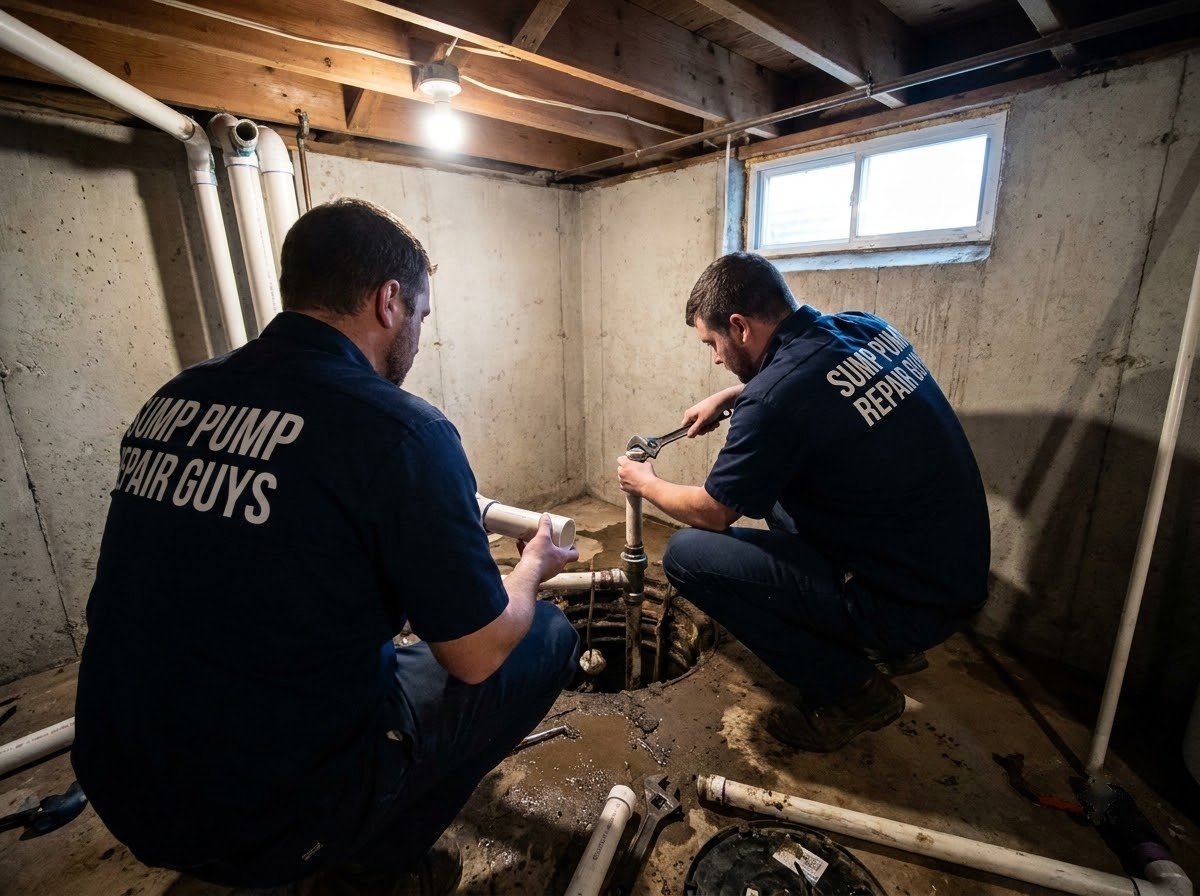
We work on sump pumps. That is the whole business.
Most plumbing companies treat a dead sump pump the same way every time: pull it out, sell a new one, drop it in. That clears the symptom and leaves the cause sitting in the pit. If the check valve has failed, the basin is full of sediment, or the pump was the wrong size to begin with, the replacement will fail exactly the way the last one did.
Sump Pump Repair Guys was built around that gap. Our technicians diagnose the actual failure first, then tell you plainly whether it is a parts-level repair or a pump that has genuinely reached the end of its life. Both answers come with a price before any work starts.
We handle repair, diagnostics, backup system service, pit cleaning and discharge line work for homeowners across the country. Emergency calls are answered around the clock, because basements do not flood during business hours.
- Every technician who enters your home is properly licensed, insured and background checked.
- A stuck float or a failed check valve is a parts-level fix. We tell you which one you actually have.
- You approve the number first. No surprise line items when the invoice arrives.
- We stand behind every repair. If the same fault returns, we come back.
- We fill the pit and watch a full cycle: activation, run, shutoff, and any backflow through the valve.
Licensed and insured
Diagnosis before replacement
Priced before we start
Workmanship guarantee
Tested before we leave
Why homeowners call us first
We are not a call centre that farms your job out to whoever answers. You get a technician who works on sump systems every day, and a price before anything gets touched.
-
Diagnosis before replacement
A stuck float, a failed check valve and a burnt-out motor are three different problems with three different prices. We find out which one you have instead of defaulting to a new pump.
-
Licensed and insured
Every technician who enters your home is properly licensed, insured and background checked. You can ask for the paperwork at the door.
-
Answered around the clock
Pumps fail during storms, at night, and while you are away. Our lines stay open all night and all weekend, and someone picks up.
-
Priced before we start
You get a written number after the diagnosis and approve it before any work begins. No surprise line items when the invoice arrives.
-
Workmanship guarantee
We stand behind the repair. If the same fault comes back after we have worked on it, we come back and sort it out.
-
Tested before we leave
We fill the pit and watch a full cycle: activation height, run, shutoff, and whether any water comes back through the valve. A pump nobody watched has not been tested.
Sump pump repair services
Every part of the system, not just the pump
Most sump pump problems are component faults, not dead pumps. We work on the whole system so the repair actually holds: the pit, the switch, the valve, the motor and the line that carries the water away.
-
01
Sump pump inspection
A full walkthrough of the system before storm season: pit condition, switch travel, valve seating, discharge route and pump age. You find out where you stand while there is still time to act.
-
02
Sump pump diagnostics
A manual lift test separates a switch failure from a motor failure in under a minute. We identify the exact fault and its price before quoting anything, so you are not paying replacement rates for a parts-level problem.
-
03
Motor repair
Humming with no flow, tripped thermal overloads, failing bearings. We test the motor under load and tell you honestly whether a repair is worth it or whether the unit has been shortened past the point of value.
-
04
Float switch repair and adjustment
The most common failure point on any pump. We free jammed floats, replace failed switches, and set the trip heights so the on and off points do not overlap and start the pump short-cycling.
-
05
Check valve replacement
A failed valve lets the water column in the riser fall straight back into the pit, refilling it seconds after shutoff. Replacing it is inexpensive and adds years to the life of the pump above it.
-
06
Impeller repair
Grinding and rattling usually mean debris in the vortex impeller or clearances worn open by grit. We open the unit, clear the obstruction and check whether the wear has already cost the pump its output.
-
07
Sump pump cleaning
Silt, gravel and iron ochre settle in the basin, block the intake screen and grind through the switch. Sediment is the single biggest lifespan killer in a sump system, and clearing it is the cheapest thing you can do for it.
-
08
Pit and basin repair
A cracked, undersized or collapsing basin makes every pump that goes into it fail early. We repair the pit and correct the sizing so the replacement runs a normal duty cycle instead of a punishing one.
-
09
Discharge line repair
Blocked, crushed, frozen or terminating too close to the foundation. Any of these defeats a perfectly healthy pump. We clear the line and correct where it puts the water so it does not return to the pit you just emptied.
-
10
Backup system service
Deep cycle batteries lose capacity quietly over three to five years and fail during the outage they were bought for. We load test the battery, service the backup pump and confirm the changeover actually triggers.
-
11
Preventative maintenance
An annual service: full cycle test, basin clean, switch and valve check, battery load test and discharge inspection. Scheduled before the wet season, when technicians are still available.
-
12
Emergency service
Water already on the floor, alarm sounding, pump silent. Same day and after hours response. We get the system back in service first and have the longer conversation afterwards.
When to call for sump pump service
Sump pumps rarely fail without warning. They give you weeks of signals first, and almost nobody acts on them until water is on the floor. Here is what to watch for.
-
01
It will not turn on
EmergencyNo sound, no vibration, no water moving while the pit fills. Check the breaker and the plug first. If power is fine and the pump is still silent, the float switch or the motor has failed, and a rising water table will not wait for you to schedule something. Call now rather than in the morning.
-
02
The high water alarm is sounding
EmergencyAn alarm means the basin is filling faster than the pump is clearing it. That is not a nuisance beep to silence, it is the last warning you get before water reaches the floor. Something upstream has already failed: the switch, the valve, the discharge line, or the pump itself.
-
03
The pump runs constantly
Nonstop running in dry weather usually means a float stuck in the raised position or a failed check valve dropping discharged water straight back into the pit. Occasionally the pump is simply undersized for the inflow. All three burn out the motor early, and all three are cheaper to fix than to ignore.
-
04
Grinding, rattling or humming
Grinding points to a jammed or worn impeller. Rattling usually means loose discharge piping. A loud hum with no water moving points to a seized motor or a completely blocked line. Pumps do not get quieter on their own, so a new noise is worth a service call before it becomes a replacement.
-
05
It cycles every few seconds
Short-cycling is a pump switching on and off in quick bursts, and it is one of the fastest ways to destroy a switch and a set of motor bearings. The cause is normally a failed check valve, a basin too small for the inflow, or float trip points set too close together.
-
06
The pump is over seven years old
Most sump pumps last seven to ten years. Past that mark, every storm is a coin flip. If yours is that old and has already needed one repair, the working rule is to replace when the repair estimate reaches about half the cost of a new unit installed.
-
07
Your backup has never been tested
Deep cycle backup batteries lose capacity quietly over three to five years. A battery that tested fine two seasons ago may have almost nothing left today, and the outage is a bad time to discover it. If you have a backup and have never load tested it, you do not currently know whether you have one.
-
08
Wet season is coming
Spring thaw and heavy autumn rain are when pits get their real workload, and they are also when every technician in your area is booked solid. An inspection before the season costs a fraction of an emergency call during it.
How our sump pump process works
We follow the same steps on every job, because a pump that seems fine is not good enough. No sales visit, no waiting days for a quote.
-
1
Check the setup
We look at your pit, pump, float switch, check valve and discharge line to see what you have and how it is performing.
-
2
Test under water
We fill the basin and watch the pump actually run, so we see how it behaves instead of guessing.
-
3
Diagnose the fault
A manual lift test separates a switch failure from a motor failure. We find out exactly what failed and why, so the repair addresses the cause and not just the symptom.
-
4
Quote, then repair
You get a written price before anything is touched. Once you approve it we complete the repair and check the discharge route so water goes far enough away from the building.
-
5
Test and walk you through
We run a final full-cycle test, then show you how to check the pump yourself and what warning signs to watch for.
States we cover
We connect homeowners with qualified sump pump technicians across 33 states, concentrated in the regions where basements are standard construction and groundwater is a year-round problem. Pick your state to see local service details.
- Ohio
- Michigan
- Indiana
- Illinois
- Wisconsin
- Minnesota
- Iowa
- Missouri
- Pennsylvania
- New York
- New Jersey
- Maryland
- Massachusetts
- Connecticut
- Virginia
- Kentucky
- West Virginia
- Nebraska
- Kansas
- Delaware
- Rhode Island
- New Hampshire
- Vermont
- Maine
- Colorado
- Washington
- Oregon
- North Dakota
- South Dakota
- Montana
- Idaho
- Utah
- Wyoming
Not sure whether we cover your area? Give us a call and we will tell you in under a minute.
Sump pump questions, answered
The things homeowners ask us most often, answered properly instead of with a sales line. If yours is not here, give us a call and we will talk it through.
Why does my sump pump keep running when it is not raining?
Three usual causes. A float stuck in the raised position tells the pump the water is high when it is not, so it never gets the shutoff signal. A failed check valve lets discharged water fall back into the pit and refill it seconds after each cycle. Or the water table around your foundation is genuinely high and the pump is doing real work it was never sized for.
All three burn out motors quickly, because continuous running builds heat the pump cannot shed. A manual lift test and a backflow check separate them in a few minutes.
My pump hums but no water comes out. What is that?
A hum with no flow almost always means the impeller is jammed or the motor bearings have seized. Debris pulled in from a basin that has never been cleaned is the usual culprit. It can also mean a completely blocked discharge line, where the pump is running against a closed pipe.
Switch it off. A humming motor under load is drawing current and heating up, and another hour of that turns a clearable jam into a replacement.
How do I test my sump pump myself?
Pour several gallons of water slowly into the basin and watch a full cycle. The float should rise, the pump should start, the water should clear, and the pump should shut off on its own.
Then keep watching for thirty seconds. If water flows back into the pit, the check valve is failing. If the pump does not start at all, lift the float by hand: if it runs then, the problem is the switch, not the motor. Do this twice a year and before the wet season.
Should I repair my sump pump or replace it?
The working rule in the trade is to replace when the pump is past seven to ten years old, or when the repair estimate reaches about half the cost of a new unit installed. Below that line, repair usually wins.
A four year old cast iron pump with a dead float switch is worth repairing. A nine year old thermoplastic pump with a seized impeller is not. We show you which side of the line yours sits on and let you decide.
Why does my pump turn on and off every few seconds?
That is short-cycling, and it is one of the fastest ways to destroy a switch and a set of bearings. Three causes account for nearly all of it: a failed check valve dropping water back into the pit, a basin too small for the inflow, or float trip points set so close together that the on and off heights overlap.
None of those are fixed by buying a bigger pump, which is what most homeowners are sold. Correcting the actual cause is usually a parts-level job.
How long does a sump pump last?
Seven to ten years for the pump itself, with quality cast iron units reaching the top of that band and budget thermoplastic ones often falling short of it.
Components vary more. Premium vertical float switches routinely last eight to twelve years, tethered floats five to eight, and budget switches can fail in two to four, often while the rest of the pump is still healthy. Backup batteries are the shortest lived at three to five years. The biggest lifespan killer across all of them is sediment in the basin.
The breaker trips when the pump runs. Is that serious?
Yes. A pump drawing enough current to trip a breaker has an electrical fault, a seized motor, or a jammed impeller forcing the motor to stall. That is a fire risk, not a nuisance.
Leave the breaker off and call rather than resetting it repeatedly. Every reset feeds current into a fault that is already failing.
How often should the pit be cleaned?
Once a year for most basements, and more often if your groundwater carries heavy silt or iron ochre. Sediment grinds mechanical switches, jams impellers and narrows the float travel path until the switch stops working reliably.
Cleaning a basin is one of the cheapest things you can do for a sump system. Replacing a pump that died from grit is not.
My high water alarm is going off. What should I do?
Treat it as an emergency. The alarm means the basin is filling faster than the pump is clearing it, which is the last warning you get before water reaches the floor.
Check that the pump is plugged in and the breaker is on, then look at the pit and see whether the pump is running at all. Either way, something upstream has already failed. Call before you start bailing.
Will my homeowners insurance cover a sump pump failure?
Usually not by default. Standard policies generally exclude groundwater intrusion and flooding caused by sump pump failure, and coverage for that specific event is normally sold as a separate rider or endorsement.
Check your policy language before you need it. A claim is a bad time to find out the answer.
How quickly can someone come out?
Same day in most of our service areas, and after hours for emergencies where water is already coming in. Diagnosis on a standard system takes thirty to sixty minutes, and a parts-level repair such as a float switch or check valve is generally completed in the same visit.
The one thing worth knowing: during spring thaw and heavy autumn rain, every technician in your area is booked. An inspection before the season costs a fraction of an emergency call during it.
Do not wait for the next storm to find out whether your pump works.
Emergency repair, diagnostics, backup system service or a full-system inspection before the season turns. Call now to book.
(512) 688-8345