
24/7 Emergency Service in Delaware County
Sump Pump Repair in Delaware, OH
You Already Pay For Stormwater Every Month
Delaware bills water, sewer and storm water as three separate lines, run by three separate divisions. Knowing which one owns your problem is the first useful step.
Answered 24 hours. Free quote over the phone.
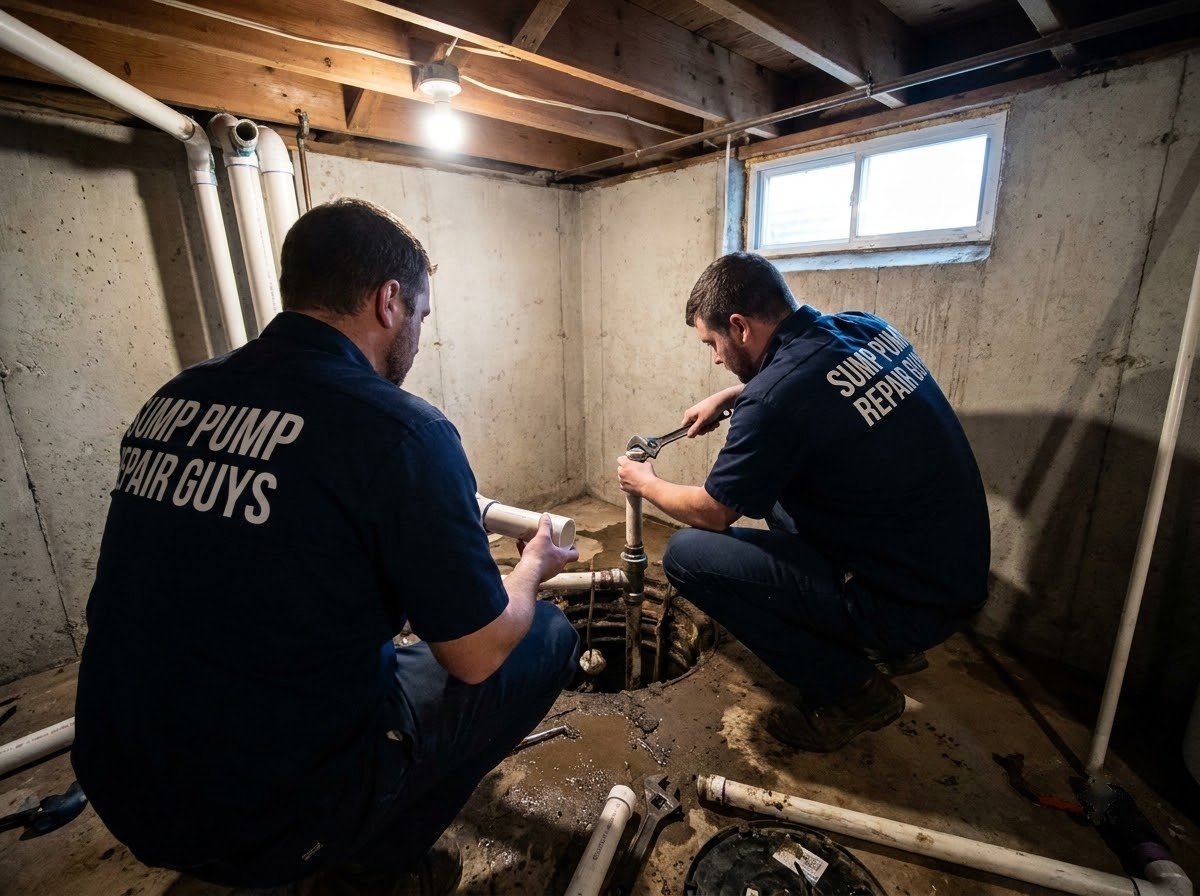
About Sump Pump Repair Guys in Delaware
We repair sump pumps and nothing else. In Delaware that focus is useful because the city structures its utilities in a way most homeowners never look at closely, and that structure tells you exactly who to call.
Public Utilities here runs three divisions. Collection and distribution handles drinking water. Wastewater collects and treats what leaves the house. Stormwater exists specifically to maintain clean surface water throughout the city. All three operate under regulations issued by the United States and Ohio Environmental Protection Agencies.
That third division matters more than people realise, because a typical residential utility bill here includes charges for water, wastewater and storm water as separate items every month. You are already funding a body whose job is surface water. Drainage complaints have somewhere to go, and calling wastewater about a street drainage problem simply routes you to the wrong division.
The sewer side is substantial for a city this size: 175 miles of sewer line, 3,250 manholes and 12 pump stations, with treated wastewater returned to the Olentangy River. The water side runs 190 miles of line to more than 12,000 customers, blending river water with groundwater drawn from wells more than 200 feet deep.
There is also a clear ownership line on the water side worth knowing before any excavation. The city is responsible for all water pipes and connections leading up to and including your water on-off valve. Everything from that valve into the property is the customer’s. The valve usually sits outside, either in a meter pit or on its own.
- Collection and distribution, wastewater, and stormwater, all regulated by the US and Ohio EPAs.
- A typical monthly residential bill carries water, wastewater and storm water charges separately.
- Plus 3,250 manholes, with treated wastewater returned to the Olentangy River.
- You approve the number first. No surprise line items when the invoice arrives.
- We fill the pit and watch a full cycle: activation, run, shutoff, and any backflow through the valve.
Three divisions, three jobs
Storm water is its own bill line
175 miles of sewer, 12 pump stations
Priced before we start
Tested before we leave
Sump pump repair services in Delaware
Sump pump repairs we handle in Delaware
Most Delaware sump pump problems are component faults. We work on the whole system so the repair holds: the pit, the switch, the valve, the motor and the line that carries the water away.
- 01
Sump pump diagnostics
A manual lift test separates a switch failure from a motor failure in under a minute. We identify the exact fault and its price before quoting anything, so you are not paying replacement rates for a parts-level problem.
- 02
Division and ownership check
The Delaware-specific one. Water, wastewater or stormwater, and whether the fault sits before or after your water on-off valve. That answer decides who you call and who pays.
- 03
Float switch repair and adjustment
The most common failure point on any pump. We free jammed floats, replace failed switches, and set trip heights so the on and off points do not overlap and start the pump short-cycling.
- 04
Check valve replacement
A failed valve lets the discharge column fall straight back into the pit, refilling it seconds after shutoff. It is a small part with a large effect on how hard your pump has to work.
- 05
Motor repair
Humming with no flow, tripped thermal overloads, failing bearings. We test the motor under load and tell you honestly whether a repair is worth it or whether the unit has been shortened past the point of value.
- 06
Impeller repair
Grinding and rattling usually mean debris in the vortex impeller or clearances worn open by grit. We open the unit, clear the obstruction and check whether the wear has already cost the pump its output.
- 07
Sump pit cleaning
Silt and iron ochre settle in the basin, block the intake screen and grind through the switch. On central Ohio clay with older footer drains, fines accumulate steadily.
- 08
Pit and basin repair
Cracked or improperly seated basins let soil and silt in continuously, and undersized basins short-cycle every pump that goes into them regardless of quality.
- 09
Discharge line repair and rerouting
Blocked, crushed, or terminating where the water returns to your own footing. We trace the line and correct where it puts the water.
- 10
Frozen discharge line repair
A badly pitched line ices solid in a central Ohio January. We thaw and clear it, then correct the pitch and termination so it drains fully between cycles.
- 11
Backup system service
Storms take the power out at the exact moment the pump is needed most. We load test the battery, service the backup pump and confirm the changeover actually triggers.
- 12
Emergency service
Water already on the floor, alarm sounding, pump silent. Same day and after hours response across Delaware. We get the system back in service first and have the longer conversation afterwards.
Why Delaware homeowners call us first
Three divisions and a clear ownership boundary means most problems here have an obvious owner, once someone actually asks the question.
-
We find the right division first
Surface water belongs to stormwater, sewage to wastewater, supply to collection and distribution. Calling the right one saves a day, and you already fund all three.
-
We fix the cause, not the symptom
A new pump dropped into an undersized pit with a failed valve dies the same way the last one did. We correct the fault around the pump so the repair survives the next wet spring.
-
Answered at 2am
Pumps fail during storms, at night, and while you are away. Our lines stay open all night and all weekend, and someone picks up. Basements do not flood during business hours.
-
Priced before we start
You get a written number after the diagnosis and approve it before any work begins. No surprise line items when the invoice arrives.
-
Licensed and insured
Every technician who enters your home is properly licensed, insured and background checked. You can ask for the paperwork at the door.
-
We stand behind it
If the same fault comes back after we have worked on it, we come back and sort it out.
When to call a sump pump technician in Delaware
Most of these are parts-level repairs. Two of them belong with a city division rather than with us, and one is a billing question worth asking separately.
-
01
Silent pump, rising pit
Call now
Check the breaker and the plug first, then lift the float by hand. If it runs, the switch is the fault and not the motor. Water arriving faster than you can bail is not a next-morning problem.
-
02
Sewage backing up through a drain
Wastewater division
No pump serves this. It belongs with the wastewater division, which collects and treats the city’s sewage across 175 miles of line and 12 pump stations. Report it before hiring anyone to work on equipment.
-
03
High water alarm sounding
Call now
Inflow has overtaken output, which means something upstream already failed: the switch, the valve, the discharge line or the pump. The alarm is the last warning before water reaches the floor.
-
04
Standing water in the street or a blocked grate
That is the stormwater division’s territory, and its job is conveying stormwater to receiving streams and keeping surface water clean. It is a separate line on your bill, so reporting a drainage problem is using something you already pay for.
-
05
Running non-stop in dry weather
Usually a float stuck raised or a failed check valve dropping the discharge column back into the pit. Occasionally a genuinely high water table near the Olentangy. The first two are parts-level fixes.
-
06
Cycling on and off every few seconds
Short-cycling, usually from a basin too small for the inflow, a failed check valve, or float trip points set so close they overlap. A bigger pump makes this worse rather than better.
-
07
Humming with no water moving
Jammed impeller, seized bearings, or a completely blocked or frozen discharge line. Switch it off now. Clearing the impeller or the line is often a same-visit fix, but another hour of humming turns it into a replacement.
-
08
A leak near the meter pit
Ownership changes at the water on-off valve. The city is responsible up to and including that valve, and the customer from the valve into the property. Establishing which side the leak sits on decides the bill.
-
09
Your sewer charge looks high for a dry summer
Sewer here is billed on water usage, so heavy outdoor watering inflates it even though none of that water reaches the sewer. An auxiliary meter exists precisely to separate that out.
How a Delaware service call runs
Five steps, the same every time. No sales visit, no waiting days for a number.
- 1
Work out whose water it is
Groundwater in the pit, sewage at the drain, or surface water off the street. Three sources, three owners, and only one of them is ours.
- 2
Check the setup
Pit, pump, float switch, check valve and discharge line, plus basin volume against real inflow and where the discharge actually terminates.
- 3
Test under water
We fill the basin and watch a real cycle: activation height, run, shutoff, and whether anything comes back through the valve.
- 4
Price it, then repair
Written number before anything is touched. If this belongs with a city division rather than with us, we say so and you pay nothing for equipment you do not need.
- 5
Test again and hand it over
Final full-cycle test, then we show you how to check it yourself and what to watch for before the next wet season.
Three divisions and one ownership line
Who owns what in Delaware
Delaware publishes its utility structure plainly. Reading it once tells you which number to dial and where your responsibility begins, which is most of the battle.
-
Division one
Collection and distribution
Responsible for collecting surface and ground water, treating it so it can be consumed, and distributing it. The plant treats and distributes an average of 3.65 million gallons a day to more than 12,000 customers across 190 miles of water line and 2,000 fire hydrants.
-
Division two
Wastewater
Collects and treats domestic and industrial wastewater and returns it to the Olentangy River. The system runs to 175 miles of sewer line, 3,250 manholes and 12 pump stations. Anything coming back up a drain belongs in this conversation.
-
Division three
Stormwater
Exists to maintain clean surface water throughout the city, with storm sewers conveying stormwater to receiving streams. This is the division for street flooding, blocked grates and drainage complaints, and it appears as its own charge on your monthly bill.
-
The boundary
Everything stops at the on-off valve
The city is responsible for all water pipes and connections leading up to and including your water on-off valve. Customers are responsible for anything from that valve into the property. The valve usually sits outside, in a meter pit or on its own.
-
The water source
River water blended with deep wells
The city can blend river water with groundwater from wells drilled more than 200 feet deep. Worth knowing because the same aquifer behaviour that supplies those wells is what fills sump pits across town during a wet season.
-
A billing note
The auxiliary meter
Sewer is billed on water use, so summer irrigation inflates it even though that water never reaches a sewer. A secondary meter tracks outside watering separately, and that water is not calculated in the sanitary sewer fee, which lowers the sewer charge.
Delaware neighborhoods we cover
Delaware sits on the Olentangy River, with a historic core of older housing and decades of newer subdivisions spreading out around it. The older streets carry the oldest laterals and footer drains, while the newer developments sit on graded ground where how the discharge is routed matters more than the age of the pump.
- Downtown Delaware
- Historic District
- Sandusky Street
- William Street
- Central Avenue
- Curve Road
- Houk Road
- Braumiller Road
- Cheshire Road
- Glenn Parkway
- Olentangy River corridor
- Delaware Run
- Mill Run
- Berlin Township
- Concord Township
- Liberty Township
- Orange Township
- Genoa Township
- Powell
- Lewis Center
- Sunbury
- Galena
ZIP codes we service in Delaware
Same-day coverage across Delaware and the surrounding Delaware County communities.
- 43015
- 43035
- 43065
- 43074
- 43021
- 43061
- 43066
- 43082
- 43081
- 43240
- 43016
- 43017
- 43040
- 43334
- 43314
- 43302
Not listed? We cover all of Delaware County. Call and we will confirm in under a minute.
Delaware sump pump questions, answered
The things Delaware homeowners ask us most often, answered properly instead of with a sales line. If yours is not here, give us a call and we will talk it through.
Which city division should I call?
It depends on the water. Public Utilities runs three divisions: collection and distribution for drinking water, wastewater for what leaves the house, and stormwater for surface water across the city.
Sewage coming back up a drain is wastewater. Street flooding and blocked grates are stormwater. A supply leak is collection and distribution. All three are regulated by the US and Ohio EPAs, and you are billed for all three every month.
Where does the city’s responsibility end on the water side?
At your water on-off valve. The city is responsible for all water pipes and connections leading up to and including that valve, and the customer is responsible for anything from the valve into the property.
The valve is usually outside, either in a water meter pit or on its own. Knowing where yours is before there is a problem is worth five minutes on a dry afternoon.
What does the stormwater charge on my bill pay for?
The stormwater division, whose role is maintaining clean surface water throughout the city, with storm sewers conveying stormwater to receiving streams. It appears as a separate line alongside water and wastewater on a typical monthly residential bill.
The practical point is that drainage problems have a funded owner here. Reporting a blocked grate or standing water is using a service you already pay for rather than asking a favour.
Why is my sewer charge higher than my water charge?
It is not unusual, and the city says so directly. Sewer is billed in tiers based on usage, and treating wastewater is a different cost structure from supplying water.
Where it becomes unfair is summer irrigation, because water used on a lawn is measured and billed as though it went to the sewer. That is what the auxiliary meter is for.
What is an auxiliary meter?
A secondary meter that tracks the amount of water used for outside watering. That water is not calculated in your sanitary sewer system fee, which lowers your sewer charges.
It requires an application through the Utility Billing Office. For a household that irrigates seriously through a dry summer, it is one of the few genuinely straightforward ways to reduce a utility bill here.
Does the river affect my basement?
Less directly than people assume. Treated wastewater is returned to the Olentangy, and the city can blend river water with groundwater from wells drilled more than 200 feet deep, so the river is central to the water system.
Your basement, though, responds mainly to the shallow water table beside the foundation. Proximity to the river raises that table in places, but most wet basements here are about grading, downspouts and discharge routing rather than river level.
Do I need a bigger pump if mine cannot keep up?
Usually not. A pump that cannot keep up is often fighting a failed check valve, a blocked or frozen discharge line, a basin too small for the inflow, or water arriving by a route the pump does not serve at all.
Oversizing into a small pit is actively harmful: the pump empties the basin faster than it refills, short-cycles, and destroys its own switch. Sizing should follow pit volume, total lift and measured inflow.
Where should my discharge line end?
Far enough from the foundation that the water does not simply return. A line terminating a few feet from the wall soaks straight back down to the footer drains and into the pit, so the pump runs continuously and wears out years early.
The homeowner then concludes the pump was undersized. It usually was not. The same water was being moved repeatedly, which is a routing problem rather than an equipment one.
How do I test my sump pump myself?
Pour several gallons of water slowly into the basin and watch a full cycle. The float should rise, the pump should start, the water should clear, and the pump should shut off on its own.
Then keep watching for thirty seconds. Water flowing back into the pit means the check valve is failing. If the pump does not start at all, lift the float by hand: if it runs then, the switch is the problem, not the motor. Test in autumn before the freeze and again in early spring.
Should I repair or replace?
Replace when the pump is past seven to ten years old, or when the repair estimate reaches about half the cost of a new unit installed. Below that line, repair usually wins.
The Delaware caveat is the split housing stock. In the historic core, the pit and discharge are often original and never corrected, so replacing the pump alone buys a few years at most. In newer subdivisions the pump is usually fine and the routing is the problem.
Which Delaware areas and ZIP codes do you cover?
All of Delaware and the surrounding Delaware County communities, including Downtown Delaware, the Historic District, the Sandusky Street, William Street, Central Avenue, Curve Road, Houk Road, Braumiller Road, Cheshire Road and Glenn Parkway corridors, the Olentangy River area, Delaware Run and Mill Run, plus Berlin, Concord, Liberty, Orange and Genoa townships, Powell, Lewis Center, Sunbury and Galena.
ZIP codes include 43015, 43035, 43065, 43074, 43021, 43061, 43066, 43082, 43081, 43240, 43016, 43017, 43040, 43334, 43314 and 43302.
How quickly can someone come out?
Same day across most of Delaware County, and after hours for emergencies where water is already coming in. Diagnosis takes thirty to sixty minutes, and a parts-level repair such as a float switch or check valve is generally completed in the same visit.
Heavy rain events are the exception, when calls across the county spike within the same hours. An inspection booked in dry weather is worth far more than a place in that queue.
Three kinds of water. We only handle one of them.
Emergency repair, water source diagnosis, pit and valve testing, or a full-system inspection in dry weather. Serving Delaware and all of Delaware County.