
24/7 Emergency Service in Cuyahoga County
Sump Pump Repair in Cleveland Heights, OH
Fifty To A Hundred Years Old, And The Money Is Competitive
The sewers here are old enough that repairs are funded through annual competitive grants. Documented basement flooding is part of what wins them.
Answered 24 hours. Free quote over the phone.
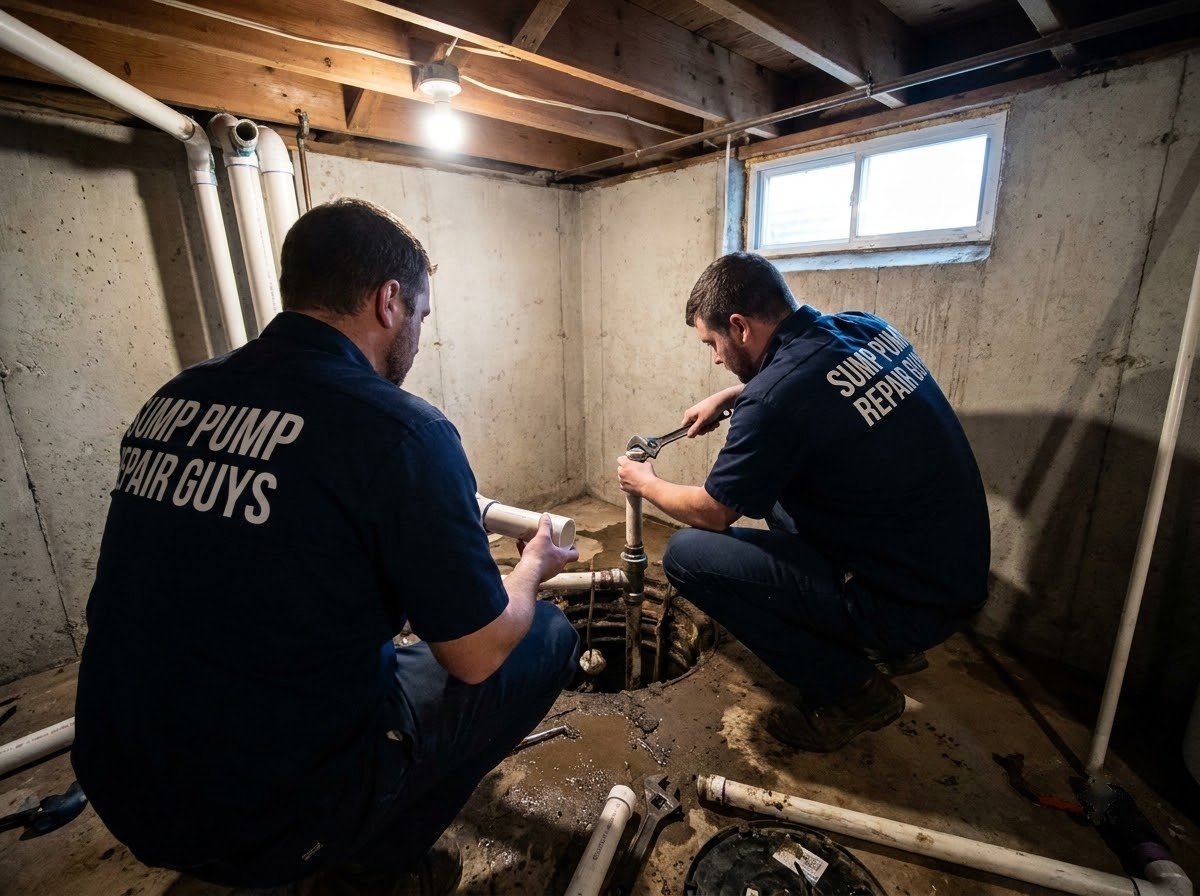
About Sump Pump Repair Guys in Cleveland Heights
We repair sump pumps and nothing else. In Cleveland Heights that focus is useful because the underlying problem here is age, and age is expensive to fix, which means the order in which streets get attention is decided by evidence.
The sewers in this city range from roughly 50 to 100 years old. Pipe of that vintage contributes to flooding and water quality problems, and the city has been working since 2015 to address US EPA requirements, developing a Partial Consent Decree to inspect and study the system and recommend cost-effective improvements under an integrated planning framework.
The city has set out what it is prioritising: basement flooding relief, control of sanitary sewer overflows, critical repairs on failing infrastructure, and removing illicit connections and non-stormwater sources from the storm sewer system. Those four items cover almost everything that puts water in a basement here that is not the pump itself.
Funding is the part homeowners rarely hear about. The Northeast Ohio Regional Sewer District runs a Member Community Infrastructure Program offering annual competitive grant opportunities, and Cleveland Heights has secured millions through it. Competitive means projects are ranked, and ranking rests on documented need.
Locally, the Sewer Utility Department maintains both the storm and sanitary systems, so one department covers both. Water is separate: since 2017 Cleveland Water has been the supplier here and is responsible for water service and repairs.
- Pipe of that age contributes to flooding and water quality problems across the city.
- Alongside SSO control, critical repairs, and removing illicit connections from the storm system.
- NEORSD’s Member Community Infrastructure Program offers annual competitive grants, and documented need is what ranks a project.
- You approve the number first. No surprise line items when the invoice arrives.
- We fill the pit and watch a full cycle: activation, run, shutoff, and any backflow through the valve.
Sewers 50 to 100 years old
Basement flooding relief is a stated priority
Grant funding is competitive
Priced before we start
Tested before we leave
Sump pump repair services in Cleveland Heights
Sump pump repairs we handle in Cleveland Heights
Most Cleveland Heights sump pump problems are component faults. We work on the whole system so the repair holds: the pit, the switch, the valve, the motor and the line that carries the water away.
- 01
Sump pump diagnostics
A manual lift test separates a switch failure from a motor failure in under a minute. We identify the exact fault and its price before quoting anything, so you are not paying replacement rates for a parts-level problem.
- 02
Old system assessment
The Cleveland Heights specific one. In housing served by pipe up to a century old, the question is often whether the fault sits in your equipment or in infrastructure already queued for repair.
- 03
Float switch repair and adjustment
The most common failure point on any pump. We free jammed floats, replace failed switches, and set trip heights so the on and off points do not overlap and start the pump short-cycling.
- 04
Check valve replacement
A failed valve lets the discharge column fall straight back into the pit, refilling it seconds after shutoff. It is a small part with a large effect on how hard your pump has to work.
- 05
Motor repair
Humming with no flow, tripped thermal overloads, failing bearings. We test the motor under load and tell you honestly whether a repair is worth it or whether the unit has been shortened past the point of value.
- 06
Impeller repair
Grinding and rattling usually mean debris in the vortex impeller or clearances worn open by grit. We open the unit, clear the obstruction and check whether the wear has already cost the pump its output.
- 07
Sump pit cleaning
Silt and iron ochre settle in the basin, block the intake screen and grind through the switch. In century-old housing with original footer drains, fines accumulate steadily.
- 08
Pit and basin repair
Many homes here had pits cut in decades after the house was built, and undersized basins short-cycle every pump that goes into them regardless of quality.
- 09
Discharge line repair and rerouting
Blocked, crushed, or terminating where the water returns to your own footing. We also confirm the discharge is not feeding the sanitary system, which is exactly what the city is working to eliminate.
- 10
Frozen discharge line repair
Lake effect winters ice a badly pitched line solid. We thaw and clear it, then correct the pitch and termination so it drains fully between cycles instead of freezing again next month.
- 11
Backup system service
Storms take the power out at the exact moment the pump is needed most. We load test the battery, service the backup pump and confirm the changeover actually triggers.
- 12
Emergency service
Water already on the floor, alarm sounding, pump silent. Same day and after hours response across Cleveland Heights. We get the system back in service first and have the longer conversation afterwards.
Why Cleveland Heights homeowners call us first
In a city rebuilding century-old sewers street by street, the useful question is whether your problem is already on somebody’s list.
-
We tell you to put it on the record
Repair money here is competitive and ranked. A basement flooding event that nobody reports is one that never counts toward the case for fixing your street.
-
We fix the cause, not the symptom
A new pump dropped into an undersized pit with a failed valve dies the same way the last one did. We correct the fault around the pump so the repair survives a lakeside winter and the melt after it.
-
Answered at 2am
Pumps fail during storms, at night, and while you are away. Our lines stay open all night and all weekend, and someone picks up. Basements do not flood during business hours.
-
Priced before we start
You get a written number after the diagnosis and approve it before any work begins. No surprise line items when the invoice arrives.
-
Licensed and insured
Every technician who enters your home is properly licensed, insured and background checked. You can ask for the paperwork at the door.
-
We stand behind it
If the same fault comes back after we have worked on it, we come back and sort it out.
When to call a sump pump technician in Cleveland Heights
Most of these are parts-level repairs. Three of them are worth reporting to the Sewer Utility as well as fixing, because they are exactly the categories the city has prioritised.
-
01
Silent pump, rising pit
Call now
Check the breaker and the plug first, then lift the float by hand. If it runs, the switch is the fault and not the motor. On heavy clay the basin refills steadily, so this one does not wait until morning.
-
02
Sewage backing up through a drain
Report it
Reducing the risk of basement backups by eliminating sanitary sewer overflows is a named city priority with construction already under way in several parts of the city. Document the date, time and rainfall, photograph it, and report it to Sewer Utility Services.
-
03
High water alarm sounding
Call now
Inflow has overtaken output, which means something upstream already failed: the switch, the valve, the discharge line or the pump. The alarm is the last warning before water reaches the floor.
-
04
Water across the yard and the street, not just inside
Overland flooding and basement flooding are treated together in relief projects here, because upsizing sewers addresses both. Mentioning what happened outside as well as inside gives a far more complete picture.
-
05
Running non-stop in dry weather
Usually a float stuck raised or a failed check valve dropping the discharge column back into the pit. Occasionally a genuinely high water table. The first two are parts-level fixes and cost a fraction of a replacement.
-
06
Cycling on and off every few seconds
Short-cycling, usually from a basin too small for the inflow, a failed check valve, or float trip points set so close they overlap. A bigger pump makes this worse rather than better.
-
07
Humming with no water moving
Jammed impeller, seized bearings, or a completely blocked or frozen discharge line. Switch it off now. Clearing the impeller or the line is often a same-visit fix, but another hour of humming turns it into a replacement.
-
08
A section of street has slumped or sunk
Partially collapsed sanitary sewers are a real category here, serious enough that repairing one along a main arterial was made a high priority project. Surface subsidence over a sewer line is worth reporting straight away.
-
09
Trouble arrives with the melt, not the storm
Lake effect snowfall loads the ground faster than it can drain, and the clay underneath holds it. If your basement problem is a February or March problem, that is your real risk window and autumn is when to prepare for it.
How a Cleveland Heights service call runs
Five steps, the same every time. No sales visit, no waiting days for a number.
- 1
Separate your equipment from the infrastructure
With pipe up to a century old, the first question is whether the fault is in your pit or in a public sewer already being studied and queued for work.
- 2
Check the setup
Pit, pump, float switch, check valve and discharge line, plus basin volume against real inflow and where the discharge actually terminates.
- 3
Test under water
We fill the basin and watch a real cycle: activation height, run, shutoff, and whether anything comes back through the valve.
- 4
Price it, then repair
Written number before anything is touched. If the right move is reporting an event to the Sewer Utility rather than buying equipment, we say so.
- 5
Test again and hand it over
Final full-cycle test, then we show you how to check it yourself and what to watch for before the next thaw.
How old pipe gets fixed, and who pays
What is being rebuilt under Cleveland Heights
The work here is real, technical and funded competitively. Understanding how a project gets chosen explains why reporting a flooded basement is worth the ten minutes it takes.
-
The problem
Pipe from 50 to 100 years old
Sewers of that age contribute to flooding and water quality issues that affect public health and the environment, and carry the risk of regulatory enforcement. That is the honest starting position, and it applies across much of the city.
-
The framework
A Partial Consent Decree since 2015
Work has been under way since then to address US EPA requirements, inspecting and studying the system and recommending cost-effective improvements under an integrated planning framework rather than fixing everything at once.
-
The priorities
Four stated aims
Basement flooding relief, control of sanitary sewer overflows, critical repairs on failing infrastructure, and removing illicit connections and non-stormwater sources from the storm sewer system. Basement flooding is first on that list, not an afterthought.
-
Inline storage
Holding water rather than passing it on
The Delamere Drive basement flooding relief project addressed chronic basement and overland flooding by replacing and upsizing sanitary and storm sewers to provide inline storage for larger rain events without increasing downstream flows. Bigger pipe that stores rather than simply moving the problem downhill.
-
Repair methods
Point repairs and pipe lining
That same project included water main relocation, point repair of existing sewer defects in the area, and cured-in-place pipe lining to improve the performance of an existing sanitary sewer. Lining rehabilitates old pipe from the inside without digging up the whole street.
-
The money
Competitive regional grants
The Northeast Ohio Regional Sewer District supports community infrastructure through its Member Community Infrastructure Program, which offers annual competitive grant opportunities. Cleveland Heights has secured millions through it, and competitive funding rewards documented need.
Cleveland Heights neighborhoods we cover
Cleveland Heights climbs from the Cleveland boundary up onto the Portage Escarpment, and that slope matters as much as the age of the pipe. Water moves downhill through a century-old system, so streets lower in a sewershed regularly feel problems that begin several blocks above them.
- Coventry Village
- Cedar Fairmount
- Cedar Lee
- Noble
- Severance
- Forest Hill
- Fairfax
- Caledonia
- Oxford
- Boulevard
- Mayfield Road
- Lee Road
- Taylor Road
- Euclid Heights Boulevard
- Cedar Glen Parkway
- Delamere Drive
- Shaker Heights
- University Heights
- South Euclid
- Lyndhurst
- East Cleveland
- Beachwood
ZIP codes we service in Cleveland Heights
Same-day coverage across Cleveland Heights and the surrounding Cuyahoga County communities.
- 44118
- 44106
- 44112
- 44121
- 44120
- 44122
- 44124
- 44104
- 44105
- 44108
- 44110
- 44117
- 44119
- 44128
- 44143
- 44146
Not listed? We cover all of Cuyahoga County. Call and we will confirm in under a minute.
Cleveland Heights sump pump questions, answered
The things Cleveland Heights homeowners ask us most often, answered properly instead of with a sales line. If yours is not here, give us a call and we will talk it through.
How old are the sewers here?
Roughly 50 to 100 years old across much of the city. Pipe of that age contributes to flooding and water quality issues that adversely affect public health and the environment, and creates the risk of regulatory enforcement.
That is not a reason to despair, but it is a reason to be realistic. A century-old system does not get replaced in one programme, which is why work here runs under an integrated planning framework that prioritises rather than attempting everything at once.
Does reporting a flooded basement actually change anything?
It contributes to the case for your area. Basement flooding relief is the first of the city’s four stated priorities, alongside controlling sanitary sewer overflows, critical repairs on failing infrastructure and removing illicit connections from the storm system.
Funding is also competitive. The regional sewer district offers annual competitive grant opportunities through its Member Community Infrastructure Program, and competitive processes reward documented need. An unreported event is invisible to that process.
What is inline storage?
It means building sewers large enough to hold water temporarily during a big storm rather than simply rushing it downstream. The Delamere Drive project replaced and upsized both sanitary and storm sewers specifically to provide inline storage for larger rain events.
The important detail is the second half: it does that without increasing downstream flows. Relieving one neighbourhood by pushing more water onto the next one is not a fix, and designing against that is what makes these projects expensive.
What is cured-in-place pipe lining?
A method of rehabilitating an existing sewer from the inside. A liner is inserted into the old pipe and cured in position, forming a new pipe within the old one without excavating the entire street.
It featured in the Delamere Drive work alongside point repairs of existing sewer defects. For century-old infrastructure it is often the difference between an affordable project and an impossible one.
Who maintains the sewers, and who supplies my water?
The city’s Sewer Utility Department is responsible for maintaining both the storm and sanitary sewer systems, so one department covers both sides. Sewer problems are reported to Sewer Utility Services.
Water is separate. Since 2017 Cleveland Water has been the supplier to Cleveland Heights and is responsible for water service and repairs. Two different organisations, and calling the wrong one costs a day.
What is a sanitary sewer overflow?
It is a discharge from a sewer built to carry sewage only, which has no designed relief point. When such a pipe fills beyond capacity, usually because stormwater has got into it, the surplus escapes wherever it can, including into basements.
Control projects to eliminate these have been designed and are beginning construction in several parts of the city, with reducing the risk of basement backups given as an explicit aim.
Why does my basement flood when my neighbour’s does not?
Elevation and pipe condition, mostly. This city sits on a slope, and water in an old shared system moves downhill and concentrates. A house lower in a sewershed carries the accumulated consequences of everything above it.
Local defects matter too. A partially collapsed sanitary sewer or a badly offset joint affects the houses immediately around it far more than those a street away, which is why two similar homes can have completely different histories.
Why is late winter worse than summer here?
Because lake effect snow loads the ground faster than it can drain, and the clay underneath does not accept water quickly. When a thaw arrives that water moves toward the lowest point available rather than soaking away.
It is why so many failures cluster in February and March. A tired pump gets through a whole year and then meets one significant melt event.
Do I need a bigger pump if mine cannot keep up?
Usually not. A pump that cannot keep up is often fighting a failed check valve, a blocked or frozen discharge line, a basin too small for the inflow, or water arriving by a route the pump does not serve at all.
Oversizing into a small pit is actively harmful: the pump empties the basin faster than it refills, short-cycles, and destroys its own switch. Sizing should follow pit volume, total lift and measured inflow.
How do I test my sump pump myself?
Pour several gallons of water slowly into the basin and watch a full cycle. The float should rise, the pump should start, the water should clear, and the pump should shut off on its own.
Then keep watching for thirty seconds. Water flowing back into the pit means the check valve is failing. If the pump does not start at all, lift the float by hand: if it runs then, the switch is the problem, not the motor. Test in autumn before the freeze and again in late February.
Which Cleveland Heights areas and ZIP codes do you cover?
All of Cleveland Heights and the surrounding Cuyahoga County communities, including Coventry Village, Cedar Fairmount, Cedar Lee, Noble, Severance, Forest Hill, Fairfax, Caledonia, Oxford and Boulevard, plus the Mayfield Road, Lee Road, Taylor Road, Euclid Heights Boulevard and Cedar Glen Parkway corridors, and Shaker Heights, University Heights, South Euclid, Lyndhurst, East Cleveland and Beachwood.
ZIP codes include 44118, 44106, 44112, 44121, 44120, 44122, 44124, 44104, 44105, 44108, 44110, 44117, 44119, 44128, 44143 and 44146.
How quickly can someone come out?
Same day across most of Cuyahoga County, and after hours for emergencies where water is already coming in. Diagnosis takes thirty to sixty minutes, and a parts-level repair such as a float switch or check valve is generally completed in the same visit.
Melt events are the exception, when calls across the county spike within the same hours. An inspection booked in autumn is worth far more than a place in that queue.
Fix your side. Put the rest on the record.
Emergency repair, water source diagnosis, pit and valve testing, or a full-system inspection before the melt. Serving Cleveland Heights and all of Cuyahoga County.