
24/7 Emergency Service in Franklin County
Sump Pump Repair in Columbus, OH
We Diagnose the Fault Before We Quote a Pump
Columbus sits on clay that will not drain, between two rivers, in a freeze and thaw climate. Your pump works harder here than the label ever assumed, and most of what fails is a part, not the pump.
Answered 24 hours. Free quote over the phone.
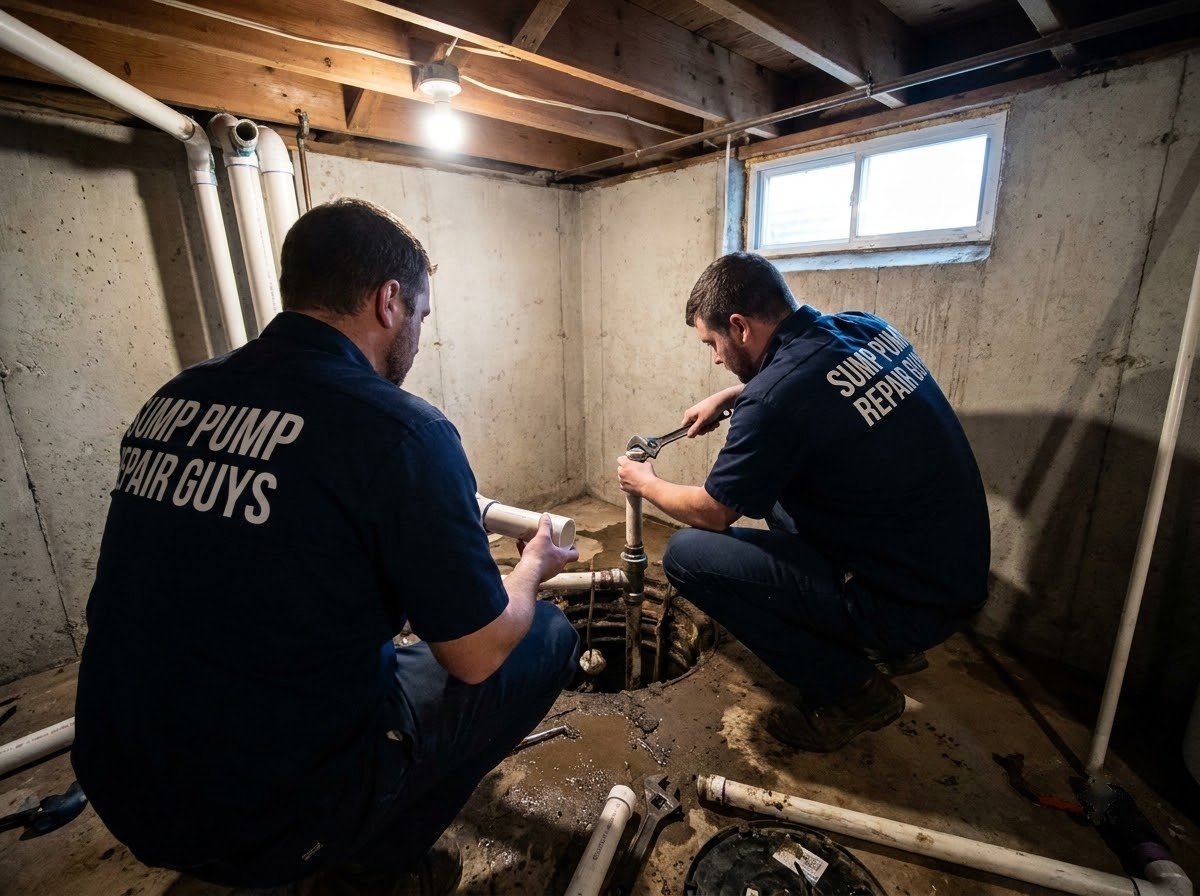
Why a Columbus pump wears out before its rated life
Three local conditions stack on top of each other here, and all three land on the same piece of equipment.
The soil holds water against your wall. Columbus sits on glacially deposited Brookston, Crosby and Patton clay loam, classified by the USDA as poorly to very poorly drained. On flat glacial terrain with clay underneath, a perched water table can form after one heavy spring storm and sit there for days, building hydrostatic pressure against the foundation. Your pump is clearing water on ordinary Tuesdays, not just during storms.
The city is built around four waterways. The Scioto runs north to south through Columbus and is joined near downtown by the Olentangy, with Big Walnut Creek east and Alum Creek southeast. Griggs and O’Shaughnessy dams plus the Scioto Greenways levee work have cut downtown risk since the 1913 flood, but intense urban rainfall still overwhelms drainage, and river corridor properties carry a genuinely higher water table year round.
Winter attacks the one part nobody inspects. The discharge line is outside, above grade and forgotten. A December to March freeze cycle turns a poorly pitched line into a solid plug of ice. The pump keeps running, the thermal overload trips, and the fault surfaces in March when the melt arrives and the pit needs it most.
There is a fourth factor specific to this city. Columbus has a deep stock of pre-1940 housing built long before sump systems were standard, so a large share of pits here were cut in decades later, often smaller and shallower than they should be. An undersized basin makes the pump short-cycle, and short-cycling destroys switches and bearings faster than any storm does.
- Franklin County total, roughly 7.9 million dollars in payouts, and that only counts properties carrying federal flood insurance.
- Standard homeowner’s policies generally exclude flooding caused by a failed sump pump. Most Columbus basement water events are paid out of pocket.
- Columbus proper plus Bexley, Grandview Heights, Upper Arlington, Worthington and Whitehall.
- You approve the number first. No surprise line items when the invoice arrives.
- We fill the pit and watch a full cycle: activation, run, shutoff, and any backflow through the valve.
1,339 NFIP claims since 1978
Sump failures are not covered
Serving all of Franklin County
Priced before we start
Tested before we leave
Why Columbus homeowners call us instead of a waterproofing company
Most companies ranking for this in Columbus are basement waterproofing firms. Sump pumps are one line on a long service list. For us it is the whole business, and that changes what happens in your basement.
-
We are not selling you a system
A waterproofing company’s incentive is the larger job: interior drainage, wall membranes, full replacement. Ours is the pump. When the answer is a cheap check valve, we say so, because that is the entire service we offer.
-
We fix the cause, not the symptom
A new pump dropped into an undersized pit with a failed valve dies the same way the last one did. We correct the fault around the pump so the repair survives a Columbus winter.
-
Answered at 2am
Pumps fail during storms, at night, and while you are away. Our lines stay open all night and all weekend, and someone picks up. Basements do not flood during business hours.
-
Priced before we start
You get a written number after the diagnosis and approve it before any work begins. No surprise line items when the invoice arrives.
-
Licensed and insured
Every technician who enters your home is properly licensed, insured and background checked. You can ask for the paperwork at the door.
-
We stand behind it
If the same fault comes back after we have worked on it, we come back and sort it out.
Sump pump repair services in Columbus
Every part of the system, not just the pump
Most Columbus sump pump problems are component faults. We work on the whole system so the repair actually holds: the pit, the switch, the valve, the motor and the line that carries the water away.
- 01
Sump pump diagnostics
A manual lift test separates a switch failure from a motor failure in under a minute. We identify the exact fault and its price before quoting anything, so you are not paying replacement rates for a parts-level problem.
- 02
Float switch repair and adjustment
The most common failure point on any pump. We free jammed floats, replace failed switches, and set the trip heights so the on and off points do not overlap and start the pump short-cycling.
- 03
Check valve replacement
A failed valve lets the discharge column fall straight back into the pit, refilling it seconds after shutoff. On Columbus duty cycles that doubles the workload and kills the motor early. Cheap part, big difference.
- 04
Motor repair
Humming with no flow, tripped thermal overloads, failing bearings. We test the motor under load and tell you honestly whether a repair is worth it or whether the unit has been shortened past the point of value.
- 05
Impeller repair
Grinding and rattling usually mean debris in the vortex impeller or clearances worn open by Central Ohio grit. We open the unit, clear the obstruction and check whether the wear has already cost the pump its output.
- 06
Frozen discharge line repair
The signature Columbus winter failure. We thaw and clear the line, then correct the pitch and the termination point so it drains fully between cycles instead of freezing again in January.
- 07
Sump pit cleaning
Central Ohio groundwater carries silt and iron ochre. It settles in the basin, blocks the intake screen and grinds through the switch. Sediment is the single biggest lifespan killer in a Franklin County sump system.
- 08
Pit and basin repair
Retrofitted pits in older Columbus homes are frequently too small for the inflow. A cracked or undersized basin makes every pump that goes into it fail early. We repair the pit and correct the sizing.
- 09
Discharge line rerouting
Moving the outlet far enough from the foundation that the water you pumped out does not walk straight back in. On clay, discharge placement matters more than it does on sandy ground.
- 10
Backup system service
Deep cycle batteries lose capacity quietly over three to five years and fail during the outage they were bought for. We load test the battery, service the backup pump and confirm the changeover actually triggers.
- 11
High water alarm service
An alarm that never sounds is worse than no alarm, because you are relying on it. We test the sensor, the sounder and the trigger height, and replace units that have corroded in the pit.
- 12
Emergency service
Water already on the floor, alarm sounding, pump silent. Same day and after hours response across Columbus. We get the system back in service first and have the longer conversation afterwards.
What your pump is telling you
Most Columbus companies read these as time for a new pump. Four of the six below are parts-level repairs.
-
01
Silent pump, rising pit
Call now
Check the breaker and the plug first, then lift the float by hand. If it runs, the switch is the fault and not the motor. On Columbus clay the basin refills fast, so this is the one symptom that does not wait until morning.
-
02
High water alarm sounding
Call now
Inflow has overtaken output, which means something upstream already failed: the switch, the valve, the discharge line or the pump. The alarm is the last warning before water reaches the floor, and silencing it buys you nothing.
-
03
Running non-stop in dry weather
Usually a float stuck raised or a failed check valve dropping the discharge column back into the pit. In Franklinton and the river corridors it can also be a genuinely high water table. The first two are parts-level fixes; only the third involves a different pump.
-
04
Cycling on and off every few seconds
Short-cycling, and in older Columbus homes a retrofitted basin too small for the inflow is often the cause, alongside a failed check valve or trip points set so close they overlap. A bigger pump makes this worse, because it empties the pit even faster.
-
05
Humming with no water moving
Jammed impeller, seized bearings, or a completely blocked or frozen discharge line. Switch it off now. Clearing the impeller or the line is often a same-visit fix, but another hour of humming turns it into a replacement.
-
06
Nothing wrong, pump is nine years old
Nothing yet, and that is the point. Columbus duty cycles are long, and a pump past seven to ten years is on borrowed time. Replace at that age or when a repair estimate reaches about half the cost of a new unit installed.
-
07
The discharge line is frozen
Unplug the pump. It is pushing against a solid plug of ice and will trip the thermal cutout or burn out. Thawing is not the fix because it refreezes next month. Pitch, diameter above grade and termination point all need correcting.
-
08
Your backup has never been load tested
Central Ohio storm outages and peak pump demand arrive in the same hour. A battery that tested fine two seasons ago may have almost nothing left. If you have never load tested yours, you do not currently know whether you have a backup.
-
09
March is coming
Frozen ground thaws, clay re-saturates and the pit runs almost continuously. This is when weak pumps die and when every technician in Franklin County is booked. An inspection in autumn costs a fraction of an emergency call in March.
What happens when you call
Five steps, the same on every Columbus job. No sales visit, no waiting days for a number.
- 1
Check the setup
Pit, pump, float switch, check valve and discharge line. On older Columbus homes we also check whether the basin was ever sized for the house or just cut in later.
- 2
Test under water
We fill the basin and watch a real cycle: activation height, run, shutoff, and whether anything comes back through the valve.
- 3
Name the fault
A manual lift test separates switch from motor. You get told what failed and why, in plain terms, not just that the pump is bad.
- 4
Price it, then repair
Written number before anything is touched. Once you approve it we complete the repair and check where the discharge puts the water, because on Franklin County clay that matters.
- 5
Test again and hand it over
Final full-cycle test, then we show you how to check it yourself and what to watch for before the next melt.
Columbus neighborhoods we cover
Housing stock changes the failure pattern. A German Village brick cottage from the 1850s does not fail the way a 1990s Hilliard build does. Pre-1900 areas usually have retrofitted, undersized pits that short-cycle. Bungalow belts like Clintonville and Bexley have discharge runs extended piecemeal over decades, adding friction lift the pump was never sized for. River corridor properties in Franklinton and the Bottoms fight a genuinely high water table. Newer suburbs are hitting eight to twelve years on their original pumps all at once.
- German Village
- Clintonville
- Franklinton
- Olde Towne East
- Victorian Village
- Italian Village
- Short North
- Hilltop
- Linden
- Bexley
- Grandview Heights
- Upper Arlington
- Worthington
- University District
- King-Lincoln
- Merion Village
- Southern Orchards
- Whitehall
- Downtown
- Arena District
ZIP codes we service in Columbus
Same-day coverage across the city and the surrounding Franklin County suburbs.
- 43085
- 43201
- 43202
- 43203
- 43204
- 43205
- 43206
- 43207
- 43209
- 43210
- 43211
- 43212
- 43213
- 43214
- 43215
- 43219
- 43220
- 43221
- 43222
- 43223
- 43224
- 43227
- 43228
- 43229
- 43231
- 43232
- 43235
Not listed? We cover all of Franklin County. Call and we will confirm in under a minute.
Columbus sump pump questions
The things Franklin County homeowners ask us most often, answered properly instead of with a sales line. If yours is not here, give us a call and we will talk it through.
Why do sump pumps fail so often in Columbus?
Duty cycle. Columbus sits on Brookston and Crosby clay loam that the USDA classes as poorly to very poorly drained, so rainwater does not soak away. It saturates, forms a perched water table and sits against the foundation, which means the pump clears water on ordinary days, not just during storms.
A pump rated for seven to ten years of normal service reaches that mileage faster here. Add the December to March freeze attacking the discharge line and you have a system tested year round.
Do I need a bigger pump if mine cannot keep up?
Usually not, and this is the most expensive mistake Columbus homeowners get sold. A pump that cannot keep up is often fighting a failed check valve, a partly blocked discharge line, or a basin too small for the inflow. A larger pump fixes none of those.
Oversizing into a small pit is actively harmful: the pump empties the basin faster than it refills, short-cycles, and destroys its own switch. Sizing depends on pit diameter, total lift and measured inflow, and horizontal pipe adds roughly one foot of effective lift for every ten feet of run.
My discharge line froze. What should I do?
Unplug the pump first. A pump running against a frozen line is pushing on a solid plug and will trip its thermal cutout, or burn out if the cutout has already failed.
Thawing is not the fix, because it refreezes next month. The correction is pitch so the line drains fully between cycles, a larger diameter section above grade, and a termination point where meltwater does not pool and refreeze.
My pump runs constantly even when it has not rained. Why?
A float stuck raised, a failed check valve dropping discharged water back into the pit, or a genuinely high water table, which on Columbus clay is normal in spring and common year round near the Scioto and Olentangy.
A manual lift test and a backflow check separate the three in a few minutes, and only one of them means you need a different pump.
How do I test my sump pump myself?
Pour several gallons of water slowly into the basin and watch a full cycle. The float should rise, the pump should start, the water should clear, and the pump should shut off on its own.
Then keep watching for thirty seconds. Water flowing back into the pit means the check valve is failing. If the pump does not start at all, lift the float by hand: if it runs then, the switch is the problem, not the motor. In Columbus, test in autumn before the freeze and again in early March.
Should I repair or replace?
Replace when the pump is past seven to ten years old, or when the repair estimate reaches about half the cost of a new unit installed. Below that line, repair usually wins.
A four year old cast iron pump with a dead float switch is worth repairing. A nine year old thermoplastic pump with a seized impeller is not. We show you which side of the line yours sits on and let you decide.
Does homeowners insurance cover a flooded basement in Columbus?
Usually not. Standard policies generally exclude groundwater intrusion and flooding caused by sump pump failure, and coverage for that event is sold as a separate rider or endorsement.
Franklin County has recorded roughly 1,339 NFIP flood claims since 1978 totalling about 7.9 million dollars, but those are federal flood policies and most Columbus basements are not on one. Check your policy language before you need it.
How often should the pit be cleaned in Central Ohio?
Once a year, and more often if your groundwater carries heavy silt or iron ochre, which is common across Franklin County. Sediment grinds mechanical switches, jams impellers and narrows the float travel path until the switch stops working reliably.
Cleaning a basin is one of the cheapest things you can do for a sump system. Replacing a pump that died from grit is not.
The breaker trips when the pump runs. Is that serious?
Yes. A pump drawing enough current to trip a breaker has an electrical fault, a seized motor, or a jammed impeller stalling the motor. That is a fire risk, not a nuisance.
Leave the breaker off and call rather than resetting it repeatedly. Every reset feeds current into a fault that is already failing.
When is the best time to book in Columbus?
September to November. Low demand, low water table, technicians available. Basin cleaning, check valve replacement, discharge repitching and battery load testing all belong in that window, before the freeze locks the line.
March to May is the opposite: peak load, peak failures, and every technician in Franklin County booked solid.
How quickly can someone come out?
Same day across most of Columbus, and after hours for emergencies where water is already coming in. Diagnosis takes thirty to sixty minutes, and a parts-level repair such as a float switch or check valve is generally completed in the same visit.
The exception is the March and April melt. Book an inspection in autumn and you skip that queue entirely.
Do not wait for the March melt to find out whether your pump works.
Emergency repair, diagnostics, frozen line clearing or a full-system inspection before the freeze. Serving Columbus and all of Franklin County.