
24/7 Emergency Service in Cuyahoga County
Sump Pump Repair in Cleveland, OH
Built for Combined Sewers and Lake Effect Winters
Cleveland runs century-old combined sewers under an old housing stock, beside a lake that dumps snow for four months. Your pump fights conditions most of the country never sees. We repair the fault instead of selling you a new pump.
Answered 24 hours. Free quote over the phone.
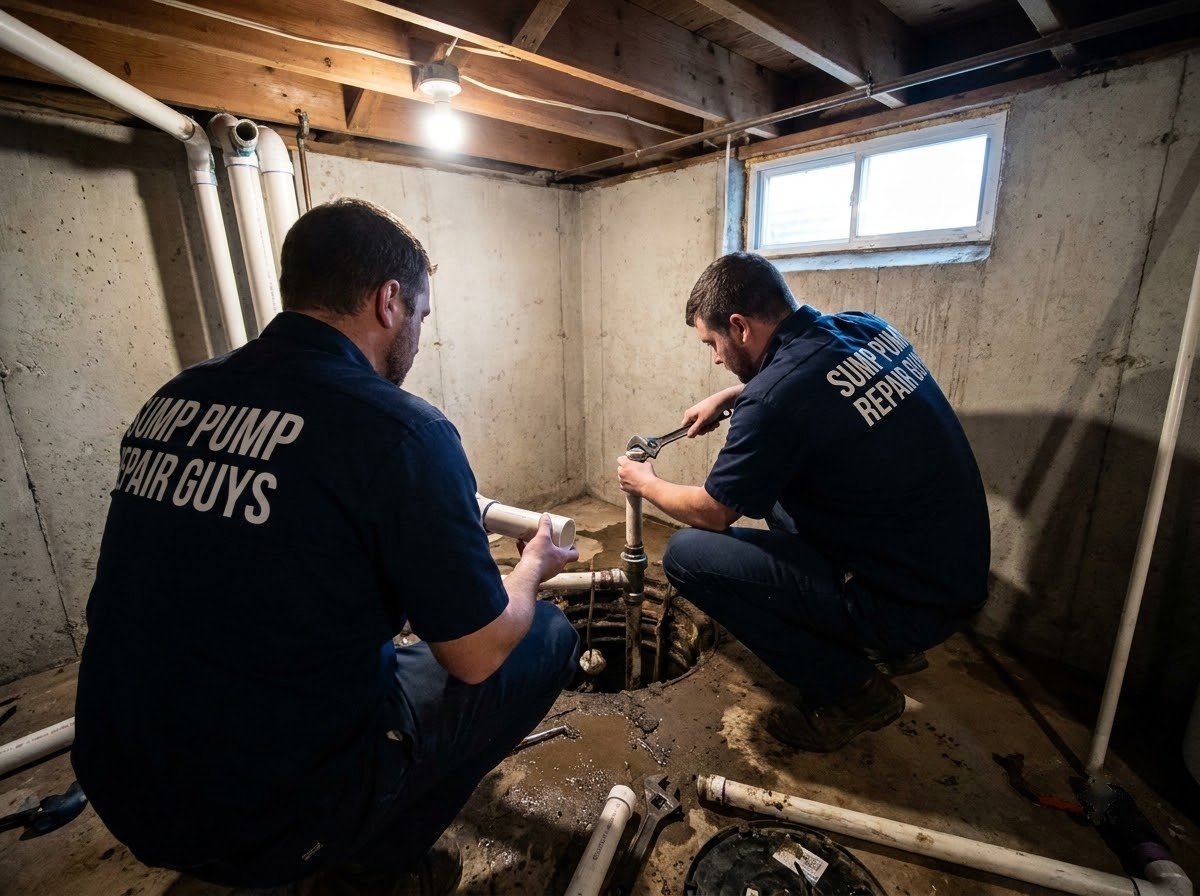
Why Cleveland basements are a different problem
Cleveland does not have a rain problem. It has an infrastructure problem, an age problem and a snow problem, and all three end up in the same pit.
Roughly 80 square miles of the sewer system is combined. Those pipes were designed and built in the late nineteenth century to carry sewage, industrial waste and stormwater together. When heavy rain arrives, the combined sewer fills faster than it can drain, and pressure has to go somewhere. The Northeast Ohio Regional Sewer District operates 126 permitted combined sewer outfalls precisely so the surcharge goes to a waterway rather than back into your basement. If the relief points cannot keep up, the next weakest link is your floor drain and your sump pit.
The sewers themselves leak inward. As pipes age, cracks let groundwater seep in, a process the district calls infiltration. On top of that, improperly connected downspouts and storm lines feed rainwater straight into sanitary sewers. Both push the whole system toward surcharge faster during a storm, and both raise the groundwater your pump is clearing on ordinary days.
Snowmelt is the real Cleveland flood risk. Lake Erie drives lake effect snow that accumulates for months. When a warm front and heavy rain land on a deep snowpack, the ground is still frozen, the meltwater cannot soak in, and it arrives all at once. That combination floods more Cleveland basements than any single summer storm does.
Add the age of the housing. Cleveland has one of the oldest residential stocks in the country, and a large share of those basements had sump systems retrofitted in decades after the house was built. Undersized, shallow pits make a pump short-cycle, and short-cycling destroys switches and bearings faster than any storm.
- Permitted relief points across the Cleveland system. They exist so surcharge reaches a waterway instead of backing into basements.
- Combined sewage reaching Lake Erie in the 1970s. Halved by 2000, and Project Clean Lake targets a further 4 billion gallon reduction by 2036.
- Standard homeowner’s policies generally exclude flooding caused by a failed sump pump. Most Cleveland basement water events are paid out of pocket.
- You approve the number first. No surprise line items when the invoice arrives.
- We fill the pit and watch a full cycle: activation, run, shutoff, and any backflow through the valve.
126 combined sewer outfalls
9 billion gallons a year, once
Sump failures are not covered
Priced before we start
Tested before we leave
Why Cleveland homeowners call us instead of a waterproofing company
Most companies ranking for this in Cleveland are basement waterproofing firms. Sump pumps are one line on a long service list. For us it is the whole business, and that changes what happens in your basement.
-
We are not selling you a system
A waterproofing company’s incentive is the larger job: interior drainage, wall membranes, full replacement. Ours is the pump. When the answer is a cheap check valve, we say so, because that is the entire service we offer.
-
We know what a surcharge looks like
On a combined sewer, water can arrive from the drain as well as the pit. A pump that seems undersized is often fighting a backflow problem instead, and that is a different fix with a very different price.
-
Answered at 2am
Pumps fail during storms, at night, and while you are away. Our lines stay open all night and all weekend, and someone picks up. Basements do not flood during business hours.
-
Priced before we start
You get a written number after the diagnosis and approve it before any work begins. No surprise line items when the invoice arrives.
-
Licensed and insured
Every technician who enters your home is properly licensed, insured and background checked. You can ask for the paperwork at the door.
-
We stand behind it
If the same fault comes back after we have worked on it, we come back and sort it out.
Sump pump repair services in Cleveland
Every part of the system, not just the pump
Most Cleveland sump pump problems are component faults. We work on the whole system so the repair holds: the pit, the switch, the valve, the motor and the line that carries the water away.
- 01
Sump pump diagnostics
A manual lift test separates a switch failure from a motor failure in under a minute. We identify the exact fault and its price before quoting anything, so you are not paying replacement rates for a parts-level problem.
- 02
Float switch repair and adjustment
The most common failure point on any pump. We free jammed floats, replace failed switches, and set trip heights so the on and off points do not overlap and start the pump short-cycling.
- 03
Check valve replacement
A failed valve lets the discharge column fall straight back into the pit. On a combined sewer system where surcharge is already a risk, backflow into the basin is the last thing you want. Cheap part, big difference.
- 04
Motor repair
Humming with no flow, tripped thermal overloads, failing bearings. We test the motor under load and tell you honestly whether a repair is worth it or whether the unit has been shortened past the point of value.
- 05
Impeller repair
Grinding and rattling usually mean debris in the vortex impeller or clearances worn open by grit. We open the unit, clear the obstruction and check whether the wear has already cost the pump its output.
- 06
Frozen discharge line repair
Lake effect winters keep a discharge line frozen for weeks, not days. We thaw and clear it, then correct pitch and termination so it drains fully between cycles instead of icing over again in January.
- 07
Sump pit cleaning
Silt and iron ochre settle in the basin, block the intake screen and grind through the switch. Sediment is the single biggest lifespan killer in a Cuyahoga County sump system.
- 08
Pit and basin repair
Cleveland has one of the oldest housing stocks in the country, and most pits here were retrofitted long after the house was built. Undersized basins make every pump that goes into them fail early.
- 09
Discharge line rerouting
Moving the outlet far enough from the foundation that the water you pumped out does not walk straight back in, and away from a storm connection that feeds it back into the combined system.
- 10
Backup system service
Deep cycle batteries lose capacity quietly over three to five years and fail during the outage they were bought for. We load test the battery, service the backup pump and confirm the changeover triggers.
- 11
High water alarm service
An alarm that never sounds is worse than no alarm, because you are relying on it. We test the sensor, the sounder and the trigger height, and replace units that have corroded in the pit.
- 12
Emergency service
Water already on the floor, alarm sounding, pump silent. Same day and after hours response across Cleveland. We get the system back in service first and have the longer conversation afterwards.
What your pump is telling you
Most Cleveland companies read these as time for a new pump. Several are parts-level repairs, and two are not a pump problem at all.
-
01
Silent pump, rising pit
Call now
Check the breaker and the plug first, then lift the float by hand. If it runs, the switch is the fault and not the motor. During a melt the basin refills fast, so this is the one symptom that does not wait until morning.
-
02
Water coming up the floor drain, not the pit
Call now
That is a sewer surcharge, not a pump failure, and it is specific to combined sewer neighborhoods. A bigger pump will not help. Backflow prevention and a working check valve are what matter here, and we will tell you that rather than sell you a pump.
-
03
High water alarm sounding
Call now
Inflow has overtaken output, which means something upstream already failed: the switch, the valve, the discharge line or the pump. The alarm is the last warning before water reaches the floor, and silencing it buys you nothing.
-
04
Running non-stop in dry weather
Usually a float stuck raised or a failed check valve dropping the discharge column back into the pit. Near the Cuyahoga Valley and the Flats it can also be a genuinely high water table. The first two are parts-level fixes; only the third involves a different pump.
-
05
Cycling on and off every few seconds
Short-cycling, and in Cleveland’s older housing a retrofitted basin too small for the inflow is often the cause, alongside a failed check valve or trip points set so close they overlap. A bigger pump makes this worse, because it empties the pit even faster.
-
06
Humming with no water moving
Jammed impeller, seized bearings, or a completely blocked or frozen discharge line. Switch it off now. Clearing the impeller or the line is often a same-visit fix, but another hour of humming turns it into a replacement.
-
07
The discharge line is frozen
Unplug the pump. It is pushing against a solid plug of ice and will trip the thermal cutout or burn out. In a lake effect winter this can persist for weeks, so thawing alone is not the fix. Pitch, diameter above grade and termination point all need correcting.
-
08
Your backup has never been load tested
Northeast Ohio storm outages and peak pump demand arrive in the same hour. A battery that tested fine two seasons ago may have almost nothing left. If you have never load tested yours, you do not currently know whether you have a backup.
-
09
A warm front is forecast over deep snow
Melting snow plus heavy rain on frozen ground is the Cleveland flood pattern. The water has nowhere to soak in and arrives all at once. If your pump has been marginal all winter, this is the week it fails.
What happens when you call
Five steps, the same on every Cleveland job. No sales visit, no waiting days for a number.
- 1
Check the setup
Pit, pump, float switch, check valve and discharge line. In older Cleveland homes we also check whether the basin was ever sized for the house or just cut in later, and where the discharge actually terminates.
- 2
Test under water
We fill the basin and watch a real cycle: activation height, run, shutoff, and whether anything comes back through the valve.
- 3
Name the fault
A manual lift test separates switch from motor. If the water is arriving from the drain rather than the pit, we tell you that too, because that is a sewer issue and not a pump issue.
- 4
Price it, then repair
Written number before anything is touched. Once you approve it we complete the repair and check where the discharge puts the water, which matters more here than in most cities.
- 5
Test again and hand it over
Final full-cycle test, then we show you how to check it yourself and what to watch for before the next thaw.
Cleveland neighborhoods we cover
Housing stock and sewer type change the failure pattern. Ohio City, Tremont and Detroit-Shoreway sit on the oldest combined lines in the city, where surcharge and backflow are the real risk. Old Brooklyn and West Park have deeper post-war stock with correctly sized pits now hitting end of life. Cuyahoga Valley and the Flats fight a genuinely high water table. Pick your area, or call and we will place you.
- Ohio City
- Tremont
- Detroit-Shoreway
- Old Brooklyn
- Slavic Village
- West Park
- Kamm’s Corners
- Edgewater
- Clark-Fulton
- Stockyards
- Jefferson
- Collinwood
- Glenville
- Hough
- Fairfax
- Buckeye-Shaker
- Union-Miles
- Mount Pleasant
- University Circle
- Cuyahoga Valley
- Euclid-Green
- Downtown
ZIP codes we service in Cleveland
Same-day coverage across the city and the inner-ring suburbs.
- 44102
- 44103
- 44104
- 44105
- 44106
- 44107
- 44108
- 44109
- 44110
- 44111
- 44112
- 44113
- 44114
- 44115
- 44118
- 44119
- 44120
- 44121
- 44125
- 44127
- 44128
- 44129
- 44134
- 44135
- 44144
Not listed? We cover all of Cuyahoga County. Call and we will confirm in under a minute.
Cleveland sump pump questions
The things Cuyahoga County homeowners ask us most often, answered properly instead of with a sales line. If yours is not here, give us a call and we will talk it through.
Water came up my basement floor drain, not the sump pit. Is my pump broken?
Probably not. Roughly 80 square miles of Cleveland’s sewer system is combined, meaning one pipe carries sewage, industrial waste and stormwater together. During heavy rain those pipes surcharge, and the pressure can push water back up a floor drain. Your sump pump has nothing to do with that path.
This is the single most common reason Cleveland homeowners get sold a bigger pump they did not need. Backflow prevention and a properly seated check valve are the relevant fixes, and we will say so rather than quote a pump.
Why do Cleveland basements flood during a thaw rather than a storm?
Lake effect snow off Lake Erie builds a deep snowpack over months. When a warm front and heavy rain arrive, the ground underneath is still frozen, so the meltwater cannot soak in. It runs straight to the lowest point available, all at once.
That combination puts more water into Cleveland basements than most summer storms do, and it is the reason a pump that coped fine all year fails in February.
Do I need a bigger pump if mine cannot keep up?
Usually not, and in Cleveland it is often the wrong diagnosis entirely. A pump that cannot keep up is frequently fighting a failed check valve, a partly blocked or frozen discharge line, a basin too small for the inflow, or a sewer surcharge that is not the pump’s job at all.
Oversizing into a small pit is actively harmful: the pump empties the basin faster than it refills, short-cycles, and destroys its own switch. Sizing depends on pit diameter, total lift and measured inflow, and horizontal pipe adds roughly one foot of effective lift for every ten feet of run.
My discharge line froze. What should I do?
Unplug the pump first. A pump running against a frozen line is pushing on a solid plug and will trip its thermal cutout, or burn out if the cutout has already failed.
In a lake effect winter the line can stay frozen for weeks, so thawing alone is not the fix. The correction is pitch so the line drains fully between cycles, a larger diameter section above grade, and a termination point where meltwater does not pool and refreeze.
Why is my pump running constantly when it has not rained?
A float stuck raised, a failed check valve dropping discharged water back into the pit, or a genuinely high water table. Cleveland’s aging sewers also leak inward, a process the sewer district calls infiltration, which raises groundwater in the surrounding soil.
A manual lift test and a backflow check separate the causes in a few minutes, and only one of them means you need a different pump.
How do I test my sump pump myself?
Pour several gallons of water slowly into the basin and watch a full cycle. The float should rise, the pump should start, the water should clear, and the pump should shut off on its own.
Then keep watching for thirty seconds. Water flowing back into the pit means the check valve is failing. If the pump does not start at all, lift the float by hand: if it runs then, the switch is the problem, not the motor. In Cleveland, test in autumn before the first freeze and again in late February before the thaw.
Should I repair or replace?
Replace when the pump is past seven to ten years old, or when the repair estimate reaches about half the cost of a new unit installed. Below that line, repair usually wins.
A four year old cast iron pump with a dead float switch is worth repairing. A nine year old thermoplastic pump with a seized impeller is not. We show you which side of the line yours sits on and let you decide.
Does homeowners insurance cover a flooded basement in Cleveland?
Usually not by default. Standard policies generally exclude groundwater intrusion and flooding caused by sump pump failure, and coverage for that event is sold as a separate rider or endorsement.
Sewer backup is often a separate endorsement again, which matters here given how much of the city sits on combined sewers. Check both before you need them rather than during a claim.
How often should the pit be cleaned?
Once a year, and more often if your groundwater carries heavy silt or iron ochre. Sediment grinds mechanical switches, jams impellers and narrows the float travel path until the switch stops working reliably.
Cleaning a basin is one of the cheapest things you can do for a sump system. Replacing a pump that died from grit is not.
When is the best time to book in Cleveland?
September through November. Low demand, technicians available, and crucially the discharge line is still workable before the freeze locks it. Basin cleaning, check valve replacement, discharge repitching and battery load testing all belong in that window.
February and March are the opposite: thaw season, peak failures, and every technician in Cuyahoga County booked.
Which Cleveland areas and ZIP codes do you cover?
All of Cleveland and the inner-ring suburbs across Cuyahoga County, including Ohio City, Tremont, Detroit-Shoreway, Old Brooklyn, Slavic Village, West Park, Kamm’s Corners, Edgewater, Clark-Fulton, Collinwood, Glenville, Hough, Fairfax, Buckeye-Shaker, University Circle and Downtown.
ZIP codes include 44102, 44103, 44104, 44105, 44106, 44107, 44108, 44109, 44110, 44111, 44112, 44113, 44114, 44115, 44118, 44119, 44120, 44121, 44125, 44127, 44128, 44129, 44134, 44135 and 44144. If yours is not listed, call anyway and we will confirm in under a minute.
How quickly can someone come out?
Same day across most of Cleveland, and after hours for emergencies where water is already coming in. Diagnosis takes thirty to sixty minutes, and a parts-level repair such as a float switch or check valve is generally completed in the same visit.
The exception is a thaw event, when calls across the county spike at once. Book an inspection in autumn and you skip that queue entirely.
Do not wait for the thaw to find out whether your pump works.
Emergency repair, diagnostics, frozen line clearing or a full-system inspection before the freeze. Serving Cleveland and all of Cuyahoga County.