
24/7 Emergency Service in Cuyahoga County
Sump Pump Repair in Parma, OH
Your Whole Street Was Built at Once. So Was Its Plumbing.
Parma went up in a post-war rush, which means identical houses, identical basements and pumps that reach the end of their lives on the same schedule. If three neighbours have had water this year, that is not a coincidence.
Answered 24 hours. Free quote over the phone.
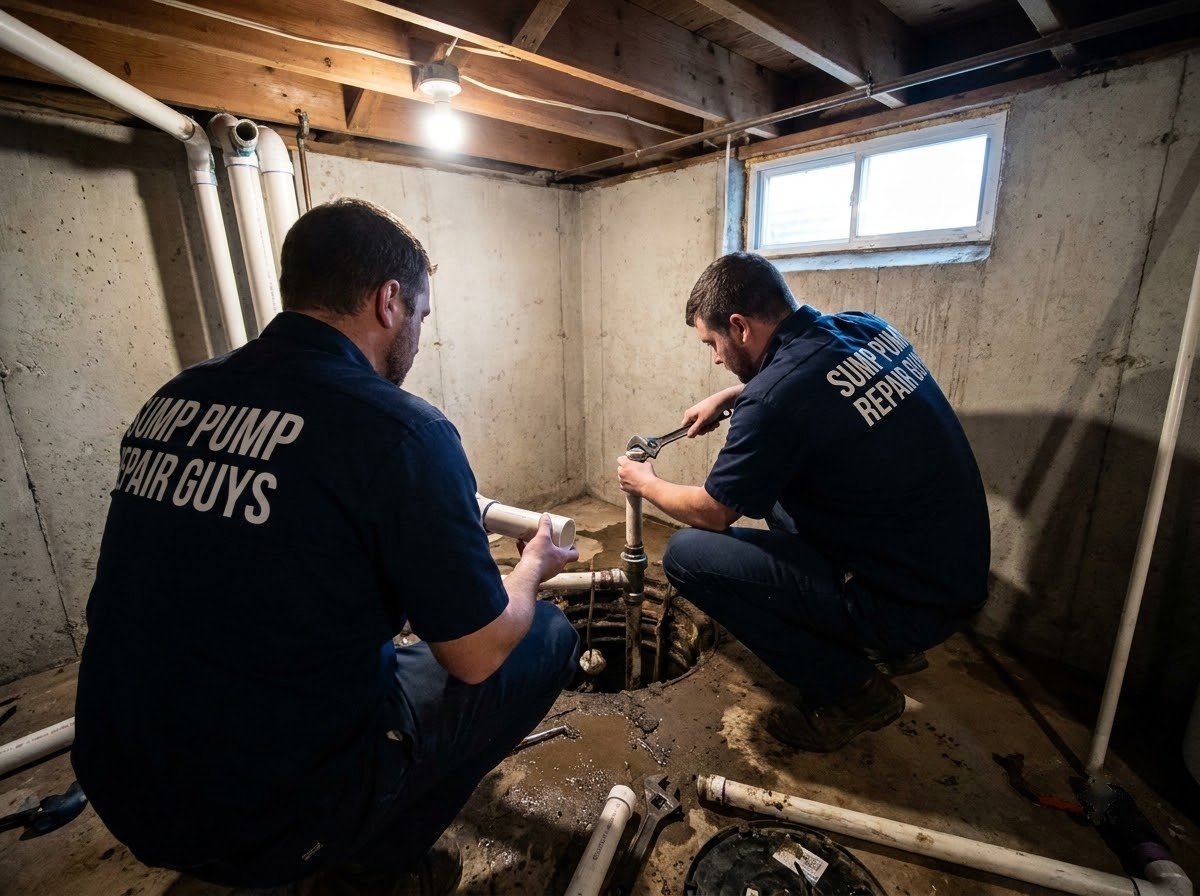
About Sump Pump Repair Guys in Parma
We repair sump pumps and nothing else. In Parma that focus pays off in an unusual way, because this city has a pattern most contractors never mention: failures here arrive in cohorts.
Parma is Cuyahoga County’s largest suburb south of Cleveland, and most of it was built in a compressed post-war boom through the 1950s and 1960s. Whole streets went up within a couple of years of each other, to the same plans, with the same basement depth, the same drain tile, the same discharge routing and, when sump systems were fitted, the same size pit. Everything on the street has aged in parallel ever since.
That is why Parma calls cluster. When one house on a street has a pit problem, the houses either side are usually two or three years behind it, not because of bad luck but because they are the same installation of the same age under the same water table. We use that. When we work on a Parma street we already have a strong idea of the basin size, the likely discharge run and the failure that is coming next.
The ground reinforces it. Parma sits on dense clay that expands when saturated and contracts when dry, cycling through that every Ohio season and building hydrostatic pressure against foundation walls that have been managing the movement since Eisenhower. Add snowbelt accumulation and a sudden spring melt and you get a suburb where the sump pump is doing real work most of the year.
So our first job on a Parma call is to work out whether we are looking at a fault in your system or the next scheduled failure of a 1950s design that has simply run out of road.
- Post-war housing means identical basements, identical pits and pumps that age together across a whole street.
- Clay soil expands and contracts with the seasons, holding water against walls and driving hydrostatic pressure.
- Single pipes carrying sanitary waste and stormwater together. During heavy rain they surcharge into the lowest point, which is your floor drain.
- You approve the number first. No surprise line items when the invoice arrives.
- We fill the pit and watch a full cycle: activation, run, shutoff, and any backflow through the valve.
Built in the 1950s and 1960s
Dense clay, poor drainage
Combination sewers in older areas
Priced before we start
Tested before we leave
Sump pump repair services in Parma
Sump pump repairs we handle in Parma
Post-war systems fail in predictable places. We work on the whole system so the repair holds: the pit, the switch, the valve, the motor and the line that carries the water away.
- 01
Sump pump diagnostics
A manual lift test separates a switch failure from a motor failure in under a minute. We identify the exact fault and its price before quoting anything, so you are not paying replacement rates for a parts-level problem.
- 02
Water source diagnosis
Pit, floor drain or window well. In Parma’s older combination sewer areas this is the question that decides everything, because surcharge at the drain is not something a pump can fix.
- 03
Float switch repair and adjustment
The most common failure point on any pump. We free jammed floats, replace failed switches, and set trip heights so the on and off points do not overlap in a shallow post-war basin.
- 04
Check valve replacement
A failed valve lets the discharge column fall straight back into the pit. In a small original basin that is enough to put the pump into permanent short-cycling.
- 05
Motor repair
Humming with no flow, tripped thermal overloads, failing bearings. We test the motor under load and tell you honestly whether a repair is worth it or whether the unit has been shortened past the point of value.
- 06
Impeller repair
Grinding and rattling usually mean debris in the vortex impeller or clearances worn open by grit. Original drain tile sheds a lot of fines into the basin over seventy years.
- 07
Sump pit cleaning
Silt and iron ochre settle in the basin, block the intake screen and grind through the switch. On a pit that has never been emptied, this is often the single highest-value job we do.
- 08
Pit and basin sizing
Post-war basins are frequently smaller than modern inflow demands. We measure pit volume against real inflow before anyone recommends more horsepower, because a bigger pump in a small pit makes things worse.
- 09
Discharge line repair and rerouting
Seventy-year-old discharge runs get extended, crushed by settling clay, or terminate where meltwater carries the water straight back. We trace the line and correct where it puts the water.
- 10
Frozen discharge line repair
Snowbelt winters ice a badly pitched line solid. We thaw and clear it, then correct the pitch and termination so it drains fully between cycles instead of freezing again next month.
- 11
Backup system service
Deep cycle batteries lose capacity quietly over three to five years and fail during the outage they were bought for. We load test the battery, service the backup pump and confirm the changeover triggers.
- 12
Emergency service
Water already on the floor, alarm sounding, pump silent. Same day and after hours response across Parma. We get the system back in service first and have the longer conversation afterwards.
Why Parma homeowners call us first
Most companies competing for this work in Parma are waterproofing and foundation contractors. Sump pumps are one line on a long list, and the bigger job is always the more profitable one.
-
We know your street’s system
Parma streets were built to repeating plans. We have usually seen your exact basin size, drain tile layout and discharge routing on the same road, which shortens diagnosis and stops us guessing at your expense.
-
We will tell you it is not the pump
In the older combination sewer streets, water arriving up the floor drain is a surcharge, not a pump failure. Selling you equipment for that would be useless, so we say so instead.
-
Answered at 2am
Pumps fail during storms, at night, and while you are away. Our lines stay open all night and all weekend, and someone picks up. Basements do not flood during business hours.
-
Priced before we start
You get a written number after the diagnosis and approve it before any work begins. No surprise line items when the invoice arrives.
-
Licensed and insured
Every technician who enters your home is properly licensed, insured and background checked. You can ask for the paperwork at the door.
-
We stand behind it
If the same fault comes back after we have worked on it, we come back and sort it out.
When to call a sump pump technician in Parma
Several of these are parts-level repairs. Two are not a pump problem at all, and one is a warning about the street rather than the house.
-
01
Silent pump, rising pit
Call now
Check the breaker and the plug first, then lift the float by hand. If it runs, the switch is the fault and not the motor. On saturated clay the basin refills steadily, so this one does not wait until morning.
-
02
Water rose at the floor drain, then drained away
Sewer, not pump
Rapid rise during the storm followed by a fairly quick retreat is the signature of a combination sewer surcharge. Parma’s older streets carry sanitary waste and stormwater in a single pipe, and the systems are interconnected with neighbouring communities, so a backup elsewhere can reach you. Report it and document it before anyone sells you equipment.
-
03
High water alarm sounding
Call now
Inflow has overtaken output, which means something upstream already failed: the switch, the valve, the discharge line or the pump. The alarm is the last warning before water reaches the floor, and silencing it buys you nothing.
-
04
Neighbours on your street have had water this year
The Parma-specific signal. Identical houses of identical age fail on similar timelines. If two or three homes on your road have needed pump work recently, book an inspection rather than waiting your turn. It costs a fraction of an emergency call.
-
05
Cycling on and off every few seconds
Short-cycling, and in a small post-war basin it is the standard fault. Usually a failed check valve dropping the discharge column back in, a basin too small for modern inflow, or float trip points set so close they overlap. A bigger pump makes it worse.
-
06
Humming with no water moving
Jammed impeller, seized bearings, or a completely blocked or frozen discharge line. Switch it off now. Clearing the impeller or the line is often a same-visit fix, but another hour of humming turns it into a replacement.
-
07
The discharge line is frozen
Unplug the pump. It is pushing against a solid plug of ice and will trip the thermal cutout or burn out. Snowbelt accumulation keeps lines frozen for weeks, so thawing alone is not the fix. Pitch and termination both need correcting.
-
08
Standing water after the melt, not the storm
Heavy lake effect snow sits on frozen clay all winter, then releases at once in spring. If your basement problem is a March problem rather than a July one, the melt is your real risk window and autumn is when to prepare for it.
-
09
You have never touched the original pit
Some Parma basins have been collecting silt since the house was built. Grit wears out mechanical switches faster than anything else, jams impellers and opens up clearances. If nobody has ever emptied yours, that is the cheapest useful job available to you.
How a Parma service call runs
Five steps, the same every time. No sales visit, no waiting days for a number.
- 1
Find the water source first
Pit, floor drain or window well. In the older combination sewer streets those are three different problems, and only one of them is a pump.
- 2
Check the setup against the era
Pit, pump, float switch, check valve and discharge line. We compare the basin volume against what a post-war plan typically provided and what your inflow actually demands now.
- 3
Test under water
We fill the basin and watch a real cycle: activation height, run, shutoff, and whether anything comes back through the valve.
- 4
Price it, then repair
Written number before anything is touched. If the honest answer is that this is a sewer issue rather than a pump issue, we say so and you pay nothing for a pump you do not need.
- 5
Test again and hand it over
Final full-cycle test, then we show you how to check it yourself and what to watch for before the next melt.
Parma ground and infrastructure
Why Parma basements fail in clusters
This suburb has a specific combination of build era, soil and drainage that produces the same problems on the same streets in the same years.
-
Build era
One boom, one design, one lifespan
Parma filled in during the post-war expansion, largely through the 1950s and 1960s. Ranches and split-levels went up street by street to repeating plans. Same basement depth, same drain tile, same discharge routing. Seventy years later they reach their limits together, which is why pump failures here arrive in waves rather than randomly.
-
Soil
Clay that expands and contracts every year
Dense clay-heavy soil holds water rather than draining it. It swells when saturated and shrinks when dry, and a foundation that has been absorbing that cycle since the 1950s ends up with the cracks and cove-joint gaps that let water reach your slab. The pump is downstream of all of that.
-
Watersheds
West Creek, Baldwin Creek and Big Creek
Parma sits across several small watersheds, and the lower-lying ground near those creeks stays saturated for extended periods after heavy rain. The Northeast Ohio Regional Sewer District has funded stormwater basin work in the West Creek and Baldwin Creek watersheds specifically to reduce street and basement flooding, which tells you how established the problem is.
-
Sewers
Combination lines in the older streets
Many of Parma’s older neighbourhoods carry sanitary waste and stormwater in a single pipe. During heavy rain those lines can be overwhelmed and water backs up into the lowest point in the house, which is the basement floor drain. The city’s systems are also interconnected with surrounding communities, so an event elsewhere can arrive at your drain.
-
Snowbelt
The melt matters more than the storm
Parma sits in the Cuyahoga County snowbelt. Lake effect snow accumulates for months on ground that is already frozen, then releases quickly when a warm front arrives. Meltwater cannot soak into frozen clay, so it runs straight to the lowest opening available. For many Parma homes, March is the real test, not July.
-
What it means
Age is a prediction, not just a fact
If your pump, your pit and your discharge line are all original to a house built in 1958, they are not going to fail one at a time in a convenient order. The useful move is to inspect the system as a whole once, rather than replacing components reactively as each one gives out.
Areas we cover in Parma
Housing era and elevation change the problem street by street. Ridgewood and State Road carry the classic 1950s clay-soil basement. Homes near Pleasant Valley Road and the Big Creek Metro Parks sit lower and stay saturated longer after heavy rain. The surrounding suburbs share the same build era and the same failures.
- Ridgewood
- State Road
- Greenbriar
- Pleasant Valley
- Parma Circle
- West Creek
- Parma Heights
- Seven Hills
- Brooklyn
- Brooklyn Heights
- Old Brooklyn
- North Royalton
- Broadview Heights
- Middleburg Heights
- Brook Park
- Berea
- Independence
- Garfield Heights
- Strongsville
- Maple Heights
ZIP codes we service in Parma
Same-day coverage across Parma and the surrounding southwest Cuyahoga County suburbs.
Not listed? We cover all of Cuyahoga County. Call and we will confirm in under a minute.
Who to call for what in Parma
What is the city’s responsibility and what is yours
Parma splits basement water problems across several agencies, and calling the wrong one costs you days. This is the part almost no contractor explains.
-
Sanitary sewer
The county sanitary engineer handles house calls
If sewage or foul water is backing up, the Cuyahoga County Sanitary Engineer is the office that handles service calls for the sanitary system, with an after-hours emergency line outside business hours. Report it before you start cleaning up, because the record matters later.
-
Storm sewer
Catch basins go to the city service department
Problems with a storm sewer or a blocked catch basin on the street are handled by the Parma Service Department, with the Service Garage taking calls after hours and at weekends. A clogged street inlet during a storm is a genuine cause of water reaching foundations.
-
Your lateral
The private line is the homeowner’s
The sewer line from your house to the public main is your responsibility, not the city’s. A blocked or root-intruded private lateral is not covered by anyone else, and on seventy-year-old clay laterals root intrusion is common.
-
Ohio Plumbing Code
Sumps connect indirectly
Under the state plumbing code, sumps and sump pumps are permitted only where they are indirectly connected to the plumbing system. Direct connections into sanitary drainage are exactly what overloads combination lines during storms and pushes water back into basements.
-
Discharge
Where the water is allowed to go
Your discharge must terminate clear of the foundation, and it must not be directed onto a neighbouring property or into the public right-of-way. On flat clay lots that takes planning, because water released close in has nowhere to go but back down to your own footing.
-
Insurance
Two separate exclusions to check
Standard homeowner’s policies generally exclude groundwater intrusion and sump pump failure, and sewer backup is usually a separate endorsement again. In a suburb with combination sewers you want to know about both before a storm, not during a claim.
Parma sump pump questions, answered
The things Parma homeowners ask us most often, answered properly instead of with a sales line. If yours is not here, give us a call and we will talk it through.
Three houses on my street have had water. Should I worry?
Yes, and it is worth acting rather than waiting. Parma was built in a compressed post-war boom, so a street of identical houses has identical basements, identical pit sizes and pumps installed to the same spec. Everything has aged in parallel for seventy years.
When failures start appearing on a road they usually continue along it. An inspection now costs a fraction of an emergency call during a melt, and we can tell you where your system sits relative to the ones that have already failed.
Water came up my floor drain. Do I need a new sump pump?
Almost certainly not. Many of Parma’s older neighbourhoods have combination sewer lines carrying sanitary waste and stormwater in a single pipe. During heavy rain those lines can be overwhelmed and water backs up into the lowest point in the house, which is the basement floor drain. Your sump pump does not serve that pipe.
The tell is timing. Surcharge rises fast during the storm and retreats fairly quickly. Groundwater seeps slowly and lingers. Parma’s systems are also interconnected with neighbouring communities, so an event elsewhere can reach your drain.
Why does my pump short-cycle in a 1950s house?
Because the basin is probably smaller than your current inflow deserves. Post-war plans provided a pit sized for the drainage expectations of the day, and modern gutter volumes, added hardscape and seventy years of settled clay have changed the maths.
The other two causes are a failed check valve letting the discharge column fall back in, and float trip points set so close that the on and off heights overlap. All three are fixable, and none of them is fixed by fitting a bigger pump into the same small hole.
Do I need a bigger pump if mine cannot keep up?
Usually not, and in Parma it is frequently the wrong move. A pump that cannot keep up is often fighting a failed check valve, a blocked or crushed discharge line, an undersized original basin, or a sewer surcharge that is not the pump’s job.
Oversizing into a small pit is actively harmful: the pump empties the basin faster than it refills, short-cycles, and destroys its own switch. Sizing should follow pit volume, total lift and measured inflow.
My basement only floods in spring. Why?
Because Parma sits in the snowbelt and your real risk window is the melt rather than the storm. Lake effect snow accumulates for months on ground that is already frozen. When a warm front arrives, the meltwater cannot soak into frozen clay, so it moves across the surface and down to the lowest opening it can find.
That is why we push Parma inspections into autumn. A pump that has been marginal all winter fails in March, which is exactly when every technician in the county is already booked.
My pit has never been cleaned. Does that matter?
It matters more than most maintenance advice suggests. Original drain tile sheds fines into the basin continuously, and on a pit that has been collecting since the house was built there can be a substantial layer of silt at the bottom.
Grit is the fastest way to wear out a mechanical float switch, it jams vortex impellers, and it opens clearances so the pump moves less water than its rating. On an untouched Parma pit, cleaning is usually the highest-value job available.
How do I test my sump pump myself?
Pour several gallons of water slowly into the basin and watch a full cycle. The float should rise, the pump should start, the water should clear, and the pump should shut off on its own.
Then keep watching for thirty seconds. Water flowing back into the pit means the check valve is failing. If the pump does not start at all, lift the float by hand: if it runs then, the switch is the problem, not the motor. In Parma, test in autumn before the freeze and again in late February.
Should I repair or replace?
Replace when the pump is past seven to ten years old, or when the repair estimate reaches about half the cost of a new unit installed. Below that line, repair usually wins.
The Parma caveat is that a new pump dropped into an undersized original basin with a failed valve will fail the same way the last one did. If the system around the pump has never been corrected, replacing the pump alone buys you a few years at most.
Who do I call, the city or the county?
It depends on the water. Sanitary sewer backups are handled by the Cuyahoga County Sanitary Engineer, which takes service calls during business hours and has an after-hours emergency line. Storm sewer and catch basin problems on the street go to the Parma Service Department, with the Service Garage covering evenings and weekends.
The line from your house to the public main is yours regardless, so a blocked private lateral is not a city matter. Identifying the source first saves you calling three offices in the wrong order.
Does homeowners insurance cover a flooded basement in Parma?
Usually not by default. Standard policies generally exclude groundwater intrusion and flooding caused by sump pump failure, and coverage for that event is sold as a separate rider or endorsement.
Sewer backup is normally a separate endorsement again, which matters here because of the combination sewer streets. Check both before you need them rather than during a claim.
Which Parma areas and ZIP codes do you cover?
All of Parma and the surrounding southwest Cuyahoga County suburbs, including Ridgewood, State Road, Greenbriar, Pleasant Valley, Parma Circle and West Creek, plus Parma Heights, Seven Hills, Brooklyn, Brooklyn Heights, Old Brooklyn, North Royalton, Broadview Heights, Middleburg Heights, Brook Park, Berea, Independence, Garfield Heights, Strongsville and Maple Heights.
ZIP codes include 44129, 44130, 44134, 44131, 44133, 44136, 44137, 44144, 44109, 44125, 44135, 44142, 44017 and 44147.
How quickly can someone come out?
Same day across most of Parma, and after hours for emergencies where water is already coming in. Diagnosis takes thirty to sixty minutes, and a parts-level repair such as a float switch or check valve is generally completed in the same visit.
The exception is a thaw event, when calls across the county spike at once and identical streets fail together. Book an inspection in autumn and you skip that queue entirely.
Do not wait for your turn on the street.
Emergency repair, water source diagnosis, pit cleaning and sizing, or a full-system inspection before the melt. Serving Parma and southwest Cuyahoga County.