24/7 Emergency Service in Mahoning County
Sump Pump Repair in Youngstown, OH
The City’s Sewer Fix Is Not Finished Until 2030
Youngstown has been under a federal sewer consent decree since 2002, and the remaining work runs to 2030. Your basement cannot wait that long, so the sensible move is protecting your own side of the pipe now.
Answered 24 hours. Free quote over the phone.
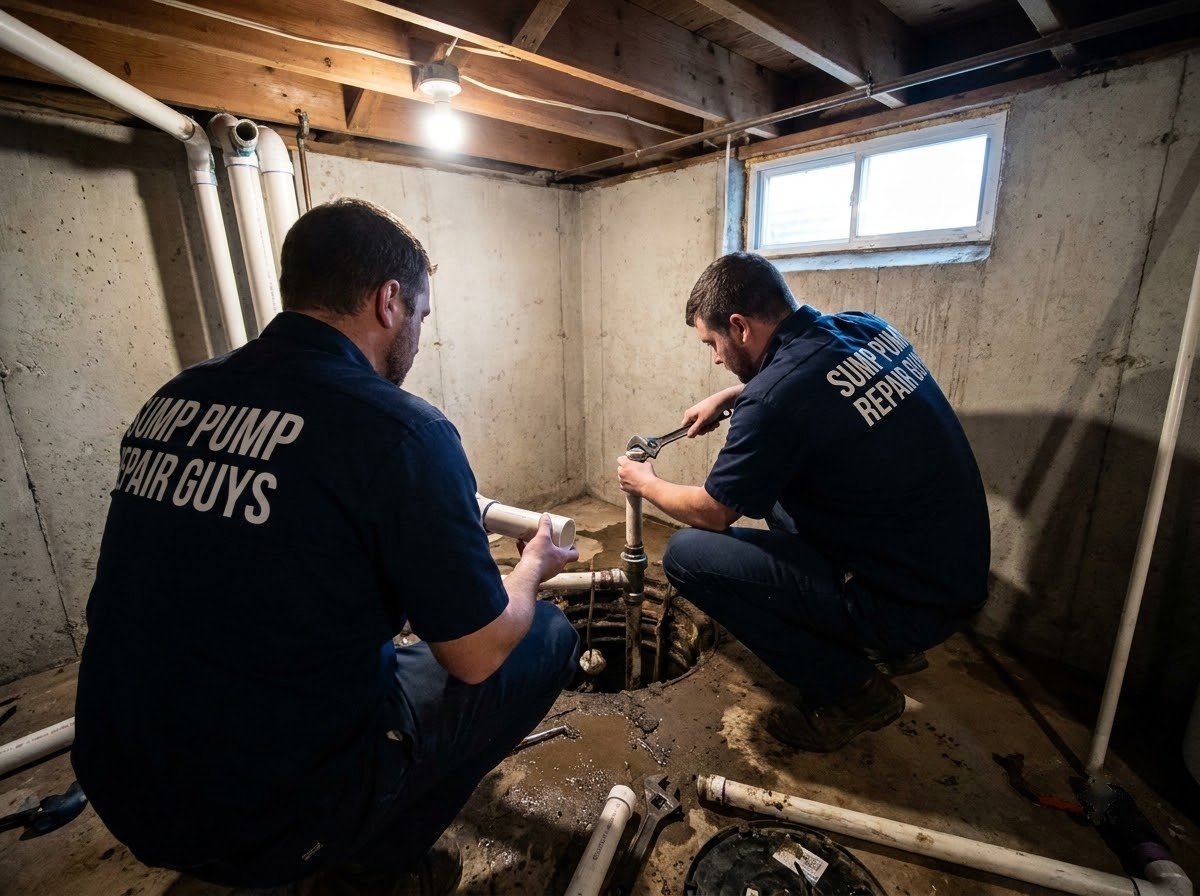
About Sump Pump Repair Guys in Youngstown
We repair sump pumps and nothing else. In Youngstown that focus leads to an unusually blunt piece of advice, so here it is up front: the public sewer work that would reduce basement backups in this city is real, it is funded, and it is not going to be finished for years.
Youngstown operates a combined sewer system, meaning stormwater and sanitary sewage travel in the same pipes. During heavy rain or snowmelt those pipes exceed capacity and the excess has to go somewhere. The city entered a federal consent decree with the US EPA and the State of Ohio in 2002 to deal with it, and a Long-Term Control Plan was approved in 2015. Twenty-four years on, the programme is still running, and key elements now carry deadlines out to 2030.
The costs tell the story. A Wet Weather Facility estimated at 62 million dollars in 2002 was later re-estimated between 232 and 240 million. The city went back to federal court to argue for a different approach, and the agreed replacement is a high-rate treatment project using cloth-disk filter media rated at 80 million gallons per day. Separately, a completed 10.35 million dollar project now diverts around 35.5 million gallons of combined sewage a year away from the Mahoning River, and a multi-phase contract worth 42.8 million dollars is under way to stop 14 combined sewer overflow lines discharging into Mill Creek Park’s Lake Glacier and Lake Cohasset.
Meanwhile city council approved a 5 percent annual wastewater rate increase across four years to fund it. So Youngstown homeowners are already paying for this work, and will keep paying, while the basements affected by surcharge stay exposed in the meantime.
That is why our first question on a Youngstown call is which side of the pipe your water came from, and our first recommendation is usually the cheapest one: make sure your own backflow protection actually works.
- A federal Clean Water Act settlement covering combined sewer overflows, with a Long-Term Control Plan approved in 2015 and work continuing today.
- A multi-phase project is removing combined sewer overflow lines discharging into Lake Glacier and Lake Cohasset, due for completion by 2030.
- Council approved a 5 percent annual wastewater rate increase over four years to fund the long term control plan work.
- You approve the number first. No surprise line items when the invoice arrives.
- We fill the pit and watch a full cycle: activation, run, shutoff, and any backflow through the valve.
Under consent decree since 2002
14 overflow lines at Mill Creek Park
Rates rising to pay for it
Priced before we start
Tested before we leave
Sump pump repair services in Youngstown
Sump pump repairs we handle in Youngstown
On a combined system the components that protect you matter as much as the pump itself. We work on the whole thing: the pit, the switch, the valve, the motor and the line that carries the water away.
- 01
Sump pump diagnostics
A manual lift test separates a switch failure from a motor failure in under a minute. We identify the exact fault and its price before quoting anything, so you are not paying replacement rates for a parts-level problem.
- 02
Water source diagnosis
Pit, floor drain or service line. In a combined sewer city this single question decides whether a pump helps you at all, and it is the first thing we establish.
- 03
Check valve replacement
The cheapest protection you can buy on a combined system. A failed valve lets the discharge column fall back into the pit and offers nothing when the sewer surcharges. We test it under load rather than assuming it works.
- 04
Float switch repair and adjustment
The most common failure point on any pump. We free jammed floats, replace failed switches, and set trip heights so the on and off points do not overlap and start the pump short-cycling.
- 05
Motor repair
Humming with no flow, tripped thermal overloads, failing bearings. We test the motor under load and tell you honestly whether a repair is worth it or whether the unit has been shortened past the point of value.
- 06
Impeller repair
Grinding and rattling usually mean debris in the vortex impeller or clearances worn open by grit. We open the unit, clear the obstruction and check whether the wear has already cost the pump its output.
- 07
Sump pit cleaning
Silt and iron ochre settle in the basin, block the intake screen and grind through the switch. On steel-era housing with original drain tile, decades of fines accumulate down there.
- 08
Pit and basin repair
Youngstown’s older housing predates sump systems, so most pits here were cut in later and are frequently undersized. A small basin short-cycles every pump that goes into it.
- 09
Discharge line repair and rerouting
Blocked, crushed or terminating too close to the foundation so the water walks straight back in. We trace the line and correct where it puts the water.
- 10
Frozen discharge line repair
Northeast Ohio winters ice a badly pitched line solid. We thaw and clear it, then correct the pitch and termination so it drains fully between cycles instead of freezing again next month.
- 11
Backup system service
Deep cycle batteries lose capacity quietly over three to five years and fail during the outage they were bought for. We load test the battery, service the backup pump and confirm the changeover triggers.
- 12
Emergency service
Water already on the floor, alarm sounding, pump silent. Same day and after hours response across Youngstown. We get the system back in service first and have the longer conversation afterwards.
Why Youngstown homeowners call us first
Most companies competing for this work in Youngstown are full-service plumbers and waterproofing contractors. Sump pumps are one line on a long list, and the bigger job is always the more profitable one.
-
We tell you what a pump cannot fix
On a combined system, water arriving up the floor drain is surcharge. No pump on the market addresses that. We say so and point you at backflow protection instead, because selling equipment for the wrong problem is just an expensive way to stay wet.
-
We work on the cheap fixes first
A check valve costs a fraction of a pump and does more for you during a surcharge event. We start with the parts that protect you and only discuss replacement when the pump itself has genuinely failed.
-
Answered at 2am
Pumps fail during storms, at night, and while you are away. Our lines stay open all night and all weekend, and someone picks up. Basements do not flood during business hours.
-
Priced before we start
You get a written number after the diagnosis and approve it before any work begins. No surprise line items when the invoice arrives.
-
Licensed and insured
Every technician who enters your home is properly licensed, insured and background checked. You can ask for the paperwork at the door.
-
We stand behind it
If the same fault comes back after we have worked on it, we come back and sort it out.
When to call a sump pump technician in Youngstown
Several of these are parts-level repairs. Two are not a pump problem at all, and one is the cheapest insurance available to you in a combined sewer city.
-
01
Silent pump, rising pit
Call now
Check the breaker and the plug first, then lift the float by hand. If it runs, the switch is the fault and not the motor. This is the one symptom that does not wait until morning.
-
02
Water rose fast at the floor drain, then drained away
Sewer, not pump
That pattern is combined sewer surcharge. Youngstown carries stormwater and sanitary sewage in the same pipes, and during heavy rain or snowmelt the system exceeds capacity. Report it, photograph it, keep the date and the rainfall. A bigger pump will not change what happens next time.
-
03
High water alarm sounding
Call now
Inflow has overtaken output, which means something upstream already failed: the switch, the valve, the discharge line or the pump. The alarm is the last warning before water reaches the floor, and silencing it buys you nothing.
-
04
You have no backflow protection at all
The Youngstown-specific one. If your basement drain has nothing between it and a combined sewer that is known to surcharge, you are relying on the weather. A working check valve and proper backflow protection cost a fraction of a flooded basement, and the public fix is years away.
-
05
Running non-stop in dry weather
Usually a float stuck raised or a failed check valve dropping the discharge column back into the pit. Occasionally a genuinely high water table. The first two are parts-level fixes and only the third involves a different pump.
-
06
Cycling on and off every few seconds
Short-cycling, and in Youngstown’s older housing a retrofitted basin too small for the inflow is often the cause, alongside a failed check valve or float trip points set so close they overlap. A bigger pump makes this worse, not better.
-
07
Humming with no water moving
Jammed impeller, seized bearings, or a completely blocked or frozen discharge line. Switch it off now. Clearing the impeller or the line is often a same-visit fix, but another hour of humming turns it into a replacement.
-
08
The discharge line is frozen
Unplug the pump. It is pushing against a solid plug of ice and will trip the thermal cutout or burn out. Thawing alone is not the fix, because the pitch that let water stand in the line will freeze it again next month.
-
09
Trouble arrives with snowmelt, not just storms
Combined systems exceed capacity during heavy rainfall or snowmelt. If your basement problem shows up during a thaw rather than a summer storm, that points at the sewer rather than at groundwater, and it changes what is worth spending money on.
How a Youngstown service call runs
Five steps, the same every time. No sales visit, no waiting days for a number.
- 1
Establish the water source
Pit, floor drain, or your own service line. In a combined sewer city those are three different problems, and only one of them is solved by a pump.
- 2
Check your protection
Before the pump, we check what stands between your basement and the public sewer. On a system known to surcharge, that is the component doing the most work for you.
- 3
Test under water
We fill the basin and watch a real cycle: activation height, run, shutoff, and whether anything comes back through the valve.
- 4
Price it, then repair
Written number before anything is touched. If the useful answer is a cheap valve rather than an expensive pump, that is what you get told.
- 5
Test again and hand it over
Final full-cycle test, then we show you how to check it yourself and what to watch for before the next thaw.
The consent decree, in plain terms
What Youngstown is fixing, and when it will actually be done
You are already paying for this work through your wastewater rates. It is worth knowing what it covers, what it does not, and how long you are waiting.
-
2002
The original settlement
The Justice Department, US EPA and the State of Ohio settled with Youngstown over long-standing raw sewage discharges from its combined sewer system. The city estimated 12 million dollars of short-term improvements and around 100 million over two decades, on an enforceable schedule to eliminate direct discharges and improve operation of the system.
-
2015
The Long-Term Control Plan
The plan required under the decree was developed by the city and approved by the US EPA and the State of Ohio. It sets out the specific projects, milestones and timelines for reducing wet weather discharges from the combined system.
-
62m to 240m
Why the plan changed
The Wet Weather Facility was estimated at 62 million dollars in 2002. Later estimates put it between 232 and 240 million. The city went back to federal court arguing a significant change in circumstances, and negotiated a different remedy rather than build the original facility.
-
The replacement
A high-rate treatment project instead
The amended decree substitutes a proposed 80 million gallon per day high-rate treatment facility using cloth-disk filter media for wet weather flows, alongside a West-Division Interceptor Sewer Replacement to reduce overflows.
-
Mill Creek Park
14 overflow lines, four phases
A separate multi-phase project, with a first-phase contract worth 42.8 million dollars, is removing combined sewer overflow lines that discharge into Lake Glacier and Lake Cohasset in Mill Creek Park. It must be finished by 2030 under the decree.
-
What it means for you
Real progress, not a finished job
A completed 10.35 million dollar project already diverts roughly 35.5 million gallons of combined sewage a year away from the Mahoning River, which is genuine improvement. But capacity work sized for typical storms still meets its limit in a heavy one, and the remaining schedule runs for years. Protecting your own basement is not pessimism, it is arithmetic.
Areas we cover in Youngstown
The combined sewer system covers the older core of the city, so the streets closest to downtown and the Mahoning River corridor carry the highest surcharge exposure. The outer townships and suburbs generally sit on separated systems, where groundwater and pump condition matter more than the sewer does.
- Downtown Youngstown
- Wick Park
- Smoky Hollow
- Brier Hill
- Idora
- Fosterville
- Lansingville
- Brownlee Woods
- Cornersburg
- North Heights
- Mill Creek
- Boardman
- Austintown
- Canfield
- Poland
- Struthers
- Campbell
- Girard
- Liberty
- Niles
- Warren
- Hubbard
ZIP codes we service in Youngstown
Same-day coverage across Youngstown and the surrounding Mahoning and Trumbull County communities.
- 44502
- 44503
- 44504
- 44505
- 44506
- 44507
- 44509
- 44510
- 44511
- 44512
- 44514
- 44515
- 44471
- 44405
- 44406
- 44420
- 44425
- 44446
- 44483
- 44484
Not listed? We cover all of Mahoning County and the surrounding Valley. Call and we will confirm in under a minute.
Youngstown sump pump questions, answered
The things Mahoning Valley homeowners ask us most often, answered properly instead of with a sales line. If yours is not here, give us a call and we will talk it through.
Water came up my floor drain. Will a bigger sump pump stop it?
No. Youngstown operates a combined sewer system, carrying stormwater and sanitary sewage in the same pipes. During heavy rainfall or snowmelt the system exceeds capacity, and the excess has to go somewhere. When it comes back up your floor drain, that is surcharge, and your sump pump does not serve that pipe.
What helps is backflow protection between your basement drain and the public sewer, plus a check valve that actually seats. Both cost a fraction of a pump, and both work on the problem you actually have.
Is the city not fixing the sewers? Should I just wait?
The city is fixing them, and the work is real. A completed project now diverts around 35.5 million gallons of combined sewage a year away from the Mahoning River, and a multi-phase contract is removing 14 overflow lines that discharge into Mill Creek Park’s Lake Glacier and Lake Cohasset.
But Youngstown has been under this consent decree since 2002, the Long-Term Control Plan was approved in 2015, and key deadlines now run to 2030. Waiting for the public system is a multi-year plan. Protecting your own basement is a one-afternoon job.
Why did the sewer project change?
Cost. The Wet Weather Facility required under the original decree was estimated at 62 million dollars in 2002. Later estimates put it between 232 and 240 million. The city argued in federal court that circumstances had changed significantly and that a facility of that size was not needed.
The agreed replacement is a proposed 80 million gallon per day high-rate treatment facility using cloth-disk filter media, together with a West-Division Interceptor Sewer Replacement. It is a different route to the same goal, on a revised schedule.
Am I paying for this work?
Yes. City council approved a 5 percent annual wastewater rate increase across four years to fund the long term control plan, covering design work and debt service on the projects.
That is worth knowing, because it means the money you are already spending is going toward capacity that arrives in future years. It does not protect the basement you have this winter, which is why the cheap protective components on your own side of the pipe are the better immediate spend.
Why does my pump run constantly in dry weather?
Usually a float stuck in the raised position telling the pump the water is high when it is not, or a failed check valve letting discharged water fall straight back into the pit so it refills seconds after shutoff. Occasionally it is a genuinely high water table.
A manual lift test and a backflow check separate the three in a few minutes, and only the third one means you need a different pump. The first two are parts-level repairs.
Do I need a bigger pump if mine cannot keep up?
Usually not, and in a combined sewer city it is frequently the wrong diagnosis entirely. A pump that cannot keep up is often fighting a failed check valve, a blocked discharge line, a basin too small for the inflow, or a surcharge that is not the pump’s job at all.
Oversizing into a small pit is actively harmful: the pump empties the basin faster than it refills, short-cycles, and destroys its own switch. Sizing should follow pit volume, total lift and measured inflow.
My problems happen during a thaw, not a storm. Why?
Because combined systems exceed capacity during heavy rainfall or snowmelt, and a Northeast Ohio thaw delivers a lot of water quickly onto ground that is still frozen. If your trouble reliably arrives in February or March rather than July, that points at the sewer rather than at groundwater.
It also tells you when to prepare. Get the valve and the discharge checked in autumn, not during the melt when everyone else is calling.
My pit was cut in later. Does that matter?
It matters a lot. Youngstown’s older housing stock predates sump systems, so most pits here were retrofitted decades after the house was built, and retrofitted basins are frequently smaller and shallower than modern inflow deserves.
An undersized basin makes the pump empty it faster than it refills, restart within seconds and destroy its own switch. Correcting the basin is usually more valuable than upgrading the pump inside it.
How do I test my sump pump myself?
Pour several gallons of water slowly into the basin and watch a full cycle. The float should rise, the pump should start, the water should clear, and the pump should shut off on its own.
Then keep watching for thirty seconds. Water flowing back into the pit means the check valve is failing. If the pump does not start at all, lift the float by hand: if it runs then, the switch is the problem, not the motor. Test in autumn before the freeze and again in late February.
Does homeowners insurance cover a flooded basement in Youngstown?
Usually not by default. Standard policies generally exclude groundwater intrusion and flooding caused by sump pump failure, and coverage is sold as a separate rider or endorsement.
Sewer backup is normally a separate endorsement again, and in a combined sewer city that is the one worth checking first. Look at your policy language before a storm rather than during a claim.
Which Youngstown areas and ZIP codes do you cover?
All of Youngstown and the surrounding Mahoning Valley, including Downtown, Wick Park, Smoky Hollow, Brier Hill, Idora, Fosterville, Lansingville, Brownlee Woods, Cornersburg, North Heights and Mill Creek, plus Boardman, Austintown, Canfield, Poland, Struthers, Campbell, Girard, Liberty, Niles, Warren and Hubbard.
ZIP codes include 44502, 44503, 44504, 44505, 44506, 44507, 44509, 44510, 44511, 44512, 44514, 44515, 44471, 44405, 44406, 44420, 44425, 44446, 44483 and 44484.
How quickly can someone come out?
Same day across most of the Mahoning Valley, and after hours for emergencies where water is already coming in. Diagnosis takes thirty to sixty minutes, and a parts-level repair such as a float switch or check valve is generally completed in the same visit.
Thaw events are the exception, when calls across the valley spike within the same hours. An inspection booked in autumn is worth far more than a place in that queue.
The public fix runs to 2030. Your basement does not have that long.
Emergency repair, water source diagnosis, backflow and check valve testing, or a full-system inspection before the thaw. Serving Youngstown and the Mahoning Valley.