
24/7 Emergency Service in Franklin County
Sump Pump Repair in Dublin, OH
Your Wet Basement Is A Reportable Event
Dublin files an annual report to the EPA covering sanitary sewer overflows and water-in-basement events. If yours is never reported, it never counts toward anything.
Answered 24 hours. Free quote over the phone.
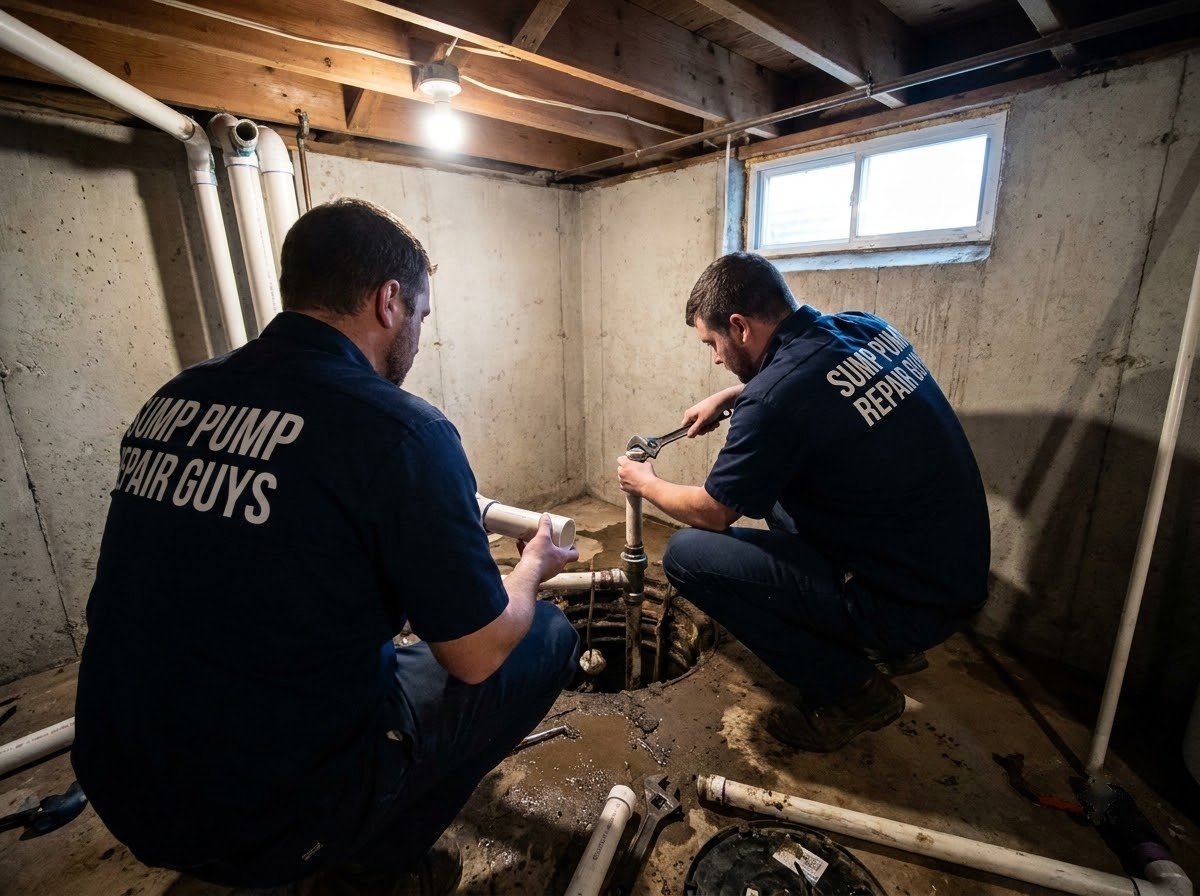
About Sump Pump Repair Guys in Dublin
We repair sump pumps and nothing else. In Dublin that focus is useful because of something unusual about how this city is regulated: a wet basement here is not just a private misfortune, it is a formally tracked category with its own annual report.
Dublin is required to produce an annual report for the EPA covering sanitary sewer overflows and water-in-basement events. That obligation has been in place since the EPA’s 2009 Director’s Final Findings and Orders, and its stated purpose is to inform the EPA and the public of the extent of inflow and infiltration of stormwater into the public sanitary sewer system for satellite communities.
Two things follow from that. First, water in basements is understood here as a symptom of stormwater getting into sanitary pipes, not simply as bad luck. Second, the city says plainly that the report is one of several data sources guiding the planning, operation and maintenance of its sanitary sewer systems. Reported events shape what gets fixed.
The uncomfortable corollary is that an unreported event guides nothing. A homeowner who quietly cleans up, pays a contractor and never tells anyone has removed their street from the dataset that decides where money goes next.
None of that means the pump does not matter. It means the pump is one part of a picture that includes what your foundation drains connect to, how much rain gets into the sanitary system around you, and whether anyone knows your basement flooded.
- Dublin files a yearly SSO and WIB report to the EPA, published for the public to read.
- The reporting regime exists to show how much stormwater is getting into the public sanitary sewer system.
- The city states the report is one of the data sources guiding planning, operation and maintenance of its sewers.
- You approve the number first. No surprise line items when the invoice arrives.
- We fill the pit and watch a full cycle: activation, run, shutoff, and any backflow through the valve.
Water-in-basement events are reported annually
The purpose is measuring inflow and infiltration
Reported events guide maintenance
Priced before we start
Tested before we leave
Sump pump repair services in Dublin
Sump pump repairs we handle in Dublin
Most Dublin sump pump problems are component faults. We work on the whole system so the repair holds: the pit, the switch, the valve, the motor and the line that carries the water away.
- 01
Sump pump diagnostics
A manual lift test separates a switch failure from a motor failure in under a minute. We identify the exact fault and its price before quoting anything, so you are not paying replacement rates for a parts-level problem.
- 02
Inflow and infiltration assessment
The Dublin-specific one. If your basement takes water when the sanitary system is under load rather than when the ground is saturated, that is a different problem with a different owner, and it is worth reporting.
- 03
Float switch repair and adjustment
The most common failure point on any pump. We free jammed floats, replace failed switches, and set trip heights so the on and off points do not overlap and start the pump short-cycling.
- 04
Check valve replacement
A failed valve lets the discharge column fall straight back into the pit, refilling it seconds after shutoff. It is a small part with a large effect on how hard your pump has to work.
- 05
Motor repair
Humming with no flow, tripped thermal overloads, failing bearings. We test the motor under load and tell you honestly whether a repair is worth it or whether the unit has been shortened past the point of value.
- 06
Impeller repair
Grinding and rattling usually mean debris in the vortex impeller or clearances worn open by grit. We open the unit, clear the obstruction and check whether the wear has already cost the pump its output.
- 07
Sump pit cleaning
Silt and iron ochre settle in the basin, block the intake screen and grind through the switch. On central Ohio clay with older footer drains, fines accumulate steadily.
- 08
Pit and basin repair
Cracked or improperly seated basins let soil and silt in continuously, and undersized basins short-cycle every pump that goes into them regardless of quality.
- 09
Discharge line repair and rerouting
Blocked, crushed, or terminating where the water returns to your own footing. We trace the line and correct where it puts the water.
- 10
Frozen discharge line repair
A badly pitched line ices solid in a central Ohio January. We thaw and clear it, then correct the pitch and termination so it drains fully between cycles.
- 11
Backup system service
Storms take the power out at the exact moment the pump is needed most. We load test the battery, service the backup pump and confirm the changeover actually triggers.
- 12
Emergency service
Water already on the floor, alarm sounding, pump silent. Same day and after hours response across Dublin. We get the system back in service first and have the longer conversation afterwards.
Why Dublin homeowners call us first
Dublin publishes more about its own sewer performance than most cities its size. A contractor who has never looked at any of it is quoting from a template.
-
We tell you to report it
Water-in-basement events feed an annual report that helps guide sewer planning and maintenance here. Reporting yours costs nothing and is the only way your street enters that picture.
-
We fix the cause, not the symptom
A new pump dropped into an undersized pit with a failed valve dies the same way the last one did. We correct the fault around the pump so the repair survives the next wet spring.
-
Answered at 2am
Pumps fail during storms, at night, and while you are away. Our lines stay open all night and all weekend, and someone picks up. Basements do not flood during business hours.
-
Priced before we start
You get a written number after the diagnosis and approve it before any work begins. No surprise line items when the invoice arrives.
-
Licensed and insured
Every technician who enters your home is properly licensed, insured and background checked. You can ask for the paperwork at the door.
-
We stand behind it
If the same fault comes back after we have worked on it, we come back and sort it out.
When to call a sump pump technician in Dublin
Most of these are parts-level repairs. Two of them are worth reporting to the city as well as fixing, because they are exactly what the annual reporting exists to capture.
-
01
Silent pump, rising pit
Call now
Check the breaker and the plug first, then lift the float by hand. If it runs, the switch is the fault and not the motor. Water arriving faster than you can bail is not a next-morning problem.
-
02
Sewage or drain water on the basement floor
Report it
This is a water-in-basement event in the sense the city reports on. Note the date, the time and the rainfall, photograph it, and report it. It costs nothing and it is the only way the event reaches the data that guides sewer work.
-
03
High water alarm sounding
Call now
Inflow has overtaken output, which means something upstream already failed: the switch, the valve, the discharge line or the pump. The alarm is the last warning before water reaches the floor.
-
04
Trouble that tracks the storm, not the season
Groundwater problems build over a wet fortnight. Inflow and infiltration problems arrive with the rain itself and ease when it stops. That timing difference is the clearest clue as to which system is actually involved.
-
05
Running non-stop in dry weather
Usually a float stuck raised or a failed check valve dropping the discharge column back into the pit. Occasionally a genuinely high water table near the Scioto. The first two are parts-level fixes.
-
06
Cycling on and off every few seconds
Short-cycling, usually from a basin too small for the inflow, a failed check valve, or float trip points set so close they overlap. A bigger pump makes this worse rather than better.
-
07
Humming with no water moving
Jammed impeller, seized bearings, or a completely blocked or frozen discharge line. Switch it off now. Clearing the impeller or the line is often a same-visit fix, but another hour of humming turns it into a replacement.
-
08
You still have a well on the property
Some Dublin properties do. If you keep the well while on city water, backflow prevention devices are required, and abandoning it needs a well sealing permit. Inspections are coordinated with the City of Dublin, the City of Columbus and Franklin County Public Health.
-
09
Your discharge runs to a rain garden or swale
Dublin encourages managing stormwater close to its source using vegetated and soil based measures. Those features work well when they drain as designed and badly when they silt up, so they need checking like any other part of the system.
How a Dublin service call runs
Five steps, the same every time. No sales visit, no waiting days for a number.
- 1
Match the water to the rainfall
Arriving with the storm points at the sanitary system. Building over a wet fortnight points at groundwater. That timing decides everything that follows.
- 2
Check the setup
Pit, pump, float switch, check valve and discharge line, plus basin volume against real inflow and where the discharge actually terminates.
- 3
Test under water
We fill the basin and watch a real cycle: activation height, run, shutoff, and whether anything comes back through the valve.
- 4
Price it, then repair
Written number before anything is touched. If the right move is reporting a water-in-basement event rather than buying equipment, we say so.
- 5
Test again and hand it over
Final full-cycle test, then we show you how to check it yourself and what to watch for before the next wet season.
Why Dublin counts wet basements
What the annual report means for your street
Very few cities formally track water in basements as a category. Dublin does, and understanding why explains a great deal about how basement water behaves here.
-
The obligation
An annual SSO and WIB report
Dublin develops a yearly report for submission to the EPA covering sanitary sewer overflows and water-in-basement events. The requirement has been in effect since the EPA’s 2009 Director’s Final Findings and Orders.
-
The purpose
Measuring inflow and infiltration
The stated reason is to inform the EPA and the public of the extent of inflow and infiltration of stormwater into the public sanitary sewer system for satellite communities. In other words, wet basements are being used as a measure of how much rain is getting into pipes meant for sewage.
-
The consequence
Data guides the maintenance
The city describes the report as one of many data sources guiding the planning, operation and maintenance of sanitary sewer systems in Dublin. Events that never get reported never appear in that source.
-
The mechanism
Rain in the wrong pipe
Infiltration is groundwater entering sewers through cracks and joints. Inflow is stormwater entering more directly, often through improper connections. Either way a pipe sized for household flow fills with rain, and the surplus surfaces at the lowest opening available.
-
The stormwater side
Managed close to the source
Dublin’s stormwater standards encourage treatment and engineering methods that allow groundwater recharge and manage stormwater as close to its source as possible, including vegetated and soil based measures that filter, treat or infiltrate runoff.
-
Flood insurance
In the NFIP since 1980
Dublin has participated in the National Flood Insurance Program since 1980, under Ordinance 27-80. Worth knowing, though flood insurance and a wet basement are frequently two different conversations with two different definitions of flooding.
Dublin neighborhoods we cover
Dublin sits along the Scioto River on central Ohio clay, with housing spanning the historic core, the large golf course communities and decades of newer subdivisions. Because the city sends its sewage onward for treatment as a satellite community, how much rain gets into the sanitary system matters as much here as how much soaks into the ground.
- Historic Dublin
- Bridge Street District
- Muirfield Village
- Ballantrae
- Tartan Fields
- Wyandotte Woods
- Llewellyn Farms
- Indian Run
- Riverside Drive
- Coffman Road
- Brand Road
- Avery Road
- Emerald Parkway
- Perimeter Drive
- Sawmill Road
- Scioto River corridor
- Amlin
- Hilliard
- Powell
- Plain City
- Washington Township
- Perry Township
ZIP codes we service in Dublin
Same-day coverage across Dublin and the surrounding Franklin, Delaware and Union County communities.
- 43016
- 43017
- 43002
- 43026
- 43065
- 43064
- 43119
- 43220
- 43221
- 43235
- 43240
- 43085
- 43081
- 43229
- 43231
- 43015
Not listed? We cover all of Franklin County. Call and we will confirm in under a minute.
Dublin sump pump questions, answered
The things Dublin homeowners ask us most often, answered properly instead of with a sales line. If yours is not here, give us a call and we will talk it through.
What is a water-in-basement event?
It is a formally reported category here. Dublin develops an annual report for submission to the EPA covering both sanitary sewer overflows and water-in-basement events, a requirement in effect since the EPA’s 2009 Director’s Final Findings and Orders.
The purpose is to inform the EPA and the public of the extent of inflow and infiltration of stormwater into the public sanitary sewer system for satellite communities. So a wet basement is treated as evidence about the sewer, not just as a household problem.
Does reporting it actually achieve anything?
The city describes the report as one of many data sources guiding the planning, operation and maintenance of sanitary sewer systems in Dublin. That is a direct link between reported events and where attention goes.
The reverse is also true and less comfortable. An event nobody reports contributes nothing to that picture, so a street where everyone quietly cleans up and pays privately can look problem-free in the data.
What is inflow and infiltration?
Infiltration is groundwater seeping into sanitary sewers through cracks, open joints and defects. Inflow is stormwater entering more directly, often through connections that should not exist.
Both put rain into pipes sized only for household sewage. Once the pipe is full, the surplus surfaces wherever the system is lowest, which is frequently a basement floor drain. It is the single biggest reason wet basements and sewer performance are tracked together here.
How do I tell groundwater from a sewer problem?
Watch the timing. Groundwater problems build slowly through a wet fortnight and ease slowly afterwards, with water rising into the sump basin as the ground saturates.
Inflow and infiltration problems track the storm itself. Water arrives during heavy rain, often at a floor drain rather than in the pit, and recedes once the system drains down. Two different mechanisms, two different owners, two different fixes.
What is a satellite community?
It is a community that collects sewage in its own pipes but sends it onward to another authority’s system for treatment. Dublin’s reporting obligation is framed specifically around inflow and infiltration for satellite communities.
The practical relevance is that rain getting into Dublin’s pipes becomes somebody else’s volume to treat as well, which is exactly why the amount is measured and published rather than left as an internal matter.
I still have a well. Does that matter?
Yes, and it has its own rules. If you connect to city water but wish to continue using a well system, backflow prevention devices are required, and inspections are coordinated with the City of Dublin, the City of Columbus and Franklin County Public Health.
If you want to abandon the well instead, you must obtain a well sealing permit. Either route involves paperwork, and it is worth settling before it collides with other work on the property.
Where should my sump discharge go?
Away from the foundation, and never into the sanitary sewer. Dublin’s stormwater standards encourage managing runoff as close to its source as possible, using measures that let water filter or infiltrate rather than rushing it away.
The practical version for a homeowner is simpler: the discharge has to end far enough from the wall that the water does not soak straight back to the footer drains and return to the pit, which is the most common routing fault we correct.
Do rain gardens and swales cause basement problems?
Not when they work as designed. Vegetated measures are intended to hold runoff briefly and let it filter into the ground or move on to the storm system, keeping it out of the street and out of the sanitary sewer.
They do need maintenance. A feature that has silted up, lost its outlet or been re-landscaped stops draining at the rate it was designed for, and water then sits longer near whatever is downhill of it.
Do I need a bigger pump if mine cannot keep up?
Usually not. A pump that cannot keep up is often fighting a failed check valve, a blocked or frozen discharge line, a basin too small for the inflow, or water arriving by a route the pump does not serve at all.
Oversizing into a small pit is actively harmful: the pump empties the basin faster than it refills, short-cycles, and destroys its own switch. Sizing should follow pit volume, total lift and measured inflow.
How do I test my sump pump myself?
Pour several gallons of water slowly into the basin and watch a full cycle. The float should rise, the pump should start, the water should clear, and the pump should shut off on its own.
Then keep watching for thirty seconds. Water flowing back into the pit means the check valve is failing. If the pump does not start at all, lift the float by hand: if it runs then, the switch is the problem, not the motor. Test in autumn before the freeze and again in early spring.
Which Dublin areas and ZIP codes do you cover?
All of Dublin and the surrounding Franklin, Delaware and Union County communities, including Historic Dublin, the Bridge Street District, Muirfield Village, Ballantrae, Tartan Fields, Wyandotte Woods, Llewellyn Farms, Indian Run and the Riverside Drive, Coffman Road, Brand Road, Avery Road, Emerald Parkway, Perimeter Drive and Sawmill Road corridors, plus Amlin, Hilliard, Powell, Plain City, Washington Township and Perry Township.
ZIP codes include 43016, 43017, 43002, 43026, 43065, 43064, 43119, 43220, 43221, 43235, 43240, 43085, 43081, 43229, 43231 and 43015.
How quickly can someone come out?
Same day across most of Franklin County, and after hours for emergencies where water is already coming in. Diagnosis takes thirty to sixty minutes, and a parts-level repair such as a float switch or check valve is generally completed in the same visit.
Heavy rain events are the exception, when calls across the county spike within the same hours. An inspection booked in dry weather is worth far more than a place in that queue.
Fix the pump. Report the event. Both matter.
Emergency repair, water source diagnosis, pit and valve testing, or a full-system inspection in dry weather. Serving Dublin and all of Franklin County.