
24/7 Emergency Service in Cuyahoga County
Sump Pump Repair in Lakewood, OH
The Regulator’s Fix And Yours Are The Same Plan
Lakewood puts it plainly: the solution to frequent basement flooding and the requirement to eliminate combined sewer overflows are the same programme. That alignment is rare.
Answered 24 hours. Free quote over the phone.
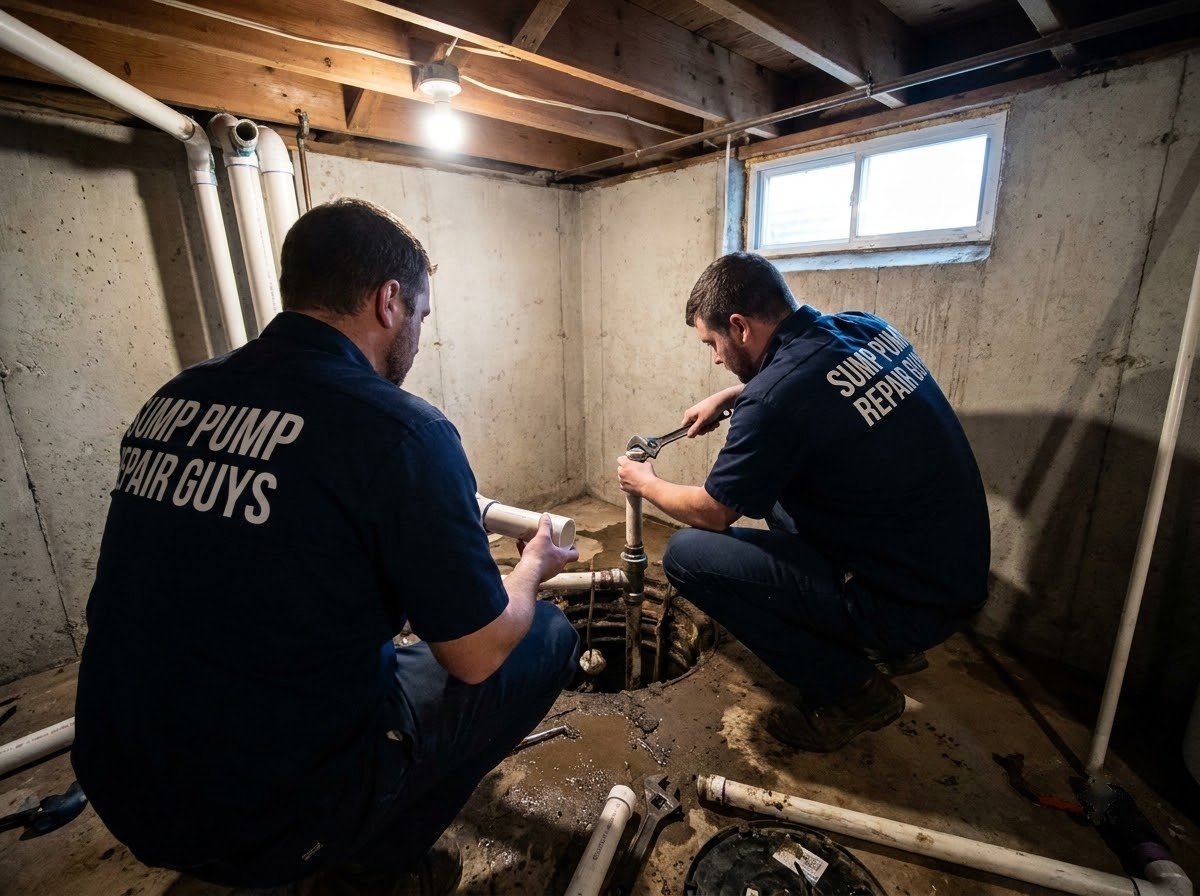
About Sump Pump Repair Guys in Lakewood
We repair sump pumps and nothing else. In Lakewood that focus is useful because the city has been unusually direct about how basement flooding and its regulatory obligations connect, and the answer is more encouraging than it sounds.
Lakewood’s sewers were built in the early 1900s. In many locations a single pipe carries combined wastewater and stormwater, intermingled with separate two-pipe systems elsewhere, all later connected through interceptors and on to the wastewater treatment plant. In dry weather everything gets treated and discharged to Lake Erie. In wet weather the excess goes to Lake Erie or the Rocky River untreated.
The city explains the mechanism in the same terms we use on a service call. Inflow and infiltration take up valuable sewer capacity, and as a result the sanitary sewer system may become overloaded and cause overflows or basement flooding. Rain in the wrong pipe, and your floor drain is the lowest opening.
What makes Lakewood different is the alignment. The city states that the solution to frequent basement flooding and the requirement to eliminate combined sewer overflows will be the same plan. Usually a homeowner’s interest and a regulator’s interest run in different directions. Here they do not.
That plan is now legally binding. In November 2022 Lakewood entered a consent decree with the US Department of Justice and the US and Ohio Environmental Protection Agencies, enforcing an 85 million dollar Integrated Wet Weather Improvement Plan that City Council had approved and begun implementing in 2019.
- The city says the fix for frequent basement flooding and the requirement to eliminate combined sewer overflows are one and the same.
- The Integrated Wet Weather Improvement Plan, begun in 2019 and now enforced under a federal consent decree.
- Single pipes carrying combined wastewater and stormwater, mixed with separate systems and joined by interceptors.
- You approve the number first. No surprise line items when the invoice arrives.
- We fill the pit and watch a full cycle: activation, run, shutoff, and any backflow through the valve.
Same plan, two purposes
An 85 million dollar programme
Sewers from the early 1900s
Priced before we start
Tested before we leave
Sump pump repair services in Lakewood
Sump pump repairs we handle in Lakewood
Most Lakewood sump pump problems are component faults. We work on the whole system so the repair holds: the pit, the switch, the valve, the motor and the line that carries the water away.
- 01
Sump pump diagnostics
A manual lift test separates a switch failure from a motor failure in under a minute. We identify the exact fault and its price before quoting anything, so you are not paying replacement rates for a parts-level problem.
- 02
Inflow and infiltration assessment
The Lakewood-specific one. Foundation drains, roofs and streets feeding the sewer is the mechanism the city names directly, and it decides whether your problem is equipment or capacity.
- 03
Float switch repair and adjustment
The most common failure point on any pump. We free jammed floats, replace failed switches, and set trip heights so the on and off points do not overlap and start the pump short-cycling.
- 04
Check valve replacement
A failed valve lets the discharge column fall straight back into the pit, refilling it seconds after shutoff. It is a small part with a large effect on how hard your pump has to work.
- 05
Motor repair
Humming with no flow, tripped thermal overloads, failing bearings. We test the motor under load and tell you honestly whether a repair is worth it or whether the unit has been shortened past the point of value.
- 06
Impeller repair
Grinding and rattling usually mean debris in the vortex impeller or clearances worn open by grit. We open the unit, clear the obstruction and check whether the wear has already cost the pump its output.
- 07
Sump pit cleaning
Silt and iron ochre settle in the basin, block the intake screen and grind through the switch. In century-old housing with original footer drains, fines accumulate steadily.
- 08
Pit and basin repair
Lakewood’s dense early 1900s housing often has pits cut in decades after the house was built, and undersized basins short-cycle every pump that goes into them.
- 09
Discharge line repair and rerouting
Blocked, crushed, or terminating where the water returns to your own footing. On small lots the distance available is short, which makes correct routing matter more rather than less.
- 10
Frozen discharge line repair
Lake effect winters ice a badly pitched line solid. We thaw and clear it, then correct the pitch and termination so it drains fully between cycles instead of freezing again next month.
- 11
Backup system service
Lake storms take the power out at the exact moment the pump is needed most. We load test the battery, service the backup pump and confirm the changeover actually triggers.
- 12
Emergency service
Water already on the floor, alarm sounding, pump silent. Same day and after hours response across Lakewood. We get the system back in service first and have the longer conversation afterwards.
Why Lakewood homeowners call us first
There is a large, funded, legally enforced programme working on this. Knowing what it covers tells you what is genuinely worth paying for privately.
-
We know what the programme covers
Storage basins, treatment and pipe lining are public work already funded. What that programme does not do is maintain the pit, valve and discharge line inside your house.
-
We fix the cause, not the symptom
A new pump dropped into an undersized pit with a failed valve dies the same way the last one did. We correct the fault around the pump so the repair survives a lakeside winter and the melt after it.
-
Answered at 2am
Pumps fail during storms, at night, and while you are away. Our lines stay open all night and all weekend, and someone picks up. Basements do not flood during business hours.
-
Priced before we start
You get a written number after the diagnosis and approve it before any work begins. No surprise line items when the invoice arrives.
-
Licensed and insured
Every technician who enters your home is properly licensed, insured and background checked. You can ask for the paperwork at the door.
-
We stand behind it
If the same fault comes back after we have worked on it, we come back and sort it out.
When to call a sump pump technician in Lakewood
Most of these are parts-level repairs. Two of them are capacity problems rather than equipment problems, and one is something you can do for the whole street in ten minutes.
-
01
Silent pump, rising pit
Call now
Check the breaker and the plug first, then lift the float by hand. If it runs, the switch is the fault and not the motor. On heavy clay the basin refills steadily, so this one does not wait until morning.
-
02
Backup at the height of a storm
Capacity, not pump
The city describes this directly: basement flooding occurs when there is more flow than the sewers can handle, or when blockages restrict the sewer’s ability to remove water quickly enough. Document it and report it rather than buying a larger pump for it.
-
03
High water alarm sounding
Call now
Inflow has overtaken output, which means something upstream already failed: the switch, the valve, the discharge line or the pump. The alarm is the last warning before water reaches the floor.
-
04
The drain on your street is packed with leaves
Lakewood runs an Adopt-A-Drain programme where residents, businesses and organisations claim a storm drain and commit to keeping it clear of debris. Clearing one grate is a genuinely useful contribution and costs nothing.
-
05
Running non-stop in dry weather
Usually a float stuck raised or a failed check valve dropping the discharge column back into the pit. Occasionally a genuinely high water table near the lake. The first two are parts-level fixes.
-
06
Cycling on and off every few seconds
Short-cycling, usually from a basin too small for the inflow, a failed check valve, or float trip points set so close they overlap. A bigger pump makes this worse rather than better.
-
07
Humming with no water moving
Jammed impeller, seized bearings, or a completely blocked or frozen discharge line. Switch it off now. Clearing the impeller or the line is often a same-visit fix, but another hour of humming turns it into a replacement.
-
08
Your foundation drains feed the sewer
Foundation drains are named by the city among the sources of excess flow entering the system in wet weather. Where a property can be re-routed to a pump and a proper discharge instead, it helps both the basement and the sewer.
-
09
Trouble arrives with the melt, not the storm
Lake effect snowfall loads the ground faster than it can drain, and snowmelt is listed alongside rain as a source of excess flow here. If your problem is a February or March problem, autumn is when to prepare for it.
How a Lakewood service call runs
Five steps, the same every time. No sales visit, no waiting days for a number.
- 1
Separate capacity from equipment
Water arriving at the peak of a storm points at sewer capacity. Water rising steadily in the pit points at your system. Two different owners, two different fixes.
- 2
Check the setup
Pit, pump, float switch, check valve and discharge line, plus basin volume against real inflow and where the discharge and foundation drains actually go.
- 3
Test under water
We fill the basin and watch a real cycle: activation height, run, shutoff, and whether anything comes back through the valve.
- 4
Price it, then repair
Written number before anything is touched. If this belongs with the city programme rather than with us, we say so and you pay nothing for equipment you do not need.
- 5
Test again and hand it over
Final full-cycle test, then we show you how to check it yourself and what to watch for before the next thaw.
The consent decree, in plain terms
What Lakewood is legally required to build
This is one of the better documented sewer programmes in the state, and the numbers in it are specific. They also explain why progress is measured in decades rather than seasons.
-
The complaint
At least 1,933 occasions
The complaint filed alongside the consent decree alleges that Lakewood discharged untreated sanitary sewage into the Rocky River or directly into Lake Erie on at least 1,933 occasions from January 2016, and discharged from combined sewer outfalls in violation of its permit.
-
The settlement
85 million dollars and a penalty
Under the interim partial consent decree, Lakewood will spend about 85 million dollars improving its sewer system and pay a civil penalty of 100,000 dollars, split evenly between the United States and Ohio.
-
The construction
High-rate treatment and two storage basins
The decree requires completing a high-rate treatment system to treat combined sewer overflows, and building two large storage basins that hold millions of gallons of wastewater until it can be sent to the treatment plant.
-
The pipe work
Lining and repairs to stop sanitary overflows
Multiple pipe lining and repair projects within the sewer system, designed specifically to eliminate the causes of sanitary sewer overflows. That is the part that most directly reaches individual streets.
-
The detective work
Finding sewage in storm outfalls
A sampling pilot study designed to identify sewage in stormwater outfalls, plus a one-year post-construction monitoring programme, providing the data needed for future work on the system.
-
The horizon
An updated plan by the end of 2034
Lakewood must conduct a thorough evaluation of the sewer system and develop an updated Integrated Wet Weather Improvement Plan by 31 December 2034. This decree is explicitly a partial step, resolving penalty claims but not everything alleged.
Lakewood neighborhoods we cover
Lakewood is one of the most densely built cities in Ohio, laid out in the early 1900s between Lake Erie and the Rocky River. Small lots and century-old housing mean discharge routing is tight and footer drains are original, so the same rainfall behaves very differently here than in a post-war suburb.
- Birdtown
- Clifton Park
- Gold Coast
- Edgewater border
- Detroit Avenue
- Madison Avenue
- Clifton Boulevard
- Lake Avenue
- Hilliard Road
- Warren Road
- Bunts Road
- Sloane Avenue
- West End
- Rocky River corridor
- Lakewood Park
- Madison Park
- Rocky River
- Fairview Park
- Bay Village
- Westlake
- North Olmsted
- Cleveland West Side
ZIP codes we service in Lakewood
Same-day coverage across Lakewood and the surrounding Cuyahoga County communities.
- 44107
- 44102
- 44111
- 44113
- 44116
- 44126
- 44135
- 44140
- 44145
- 44070
- 44144
- 44109
- 44017
- 44130
- 44142
- 44133
Not listed? We cover all of Cuyahoga County. Call and we will confirm in under a minute.
Lakewood sump pump questions, answered
The things Lakewood homeowners ask us most often, answered properly instead of with a sales line. If yours is not here, give us a call and we will talk it through.
How do combined sewer overflows relate to my basement?
Directly. The city explains that overflow discharges during heavy rain and basement flooding both happen when there is more flow than the sewers can handle, or when blockages restrict the sewer’s ability to remove water quickly enough.
The encouraging part is what follows. The city states that the solution to frequent basement flooding and the requirement to eliminate the overflows will be the same plan. Your interest and the regulator’s interest point the same way here, which is not always the case.
What is inflow and infiltration?
Water that gets into the sewer without being sewage. The city names the sources plainly: rain, snowmelt, and water flowing off impermeable surfaces such as roofs, foundation drains and streets.
Its effect is described just as plainly. During a rain event, inflow and infiltration take up valuable sewer capacity, and as a result the sanitary sewer system may become overloaded and cause overflows or basement flooding.
What exactly is the city required to build?
Under the consent decree, a high-rate treatment system to treat combined sewer overflows, and two large storage basins that hold millions of gallons of wastewater until it can be sent to the treatment plant.
Alongside that, multiple pipe lining and repair projects designed to eliminate causes of sanitary sewer overflows, a sampling pilot study to identify sewage in stormwater outfalls, and a one-year post-construction monitoring programme.
How long will all this take?
Decades. The city has said it plans to address the largest overflows first, and the decree requires a thorough evaluation of the system with an updated Integrated Wet Weather Improvement Plan by the end of 2034.
The decree is also explicitly interim and partial. It resolves the civil penalty claims but not everything alleged, with a further agreement expected to address the remaining overflows. Progress is real, but it will not arrive before your next wet spring.
How bad was the problem?
The complaint alleges that Lakewood discharged untreated sanitary sewage into the Rocky River or directly into Lake Erie on at least 1,933 occasions from January 2016, along with discharges from combined sewer outfalls that exceeded permit limits.
The settlement figure reflects that scale: roughly 85 million dollars of improvements and a 100,000 dollar civil penalty split between the United States and Ohio.
What is Adopt-A-Drain?
A city programme where residents, businesses or organisations claim a storm drain and commit to keeping it clear of debris. There is an interactive map showing which drains are available, and adopters can collect a safety kit from City Hall.
It sounds small and it is not. A grate packed with leaves makes the street the low point, and the water that collects there goes looking for the nearest foundation. Separating litter from natural material and disposing of both properly is the whole job.
Why does Lakewood have combined sewers at all?
Because of when it was built. The city’s sewers date from the early 1900s, and at the time combining wastewater and stormwater in a single pipe was the state of the art approach to flooding and public health.
Those pipes were later connected through interceptors and on to the treatment plant. Combined systems are found throughout many older communities across the country, and roughly 772 cities in the United States have them.
Should I disconnect my foundation drains from the sewer?
Where it can be done properly, it usually helps both you and the system. Foundation drains are named among the sources of excess flow entering the sewer during wet weather, and every gallon kept out is capacity left for sewage.
The caveat is that the water still has to go somewhere. Re-routing to a sump pit and a well-placed discharge only works if the discharge is far enough from the wall that the water does not simply return.
Do I need a bigger pump if mine cannot keep up?
Usually not. A pump that cannot keep up is often fighting a failed check valve, a blocked or frozen discharge line, a basin too small for the inflow, or water arriving by a route the pump does not serve at all.
Oversizing into a small pit is actively harmful: the pump empties the basin faster than it refills, short-cycles, and destroys its own switch. Sizing should follow pit volume, total lift and measured inflow.
How do I test my sump pump myself?
Pour several gallons of water slowly into the basin and watch a full cycle. The float should rise, the pump should start, the water should clear, and the pump should shut off on its own.
Then keep watching for thirty seconds. Water flowing back into the pit means the check valve is failing. If the pump does not start at all, lift the float by hand: if it runs then, the switch is the problem, not the motor. Test in autumn before the freeze and again in late February.
Which Lakewood areas and ZIP codes do you cover?
All of Lakewood and the surrounding Cuyahoga County communities, including Birdtown, Clifton Park, the Gold Coast, the West End, Lakewood Park and Madison Park, plus the Detroit Avenue, Madison Avenue, Clifton Boulevard, Lake Avenue, Hilliard Road, Warren Road, Bunts Road and Sloane Avenue corridors, and Rocky River, Fairview Park, Bay Village, Westlake, North Olmsted and the Cleveland west side.
ZIP codes include 44107, 44102, 44111, 44113, 44116, 44126, 44135, 44140, 44145, 44070, 44144, 44109, 44017, 44130, 44142 and 44133.
How quickly can someone come out?
Same day across most of Cuyahoga County, and after hours for emergencies where water is already coming in. Diagnosis takes thirty to sixty minutes, and a parts-level repair such as a float switch or check valve is generally completed in the same visit.
Melt events and heavy storms are the exception, when calls across the west side spike within the same hours. An inspection booked in autumn is worth far more than a place in that queue.
The city is fixing the sewer. We fix the part inside your house.
Emergency repair, water source diagnosis, pit and valve testing, or a full-system inspection before the melt. Serving Lakewood and all of Cuyahoga County.