
24/7 Emergency Service in Fairfield County
Sump Pump Repair in Lancaster, OH
Two To Four Overflows A Year Is The Target
Ohio EPA set that number, and Lancaster has spent tens of millions working toward it. There is also a stream gage and a rain gage you can check yourself.
Answered 24 hours. Free quote over the phone.
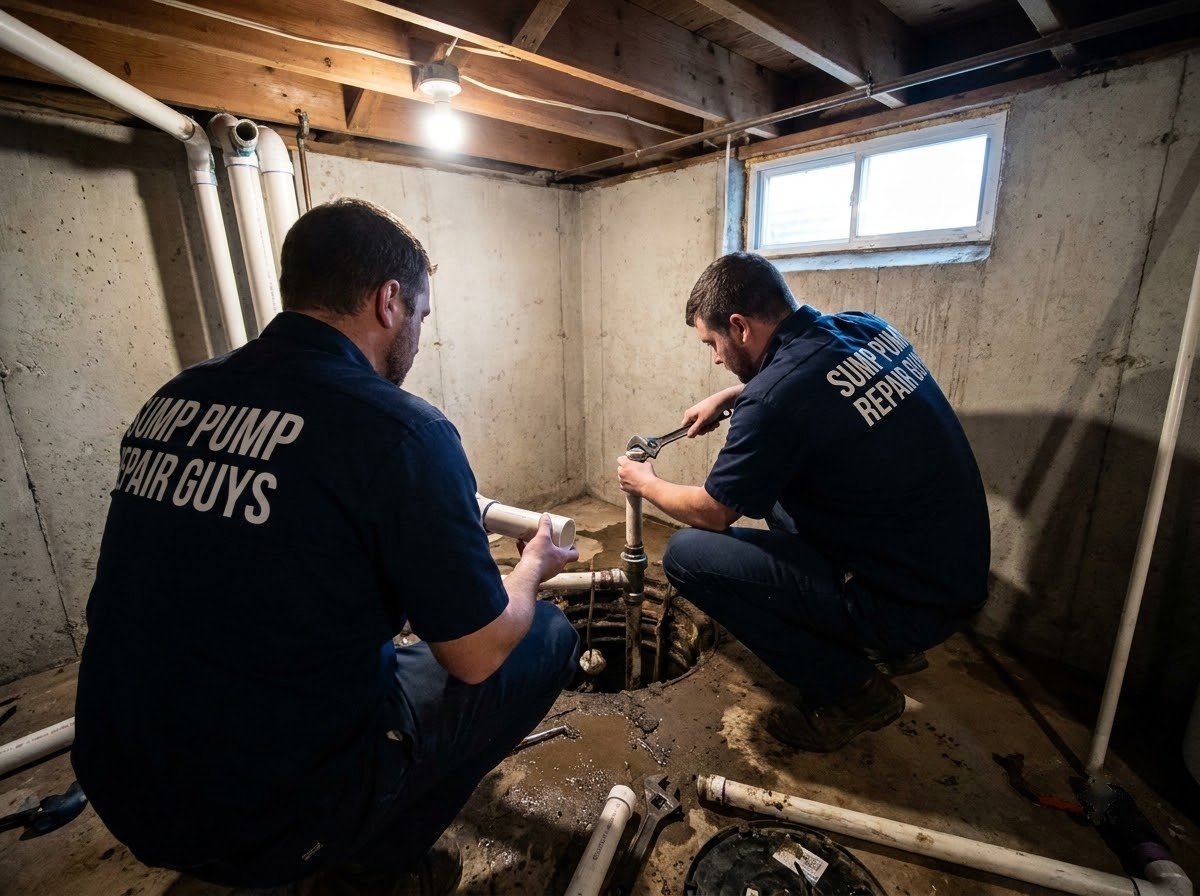
About Sump Pump Repair Guys in Lancaster
We repair sump pumps and nothing else. In Lancaster that focus is worth having because this city has spent an unusual amount of money on the exact problem underneath most basement complaints, and the results are documented rather than claimed.
Lancaster still has combined sewers, built to carry stormwater and sewage in the same pipe. Under storm conditions they overflow at regulators into the Hocking River, Baldwin Run and Fetter’s Run. Ohio EPA has mandated that the city reduce those overflows to between two and four events in a typical year, which is a demanding target.
The spending behind it is substantial. Through 2013 the city had invested 68 million dollars in combined sewer overflow management, and the Long Term Control Plan calls for a further 23 million over the following decade. The second phase of that plan, completed in August 2014, sets out projects aimed at bringing citywide overflow events down to that two to four range.
This is a long story rather than a recent one. In 1930 Berne Township sued the City of Lancaster over pollution in the Hocking River. Today the upper Hocking has attained the water quality standards set by Ohio EPA, which declared it the most improved stream segment in the state. Over 120 acres of wetlands and 10,000 feet of stream restoration went into that.
For a homeowner the useful part is the separation work. Projects such as the Frederick Street sewer separation exist specifically to split storm and sanitary flows so the storm side stops loading the sanitary side. Where that has happened, wet weather behaves differently on those streets than it did a decade ago.
- The Ohio EPA mandated target for combined sewer overflows citywide in a typical year.
- Invested in combined sewer overflow management through 2013, with more set out in the Long Term Control Plan.
- A stream gage on the Hocking River at South Columbus Street, alongside a rain gage operated by the National Weather Service.
- You approve the number first. No surprise line items when the invoice arrives.
- We fill the pit and watch a full cycle: activation, run, shutoff, and any backflow through the valve.
Two to four overflow events a year
68 million spent, 23 million planned
Gages you can check yourself
Priced before we start
Tested before we leave
Sump pump repair services in Lancaster
Sump pump repairs we handle in Lancaster
Most Lancaster sump pump problems are component faults. We work on the whole system so the repair holds: the pit, the switch, the valve, the motor and the line that carries the water away.
- 01
Sump pump diagnostics
A manual lift test separates a switch failure from a motor failure in under a minute. We identify the exact fault and its price before quoting anything, so you are not paying replacement rates for a parts-level problem.
- 02
Combined sewer exposure check
The Lancaster-specific one. Whether your street is still on combined sewer or has been separated changes what wet weather does to you, and separation work has already reached parts of the city.
- 03
Float switch repair and adjustment
The most common failure point on any pump. We free jammed floats, replace failed switches, and set trip heights so the on and off points do not overlap and start the pump short-cycling.
- 04
Check valve replacement
A failed valve lets the discharge column fall straight back into the pit, refilling it seconds after shutoff. It is a small part with a large effect on how hard your pump has to work.
- 05
Motor repair
Humming with no flow, tripped thermal overloads, failing bearings. We test the motor under load and tell you honestly whether a repair is worth it or whether the unit has been shortened past the point of value.
- 06
Impeller repair
Grinding and rattling usually mean debris in the vortex impeller or clearances worn open by grit. We open the unit, clear the obstruction and check whether the wear has already cost the pump its output.
- 07
Sump pit cleaning
Silt and iron ochre settle in the basin, block the intake screen and grind through the switch. On Fairfield County clay with older footer drains, fines accumulate steadily.
- 08
Pit and basin repair
Lancaster’s older housing frequently has pits cut in decades after the house was built, and undersized basins short-cycle every pump that goes into them.
- 09
Discharge line repair and rerouting
Blocked, crushed, or terminating where the water returns to your own footing. We trace the line and correct where it puts the water.
- 10
Frozen discharge line repair
A badly pitched line ices solid in a central Ohio January. We thaw and clear it, then correct the pitch and termination so it drains fully between cycles.
- 11
Backup system service
Storms take the power out at the exact moment the pump is needed most. We load test the battery, service the backup pump and confirm the changeover actually triggers.
- 12
Emergency service
Water already on the floor, alarm sounding, pump silent. Same day and after hours response across Lancaster. We get the system back in service first and have the longer conversation afterwards.
Why Lancaster homeowners call us first
Lancaster publishes its overflow targets, its spending and its gage readings. A contractor who has read none of it is quoting blind.
-
We check the rain and the river
There is a stream gage and a rain gage covering this city. Matching what your basement did to what those recorded is a far better diagnosis than a general description of dampness.
-
We fix the cause, not the symptom
A new pump dropped into an undersized pit with a failed valve dies the same way the last one did. We correct the fault around the pump so the repair survives the next wet spring.
-
Answered at 2am
Pumps fail during storms, at night, and while you are away. Our lines stay open all night and all weekend, and someone picks up. Basements do not flood during business hours.
-
Priced before we start
You get a written number after the diagnosis and approve it before any work begins. No surprise line items when the invoice arrives.
-
Licensed and insured
Every technician who enters your home is properly licensed, insured and background checked. You can ask for the paperwork at the door.
-
We stand behind it
If the same fault comes back after we have worked on it, we come back and sort it out.
When to call a sump pump technician in Lancaster
Most of these are parts-level repairs. Two of them depend on whether your street has been separated yet, and one is about the floodplain rather than the sewer.
-
01
Silent pump, rising pit
Call now
Check the breaker and the plug first, then lift the float by hand. If it runs, the switch is the fault and not the motor. Water arriving faster than you can bail is not a next-morning problem.
-
02
Sewage at the floor drain during a storm
Document it
On a still-combined street this is surcharge, and no pump serves it. Note the date, the time and the rainfall, photograph it, and report it. Overflow events are being counted here against a target, so records matter.
-
03
High water alarm sounding
Call now
Inflow has overtaken output, which means something upstream already failed: the switch, the valve, the discharge line or the pump. The alarm is the last warning before water reaches the floor.
-
04
Your street was recently separated and things changed
Separation projects connect curb inlets to a new storm sewer and take the storm load off the sanitary line. That usually helps, but any change to drainage around a property is worth watching for a season.
-
05
Running non-stop in dry weather
Usually a float stuck raised or a failed check valve dropping the discharge column back into the pit. Occasionally a genuinely high water table over the buried valley aquifer. The first two are parts-level fixes.
-
06
Cycling on and off every few seconds
Short-cycling, usually from a basin too small for the inflow, a failed check valve, or float trip points set so close they overlap. A bigger pump makes this worse rather than better.
-
07
Humming with no water moving
Jammed impeller, seized bearings, or a completely blocked or frozen discharge line. Switch it off now. Clearing the impeller or the line is often a same-visit fix, but another hour of humming turns it into a replacement.
-
08
You are near the Hocking, Baldwin Run or Fetter’s Run
Those are the watercourses the combined system overflows into during storms, and they are also where surface flooding concentrates. Being close to one changes both the risk and the right preparation.
-
09
You are buying or building in the floodplain
Lancaster has had floodplain regulations since the Flood Damage Prevention Ordinance took effect in 1980, revised in 2011 under flood map modernisation. Check the mapping before the survey rather than after.
How a Lancaster service call runs
Five steps, the same every time. No sales visit, no waiting days for a number.
- 1
Establish combined or separated
Separation work has already reached parts of the city. Which side your street is on decides whether wet weather surcharge is even possible for you.
- 2
Check the setup
Pit, pump, float switch, check valve and discharge line, plus basin volume against real inflow and where the discharge actually terminates.
- 3
Test under water
We fill the basin and watch a real cycle: activation height, run, shutoff, and whether anything comes back through the valve.
- 4
Price it, then repair
Written number before anything is touched. If the answer is reporting an overflow event rather than buying equipment, we say so.
- 5
Test again and hand it over
Final full-cycle test, then we show you how to check it yourself and what to watch for before the next wet season.
From a lawsuit in 1930 to the most improved stream in Ohio
What Lancaster has fixed, and what it has not
This city has been working on the same problem for the better part of a century, and the record is unusually well documented. It is worth knowing what that record does and does not promise your basement.
-
1930
Berne Township sued the city
The lawsuit concerned pollution in the Hocking River. Almost a century later that same river is the reference point for how the city measures its own progress, which is a useful reminder that infrastructure problems run on very long timescales.
-
The mechanism
Overflows at regulators
Combined sewers were originally conceived to carry both stormwater and sewage. Under storm conditions they overflow at regulators into the Hocking River, Baldwin Run and Fetter’s Run rather than backing up through the whole system.
-
The target
Two to four events in a typical year
Ohio EPA has mandated that the city reduce overflows to that range citywide. The Phase II Long Term Control Plan, completed in August 2014, sets out the projects intended to get there.
-
The money
68 million spent, 23 million more
Through 2013 the city had invested 68 million dollars in combined sewer overflow management, with the control plan calling for an additional 23 million over the following ten years in further projects.
-
The result
Most improved stream segment in the state
The upper Hocking River has attained the water quality standards set by Ohio EPA, which gave it that description. Over 120 acres of wetlands and 10,000 feet of stream restoration went into reducing nutrients and sediment and improving habitat.
-
The limit
Water quality is not water quantity
The city separates the two ideas plainly, and so should a homeowner. Cleaner streams do not stop too much stormwater overwhelming streets, sewers, ditches and streams. Flooding is a separate programme with separate design standards.
Lancaster neighborhoods we cover
Lancaster sits where the Hocking River, Baldwin Run and Fetter’s Run come together on the edge of the Hocking Hills, over a buried valley aquifer of glacial sand and gravel. The older central streets carry the combined sewers still being separated, while the outer areas and townships behave more like ordinary clay-soil drainage problems.
- Downtown Lancaster
- Square 13
- Mount Pleasant
- Rising Park
- Miller Park
- South Columbus Street
- Frederick Street
- Main Street
- Memorial Drive
- Ety Road
- Cedar Hill Road
- Baldwin Run
- Fetter’s Run
- Hocking River corridor
- Berne Township
- Greenfield Township
- Pleasant Township
- Hocking Township
- Amanda
- Baltimore
- Carroll
- Sugar Grove
ZIP codes we service in Lancaster
Same-day coverage across Lancaster and the surrounding Fairfield County communities.
- 43130
- 43102
- 43105
- 43110
- 43112
- 43147
- 43154
- 43155
- 43157
- 43138
- 43068
- 43125
- 43113
- 43146
- 43106
- 43119
Not listed? We cover all of Fairfield County. Call and we will confirm in under a minute.
Lancaster sump pump questions, answered
The things Lancaster homeowners ask us most often, answered properly instead of with a sales line. If yours is not here, give us a call and we will talk it through.
How many sewer overflows is Lancaster allowed?
Ohio EPA has mandated that the city reduce combined sewer overflows to between two and four events in a typical year, citywide. The Phase II Long Term Control Plan completed in August 2014 sets out the projects intended to reach that.
It is a demanding number. For comparison, plenty of Ohio cities with combined systems still see dozens of overflow events annually, so the target here reflects both the scale of the investment and the size of the system.
Where do the overflows actually go?
Under storm conditions the combined sewers overflow at regulators into the Hocking River, Baldwin Run and Fetter’s Run.
That relief is deliberate. It is what stops the system backing up wholesale during a large storm, which is an uncomfortable trade and the reason separation work exists in the first place.
What has the city actually spent?
Through 2013 the city had invested 68 million dollars in combined sewer overflow management, and the Long Term Control Plan calls for a further 23 million over the following ten years in additional projects.
The results are measurable rather than promotional. The upper Hocking River has attained Ohio EPA water quality standards and was declared the most improved stream segment in the state, supported by over 120 acres of wetlands and 10,000 feet of stream restoration.
What is a sewer separation project?
It splits storm and sanitary flows that currently share one pipe. The Frederick Street project is a named example, developed under the control plan with the specific goal of reducing overflows at a structure in that area by connecting existing curb inlets into a separate storm system.
Where separation has been completed, the storm load no longer fills the sanitary line during rain. That is the most durable fix available for a combined system, and it is also why progress is street by street rather than citywide at once.
Can I check the river and rainfall myself?
Yes. The city, working with the United States Geological Survey, has installed a stream gage on the Hocking River at South Columbus Street, and there is a rain gage operated by the National Weather Service alongside it.
Both are published. Matching the date your basement took water against what those recorded turns a vague complaint into evidence, which is worth far more when you report an event.
Does cleaner water mean less flooding?
No, and the city is careful to separate the two. Water quality is about what reaches the streams. Water quantity is about flooding, and too much stormwater will overwhelm streets, sewers, ditches and streams regardless of how clean it is.
The stormwater programme addresses quantity through design standards that route water away from homes and detain peak flows. Those are different projects from the overflow work, with different measures of success.
Why does my pump run so much in a wet spring?
Lancaster sits over the Hocking River Valley Aquifer, vast subsurface sand and gravel deposits laid down as glaciers retreated across Fairfield County. Rainfall naturally recharges that groundwater supply.
The same recharge that makes it a reliable water source raises the shallow water table beside foundations after sustained rain. A pump in that situation is doing exactly what it was installed for, provided it is not running in dry weather too.
Am I in the floodplain?
Worth checking properly rather than guessing. Lancaster City Council adopted floodplain regulations through the Flood Damage Prevention Ordinance, passed in 1979 and effective in 1980, revised in 2011 as part of the Flood Map Modernization programme.
Flood mapping and basement water are related but not the same thing. Being outside a mapped floodplain does not stop groundwater or a surcharged sewer, and being inside one does not mean your pump is the wrong answer.
Do I need a bigger pump if mine cannot keep up?
Usually not. A pump that cannot keep up is often fighting a failed check valve, a blocked or frozen discharge line, a basin too small for the inflow, or water arriving by a route the pump does not serve at all.
Oversizing into a small pit is actively harmful: the pump empties the basin faster than it refills, short-cycles, and destroys its own switch. Sizing should follow pit volume, total lift and measured inflow.
How do I test my sump pump myself?
Pour several gallons of water slowly into the basin and watch a full cycle. The float should rise, the pump should start, the water should clear, and the pump should shut off on its own.
Then keep watching for thirty seconds. Water flowing back into the pit means the check valve is failing. If the pump does not start at all, lift the float by hand: if it runs then, the switch is the problem, not the motor. Test in autumn before the freeze and again in early spring.
Which Lancaster areas and ZIP codes do you cover?
All of Lancaster and the surrounding Fairfield County communities, including Downtown Lancaster, Square 13, Mount Pleasant, Rising Park, Miller Park and the South Columbus Street, Frederick Street, Main Street, Memorial Drive, Ety Road and Cedar Hill Road corridors, plus the Baldwin Run, Fetter’s Run and Hocking River areas, Berne, Greenfield, Pleasant and Hocking townships, and Amanda, Baltimore, Carroll and Sugar Grove.
ZIP codes include 43130, 43102, 43105, 43110, 43112, 43147, 43154, 43155, 43157, 43138, 43068, 43125, 43113, 43146, 43106 and 43119.
How quickly can someone come out?
Same day across most of Fairfield County, and after hours for emergencies where water is already coming in. Diagnosis takes thirty to sixty minutes, and a parts-level repair such as a float switch or check valve is generally completed in the same visit.
Heavy rain events are the exception, when calls across the county spike within the same hours. An inspection booked in dry weather is worth far more than a place in that queue.
Match your basement to the rain and the river.
Emergency repair, water source diagnosis, pit and valve testing, or a full-system inspection in dry weather. Serving Lancaster and all of Fairfield County.