
24/7 Emergency Service in Franklin County
Sump Pump Repair in Westerville, OH
First Thing To Do Is Stop Using Water
Westerville’s own guidance is blunt about it. During a blockage, any water that goes into your drains ends up in your basement. That includes the washing machine.
Answered 24 hours. Free quote over the phone.
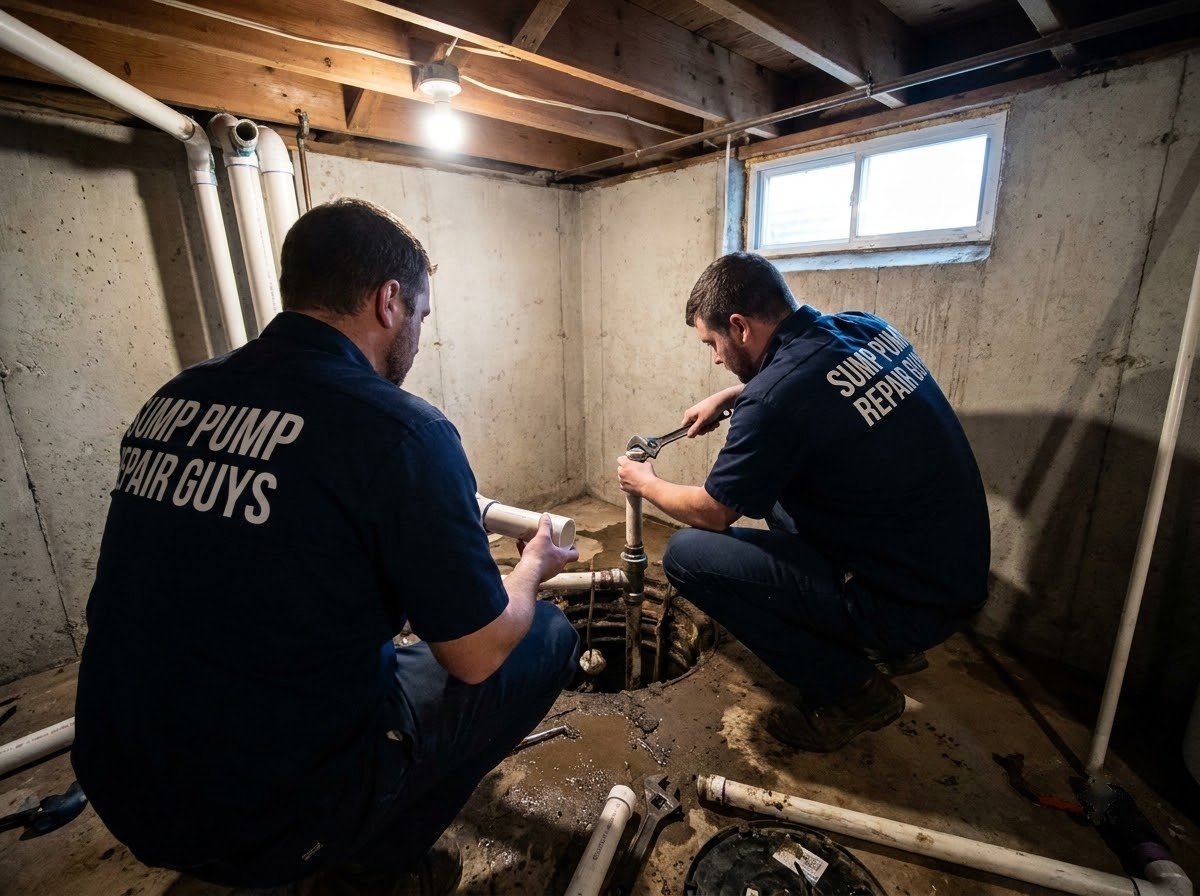
About Sump Pump Repair Guys in Westerville
We repair sump pumps and nothing else. In Westerville the most valuable thing we can tell you costs nothing and takes ten seconds, and it comes from the city rather than from us.
If water is backing up into your basement, the city’s guidance is to stop all use of water in the house immediately. That means no dish washing, no clothes washing, no bathing or showering. If you need the bathroom, do not flush the toilet, because that only adds to the problem. If you need water for drinking or cooking, try to keep it from going down the drain.
The reasoning is stated plainly: in the case of a blockage, any water that gets into your drains will end up in your basement. People stand watching a basement fill while a dishwasher quietly finishes its cycle upstairs, and every gallon of that lands on the floor they are trying to save.
The second thing worth knowing is what the city will do. If the problem is in the collector, crews clean the line with a sewer jet. The lateral is the homeowner’s responsibility, but in most cases the city will still jet the collector to see whether the suction dislodges the blockage in the lateral. That is a free attempt on your behalf, and it is worth asking for.
If sanitary sewage appears to be flowing onto the ground rather than into a basement, the city asks to be called immediately, at any hour. Its Utilities Division maintains the water, sanitary sewer and storm water systems, which together run to more than 400 miles of pipe.
- During a blockage, anything entering a drain in the house ends up on the basement floor.
- Even when the blockage is in your lateral, crews will often jet the public collector to see whether suction dislodges it.
- Water, sanitary sewer and storm water systems combined, maintained by the Utilities Division.
- You approve the number first. No surprise line items when the invoice arrives.
- We fill the pit and watch a full cycle: activation, run, shutoff, and any backflow through the valve.
Stop all water use first
The city may jet the collector anyway
More than 400 miles of pipe
Priced before we start
Tested before we leave
Sump pump repair services in Westerville
Sump pump repairs we handle in Westerville
Most Westerville sump pump problems are component faults. We work on the whole system so the repair holds: the pit, the switch, the valve, the motor and the line that carries the water away.
- 01
Sump pump diagnostics
A manual lift test separates a switch failure from a motor failure in under a minute. We identify the exact fault and its price before quoting anything, so you are not paying replacement rates for a parts-level problem.
- 02
Collector or lateral assessment
The Westerville-specific one. The city jets the collector and the lateral is yours, so establishing which side the restriction sits on decides both the fix and the bill.
- 03
Float switch repair and adjustment
The most common failure point on any pump. We free jammed floats, replace failed switches, and set trip heights so the on and off points do not overlap and start the pump short-cycling.
- 04
Check valve replacement
A failed valve lets the discharge column fall straight back into the pit, refilling it seconds after shutoff. It is a small part with a large effect on how hard your pump has to work.
- 05
Motor repair
Humming with no flow, tripped thermal overloads, failing bearings. We test the motor under load and tell you honestly whether a repair is worth it or whether the unit has been shortened past the point of value.
- 06
Impeller repair
Grinding and rattling usually mean debris in the vortex impeller or clearances worn open by grit. We open the unit, clear the obstruction and check whether the wear has already cost the pump its output.
- 07
Sump pit cleaning
Silt and iron ochre settle in the basin, block the intake screen and grind through the switch. On central Ohio clay with older footer drains, fines accumulate steadily.
- 08
Pit and basin repair
Cracked or improperly seated basins let soil and silt in continuously, and undersized basins short-cycle every pump that goes into them regardless of quality.
- 09
Discharge line repair and rerouting
Blocked, crushed, or terminating where the water returns to your own footing. We trace the line and correct where it puts the water.
- 10
Frozen discharge line repair
A badly pitched line ices solid in a central Ohio January. We thaw and clear it, then correct the pitch and termination so it drains fully between cycles.
- 11
Backup system service
Storms take the power out at the exact moment the pump is needed most. We load test the battery, service the backup pump and confirm the changeover actually triggers.
- 12
Emergency service
Water already on the floor, alarm sounding, pump silent. Same day and after hours response across Westerville. We get the system back in service first and have the longer conversation afterwards.
Why Westerville homeowners call us first
The most useful minute of a backup is the first one, and almost nobody uses it well.
-
We tell you to stop the water first
Before anything else, before we are even dispatched. Every load of laundry and every flush during a blockage arrives on your basement floor, and stopping costs nothing.
-
We fix the cause, not the symptom
A new pump dropped into an undersized pit with a failed valve dies the same way the last one did. We correct the fault around the pump so the repair survives the next wet spring.
-
Answered at 2am
Pumps fail during storms, at night, and while you are away. Our lines stay open all night and all weekend, and someone picks up. Basements do not flood during business hours.
-
Priced before we start
You get a written number after the diagnosis and approve it before any work begins. No surprise line items when the invoice arrives.
-
Licensed and insured
Every technician who enters your home is properly licensed, insured and background checked. You can ask for the paperwork at the door.
-
We stand behind it
If the same fault comes back after we have worked on it, we come back and sort it out.
When to call a sump pump technician in Westerville
Most of these are parts-level repairs. Two of them start with the city, and one of them starts with you turning taps off.
-
01
Water backing up into the basement
Stop water use now
Before calling anyone, stop dish washing, clothes washing and showering, and do not flush toilets. During a blockage every gallon entering a drain reaches the basement. Then call the city, because they may be able to jet the collector.
-
02
Sewage flowing onto the ground outside
Call the city now
The city asks to be told immediately, at any hour of day or night, if what appears to be sanitary sewage is flowing onto the ground. That is a public health matter rather than a plumbing preference.
-
03
Silent pump, rising pit
Call now
Check the breaker and the plug first, then lift the float by hand. If it runs, the switch is the fault and not the motor. Water arriving faster than you can bail is not a next-morning problem.
-
04
The city jetted the collector and it helped briefly
That is a known pattern. The city notes that jetting the collector can sometimes dislodge a blockage in the lateral, but still recommends hiring a plumber to find the cause and clean the lateral properly. Partial relief is not a repair.
-
05
Running non-stop in dry weather
Usually a float stuck raised or a failed check valve dropping the discharge column back into the pit. Occasionally a genuinely high water table near the creeks. The first two are parts-level fixes.
-
06
Cycling on and off every few seconds
Short-cycling, usually from a basin too small for the inflow, a failed check valve, or float trip points set so close they overlap. A bigger pump makes this worse rather than better.
-
07
Humming with no water moving
Jammed impeller, seized bearings, or a completely blocked or frozen discharge line. Switch it off now. Clearing the impeller or the line is often a same-visit fix, but another hour of humming turns it into a replacement.
-
08
You have no plumber’s number to hand
The city’s own advice is to add a plumber’s number to your emergency call list before you need it. At two in the morning with water rising, searching is the worst time to start choosing.
-
09
Something odd is discharging from a storm outfall
The city contracts with the Franklin County Board of Health to inspect stormwater outfalls for illicit discharges, and follows up where contamination is indicated. Reporting what you see is genuinely part of that process.
How a Westerville service call runs
Five steps, the same every time. No sales visit, no waiting days for a number.
- 1
Stop the water, then find the side
Water use off first. Then we establish whether the restriction sits in the public collector or in the lateral you own, because the city handles one and you handle the other.
- 2
Check the setup
Pit, pump, float switch, check valve and discharge line, plus basin volume against real inflow and where the discharge actually terminates.
- 3
Test under water
We fill the basin and watch a real cycle: activation height, run, shutoff, and whether anything comes back through the valve.
- 4
Price it, then repair
Written number before anything is touched. If the right move is the city jetting the collector rather than us selling equipment, we say so.
- 5
Test again and hand it over
Final full-cycle test, then we show you how to check it yourself and what to watch for before the next wet season.
The first ten minutes, and who does what after
What to do during a Westerville backup
This sequence comes from the city’s own guidance. Following it in order limits the damage before anyone arrives, and it costs nothing at all.
-
Step one
Stop all use of water in the house
Dish washing, clothes washing, bathing and showering all stop immediately. A washing machine mid-cycle can put more water on your floor in ten minutes than you can mop in an hour.
-
Step two
Do not flush the toilet
If you need to use the bathroom, the city is direct that flushing will only add to the problem. The same applies to drinking and cooking water: try to prevent it going down a drain while the blockage lasts.
-
Why it matters
Everything reaches the basement
The principle behind all of it, in the city’s words: in the case of a blockage, any water that gets into your drains will end up in your basement. There is no exception for a small load or a quick shower.
-
Step three
Call the city
If the problem is in the collector, crews clean the line with a sewer jet and investigate the cause. If sanitary sewage is flowing onto the ground rather than indoors, the city asks to be called immediately at any hour.
-
The generous bit
They may jet the collector anyway
The lateral is the homeowner’s responsibility, but in most cases the city will still jet the collector to see whether the suction dislodges a blockage in the lateral. A free attempt on your side of the line, worth asking about.
-
Step four
Then the lateral, properly
Even where jetting the collector helps, the city recommends hiring a plumber to determine the cause and clean the lateral. Where it does not help, you need someone able to jet flush the lateral itself.
Westerville neighborhoods we cover
Westerville runs to more than 37,000 residents, 170 miles of roadway and 133 miles of storm sewer pipe, with 43 stormwater outfalls draining toward Alum Creek and Big Walnut Creek. The older uptown streets carry the oldest laterals, while the newer subdivisions sit on graded ground where discharge routing matters more than pipe age.
- Uptown Westerville
- State Street
- Old Westerville
- Cleveland Avenue
- Schrock Road
- County Line Road
- Alum Creek
- Big Walnut Creek
- Hoff Woods
- Annehurst
- Spring Grove
- Cherrington
- Highlands
- Sunrise
- Huber Ridge
- Blendon Township
- Genoa Township
- Blendon Woods
- Minerva Park
- Polaris
- Gahanna
- New Albany
ZIP codes we service in Westerville
Same-day coverage across Westerville and the surrounding Franklin and Delaware County communities.
- 43081
- 43082
- 43086
- 43085
- 43230
- 43054
- 43021
- 43015
- 43035
- 43229
- 43231
- 43219
- 43240
- 43004
- 43062
- 43068
Not listed? We cover all of Franklin County. Call and we will confirm in under a minute.
Westerville sump pump questions, answered
The things Westerville homeowners ask us most often, answered properly instead of with a sales line. If yours is not here, give us a call and we will talk it through.
What should I do the moment water starts backing up?
Stop all use of water in the house. That means dish washing, clothes washing and bathing or showering. If you need the bathroom, do not flush the toilet, because it will only add to the problem. If you need water for drinking or cooking, try to prevent it going down the drain.
The reason is simple and worth repeating: in the case of a blockage, any water that gets into your drains will end up in your basement. Then call the city, because they may be able to clear the line.
Will the city clear a blockage in my own lateral?
Not formally, but they often try. The lateral is the homeowner’s responsibility. However in most cases the city will still jet the collector to see whether the suction dislodges the blockage in the lateral.
If that helps, they still recommend hiring a plumber to determine the cause and clean the lateral properly. If it does not help, you need someone with the equipment to jet flush the lateral itself.
What happens if the blockage is in the collector?
Then it is the city’s to fix. Crews clean the line with a sewer jet to remove the blockage, and investigate further to determine what caused it.
That is why the call to the city comes before the call to a plumber. Establishing which side of the connection the problem sits on decides who pays, and finding out costs you nothing.
What if sewage is coming up outside rather than indoors?
Call the city immediately, at any time of day or night. Their guidance asks specifically to be told if what appears to be sanitary sewage is flowing onto the ground.
Treat it as a public health situation rather than an inconvenience. Keep people and pets away from the area until it has been assessed.
Why does jetting fix it for a while and then it comes back?
Because jetting clears the obstruction without addressing what caused it. Roots, an offset joint, a partial collapse or a build-up of grease will all recur once the line has been opened up.
That is exactly why the city recommends a plumber determine the cause even when jetting the collector appears to have solved the problem. Repeated backups on the same line are a diagnosis waiting to happen.
Where does Westerville’s stormwater go?
Through 133 miles of storm sewer pipe and 43 stormwater outfalls, into waters that eventually enter Alum Creek and Big Walnut Creek. It is not treated on the way.
That is why nothing but stormwater should ever enter a storm drain. The city also contracts with the Franklin County Board of Health to inspect stormwater outfalls for illicit discharges, and follows up where wastewater contamination is indicated.
Should I keep a plumber’s number ready?
The city thinks so, and it is right. Its guidance is to add a plumber’s number to your emergency call list before you need it.
The reason is practical. At two in the morning with water rising, you are choosing under pressure and paying whatever the first available person quotes. Choosing in advance is a better deal in every direction.
Do I need a bigger pump if mine cannot keep up?
Usually not. A pump that cannot keep up is often fighting a failed check valve, a blocked or frozen discharge line, a basin too small for the inflow, or water arriving by a route the pump does not serve at all.
Oversizing into a small pit is actively harmful: the pump empties the basin faster than it refills, short-cycles, and destroys its own switch. Sizing should follow pit volume, total lift and measured inflow.
Would a backwater valve have helped?
Against sewage coming back toward the house, yes. A properly installed backwater valve closes when flow reverses, which is the exact mechanism that puts sewage on a basement floor during a blockage or surcharge.
The trade-off is that a closed valve also stops water leaving while it is shut, which is another reason the city’s advice to stop using water matters. The valve and the behaviour work together.
How do I test my sump pump myself?
Pour several gallons of water slowly into the basin and watch a full cycle. The float should rise, the pump should start, the water should clear, and the pump should shut off on its own.
Then keep watching for thirty seconds. Water flowing back into the pit means the check valve is failing. If the pump does not start at all, lift the float by hand: if it runs then, the switch is the problem, not the motor. Test in autumn before the freeze and again in early spring.
Which Westerville areas and ZIP codes do you cover?
All of Westerville and the surrounding Franklin and Delaware County communities, including Uptown Westerville, Old Westerville, Hoff Woods, Annehurst, Spring Grove, Cherrington, the Highlands, Sunrise and Huber Ridge, plus the State Street, Cleveland Avenue, Schrock Road and County Line Road corridors, the Alum Creek and Big Walnut Creek areas, Blendon and Genoa townships, Blendon Woods, Minerva Park, Polaris, Gahanna and New Albany.
ZIP codes include 43081, 43082, 43086, 43085, 43230, 43054, 43021, 43015, 43035, 43229, 43231, 43219, 43240, 43004, 43062 and 43068.
How quickly can someone come out?
Same day across most of Franklin County, and after hours for emergencies where water is already coming in. Diagnosis takes thirty to sixty minutes, and a parts-level repair such as a float switch or check valve is generally completed in the same visit.
Heavy rain events are the exception, when calls across the county spike within the same hours. An inspection booked in dry weather is worth far more than a place in that queue.
Turn the water off. Then call.
Emergency repair, water source diagnosis, pit and valve testing, or a full-system inspection in dry weather. Serving Westerville and all of Franklin County.