
24/7 Emergency Service Nationwide
About Sump Pump Repair Guys
We Repair Sump Pumps. That Is The Whole Business.
No waterproofing packages, no basement remodels, no upsell to a system you did not ask about. One job, done properly, at the hour you actually need it.
Answered 24 hours. Free quote over the phone.
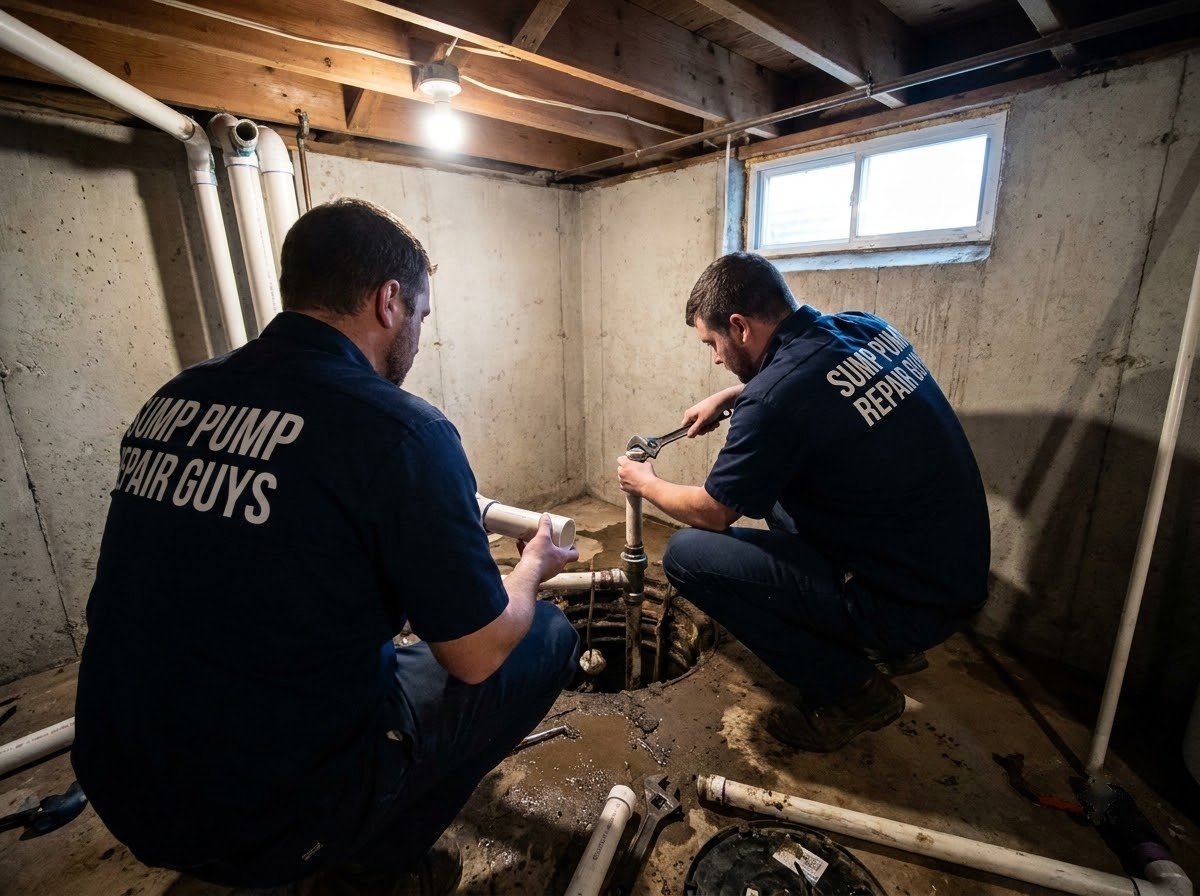
Why we only do one thing
Most companies that answer a sump pump call are waterproofing contractors, general plumbers or basement remodelers. The pump is one line on a long service list, and it is rarely the line with the margin on it. So the conversation drifts. You called about a pump that will not start, and somewhere in the visit it becomes an interior drainage system, a vapour barrier and a payment plan.
We built this business the other way round. Sump pumps are the entire trade. The pit, the float switch, the check valve, the impeller, the motor, the discharge line and where that line puts the water. That is the whole list, and it is a list our technicians work through several times a day rather than a few times a month.
The practical effect is that we recognise faults quickly. A pump humming with no flow, a basin refilling seconds after shutoff, a float set so its trip points overlap. These are patterns, and someone who sees them daily names them in minutes instead of guessing at them for an hour on your clock.
It also means we are comfortable telling you when the answer is not a pump. Sometimes basement water is a sewer surcharge, a private lateral fault, a downspout discharging against the foundation or a grading problem. None of those are things we sell. Saying so costs us a job and saves you a great deal, and we would rather be the company that told you the truth than the one that sold you equipment for a problem it was never going to solve.
- Most failures are parts-level. We quote a repair when a repair genuinely holds, and say plainly when a unit is past saving.
- A written number after the diagnosis, approved by you before anything is touched. No line items appearing later.
- We fill the pit and watch a full cycle: activation, run, shutoff, and any backflow through the valve.
- Our lines stay open all night and all weekend. Basements do not flood during business hours.
- Every technician who enters your home. Ask for the paperwork at the door.
Repair first, replace only when it is right
Priced before we start
Tested before we leave
Answered at 2am
Licensed, insured, background checked
What we stand for
The rules we work by
These are not marketing lines. They are the standing instructions every technician carries into a house, and the reason we turn down work we could easily have taken.
- 01
Diagnose before quoting
No number gets quoted until the fault is identified. A manual lift test separates a switch failure from a motor failure in under a minute, and that one minute is often the difference between a small part and a full replacement.
- 02
The cheapest honest answer wins
If a check valve fixes it, we fit a check valve. We do not quote a replacement because the margin is better, and we do not oversize a pump into a small pit, which causes short-cycling and kills the switch.
- 03
Tell people when it is not ours
Sewer surcharge, a failing lateral, a septic problem or a grading issue are not sump pump work. We name it, point you at who does handle it, and charge you nothing for equipment you do not need.
- 04
Fix the cause, not the symptom
A new pump dropped into an undersized basin with a failed valve and a discharge that returns water to the foundation dies exactly the way the last one did. We correct what is around the pump so the repair survives.
- 05
Know the ground we are standing on
Clay, glacial till, river valley sand, combined sewer or separated. Local conditions decide what a basement is actually reacting to, and we research the places we serve rather than reciting the same script everywhere.
- 06
Leave the homeowner able to check it
Before we go, we show you how to test the pump yourself, what a healthy cycle looks like, and what the early warning signs are. A customer who catches a failing switch in autumn does not need us in February.
What working with us is like
No sales visit, no three day wait for a number, no technician who needs to phone a manager before he can tell you what is wrong.
-
Someone actually answers
Nights, weekends and holidays. Pumps fail during storms, in the small hours, and while you are away from the house. An answering machine is not an emergency service.
-
Free diagnosis over the phone first
Describe what the pump is doing and we will usually narrow it before anyone gets in a van. Some callers fix it themselves on that call, and that is a perfectly good outcome.
-
One number, agreed up front
You get a written price after the diagnosis and approve it before work begins. If the job turns out to be smaller than expected, the price goes down rather than staying put.
-
Same day where we can
Most parts-level repairs are completed in the same visit. Storm and thaw events are the exception, when an entire county calls inside the same hour.
-
Properly credentialed people
Licensed, insured and background checked, every one of them. You are entitled to see the paperwork before anyone comes down your basement stairs.
-
We stand behind the work
If the same fault returns after we have worked on it, we come back and sort it out. That is the whole warranty, and it does not need a page of conditions.
The things we will not do
A short list, and the reason each one is on it. Every item here is something the trade does routinely and we have decided against.
-
01
Quote a replacement for a parts-level fault
Never
The most common sump pump failure is the float switch, and it is a fraction of the cost of a new unit. Selling a replacement when the switch is the fault is the single most common way homeowners get overcharged in this trade.
-
02
Use a flooded basement as a sales opportunity
Never
Someone standing in water at midnight is not in a position to evaluate a large proposal. We get the system back in service first and have the longer conversation the next day, when you can think properly and get other prices.
-
03
Oversize a pump to look generous
A pump too large for its basin empties it faster than it refills, cycles on and off constantly, and destroys its own switch. Bigger is not better. Sizing follows pit volume, total lift and measured inflow.
-
04
Ignore where the discharge ends
A line terminating a few feet from the wall sends water straight back to the footer drains and into the pit. The pump then runs continuously and the homeowner concludes it was undersized. It usually was not.
-
05
Bundle work you did not ask about
You called about a pump. If we notice something else worth mentioning we will mention it, in plain terms, as information. It does not appear on the invoice unless you asked for it.
-
06
Pretend a public problem is a private one
If the water at your floor drain is coming from a surcharged public sewer, no pump on the market serves it. We say so, and we tell you to document it and report it rather than quietly paying us instead.
-
07
Publish reviews we have not earned
There are no invented testimonials on this site. When we have genuine reviews from real customers, they will appear here, and not a day before that.
How every service call runs
Five steps, the same in every city we serve. You should know what is coming before anyone knocks.
- 1
Understand the water
How fast it arrives, how long it stays, what the weather was doing, and which sewer system serves the property. That answer reframes everything after it.
- 2
Check the whole setup
Pit, pump, float switch, check valve and discharge line, plus basin volume against real inflow and where the discharge and downspouts actually terminate.
- 3
Test under water
We fill the basin and watch a real cycle: activation height, run, shutoff, and whether anything comes back through the valve. Guessing is not testing.
- 4
Price it, then repair
A written number before anything is touched. If the job belongs to someone else entirely, we say so and you pay nothing for equipment you do not need.
- 5
Test again and hand it over
Final full-cycle test, then we show you how to check it yourself and what to watch for before the next wet season.
Local knowledge, not a national script
How we approach each area we serve
Basement water behaves differently from one city to the next, and often from one street to the next. We research the places we work rather than repeating the same advice everywhere.
-
Ground
What the soil does with rain
Heavy clay holds water against a foundation for days. Sand and gravel drain fast but sit on a high water table. Glacial till behaves differently again. The soil under a house decides how much work a pump is being asked to do.
-
Pipes
Combined, separated, or neither
A combined sewer can surcharge into a basement during heavy rain. A separated system usually cannot, which points the diagnosis at the private lateral instead. Some properties are on no public sewer at all. Establishing which comes first.
-
Rules
Who is responsible for which pipe
The boundary between private and public responsibility is set locally, and it is not the same everywhere. Knowing where yours falls can be the difference between your bill and somebody else’s.
-
Money
Programmes homeowners never hear about
Some cities operate backwater valve assistance, basement flooding grants or reimbursement routes after a public system failure. They usually come with conditions such as permits and inspections. We mention them even though they are not work we sell.
-
Season
When the risk window actually falls
In snowbelt areas the dangerous period is the late winter melt, not the summer storm. Elsewhere it is a single cloudburst. Knowing which applies tells you when to book an inspection and when not to bother.
-
Sources
Everything checked, nothing invented
The local detail on our city pages comes from city, county and environmental agency documents rather than from guesswork. If we cannot verify a claim about your area, we do not put it in front of you.
What we repair
The complete list. If it is part of the system that keeps water out of your basement, it is ours. If it is not on this list, we will tell you who to call.
- Sump pump diagnostics
- Float switch repair
- Float switch adjustment
- Check valve replacement
- Motor repair
- Impeller repair
- Sump pit cleaning
- Pit and basin repair
- Basin resizing
- Discharge line repair
- Discharge rerouting
- Frozen line clearing
- Backup pump service
- Battery load testing
- High water alarm service
- Short-cycling diagnosis
- Full system inspection
- Emergency repair
Something not on the list? Call and we will tell you honestly whether it is ours or whose it is.
Where we work
We serve homeowners across the United States, with technicians covering cities, suburbs and surrounding county areas. Ohio is our most thoroughly built out region, with detailed guidance for individual cities and their local sewer conditions.
- Ohio
- Columbus
- Cleveland
- Cincinnati
- Toledo
- Akron
- Dayton
- Parma
- Canton
- Youngstown
- Lorain
- Hamilton
- Springfield
- Kettering
- Elyria
- Cuyahoga Falls
- Middletown
- Mansfield
- Newark
- Findlay
- Warren
- Lima
Do not see your city? We are adding areas continually. Call and we will confirm coverage in under a minute.
Questions about who we are
The things people ask before they let us in the house. If yours is not here, call and ask it directly.
Do you install new sump pumps, or only repair?
Repair is the core of the business, and it is what we lead with because most failures are parts-level and a repair genuinely holds. A float switch, a check valve, a jammed impeller or a blocked discharge line are all fixable, and quoting a replacement for any of them is how homeowners get overcharged.
When a unit is genuinely finished, we say so and replace it. The test we use is simple: past seven to ten years of age, or a repair estimate reaching about half the cost of a new unit installed. Below that line, repair wins.
Why don’t you do waterproofing?
Because the moment a company sells both, the incentive changes. A pump repair is a small job and a waterproofing system is a large one, and every wet basement starts to look like the larger job.
By not selling it, we can give you an honest reading of whether your problem is the pump or something structural. If it is structural, we tell you that, and you go and get competitive quotes from people who actually specialise in it.
Are you a national company or a local one?
Both, in the sense that matters. The brand, the standards, the pricing approach and the guarantee are consistent everywhere. The technicians who come to your house work in your area and know its ground, its sewers and its seasons.
We think that is the right way round. A national script applied to local water is how you end up being told the same thing in a river valley, on glacial clay and on a high water table.
How do you charge?
Diagnosis first, then a written price you approve before any work starts. The number does not move once agreed, and if the job turns out smaller than expected the price comes down rather than staying put.
Phone advice is free. If we can narrow the fault before anyone drives out, we will, and some callers resolve it themselves on that call.
Are your technicians licensed and insured?
Yes, all of them, along with background checks. You are entitled to ask for the paperwork at the door before anyone comes down your basement stairs, and a reasonable company will hand it over without hesitation.
That applies to anyone you hire, not just us. If a contractor is reluctant to show credentials, that is information.
What is your guarantee?
If the same fault comes back after we have worked on it, we come back and put it right. That is the whole of it.
What it does not cover is a different fault appearing later in an old system, which is why we tell you at handover which parts of your setup are near the end of their life rather than leaving you to find out.
Can you come out at night or at the weekend?
Yes. Emergency response runs around the clock, seven days a week, and the phone is answered by a person rather than a machine.
The honest exception is a major storm or a rapid thaw, when an entire county calls within the same hour. We work through those as fast as we can, and it is exactly why an inspection booked in calm weather is worth far more than a place in that queue.
Why are there no customer reviews on this site?
Because we do not have genuine ones to publish yet, and inventing them is not something we are willing to do. Fabricated testimonials are common in this trade and they are both dishonest and unlawful.
When real customers have left real reviews, they will appear here. Until then the page stays empty, which we would rather you noticed than not.
What should I do right now if water is coming in?
Check the breaker and the plug first, then lift the float by hand. If the pump runs when you lift the float, the switch is the fault rather than the motor. If it hums without moving water, switch it off, because running it further can turn a repair into a replacement.
Do not stand in standing water near powered equipment. Then call us and describe what you saw, because those few observations usually narrow the fault before we arrive.
How do I test my pump when nothing is wrong?
Pour several gallons of water slowly into the basin and watch a full cycle. The float should rise, the pump should start, the water should clear, and the pump should shut off on its own.
Then keep watching for thirty seconds. Water flowing back into the pit means the check valve is failing. Do this in autumn before the freeze and again in early spring, and you will catch most failures before they matter.
One trade, done properly, at the hour you need it.
Emergency repair, water source diagnosis, pit and valve testing, or a full-system inspection before the wet season. Answered 24 hours a day, seven days a week.